

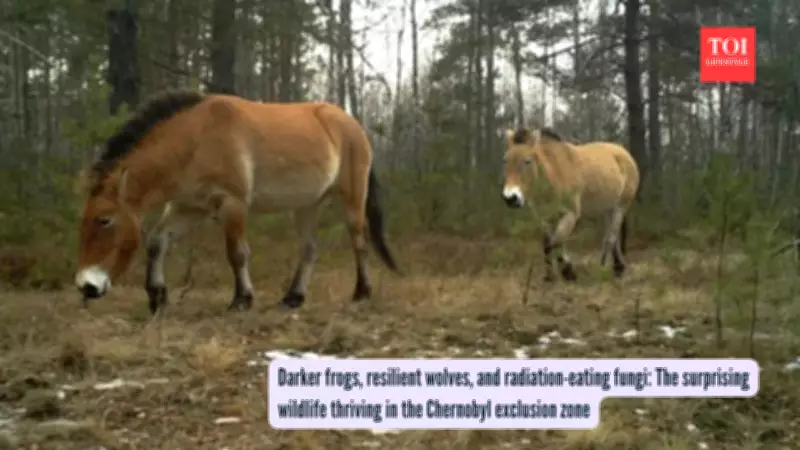
For almost four decades after the Chernobyl nuclear disaster, the world viewed the exclusion zone as a wasteland of radiation and decay. However, that image is now being rewritten as cameras and scientists document wolves, foxes, bears, beavers, and even bison quietly returning to the forests around the abandoned power plant.
Why Was the Chernobyl Exclusion Zone Created?
In 1986, the Chernobyl explosion released a radioactive cloud across much of Europe, leading to the evacuation of about 115,000 people from a 2,600-square-kilometer area around the plant. A strict exclusion zone was established, banning homes, farms, logging, and most other human activities. Over the following decades, scientists observed a surprising trend: wildlife populations did not collapse but often began to grow.
Large-mammal numbers in the Belarusian part of the zone are now comparable to, or even higher than, those in nearby uncontaminated reserves. According to several studies, the absence of hunting, farming, and infrastructure has had a more positive effect on animals than the lingering radiation has had a negative one.

Wolves, Bears, and Bison Return
According to an ABC report, within the Chernobyl Exclusion Zone (CEZ), species such as wolves, foxes, Eurasian lynx, elk, wild boar, and beavers have all increased significantly. Brown bears and European bison, which had vanished from the area long before the disaster, have also returned and established new populations. This represents rewilding in its most extreme form, as nature fills the space left by humans with almost no direct management.
Birds have rebounded as well. Black storks, white storks, and white-tailed eagles have returned, and the globally endangered greater spotted eagle is now nesting in the zone, with at least 13 pairs recorded in the Belarusian sector in 2019. Scientists note that this region is now the only place in the world where the population of this rare eagle is growing.
Animals Adapting to the Region
Some species appear to be adapting to the radioactive environment. Tree frogs in the CEZ are darker than their counterparts outside the zone, suggesting that higher melanin may help protect them against radiation damage. Research on Eurasian wolves also hints at possible evolutionary changes that might help them survive chronic radiation and reduce cancer risk.
In the plant world, certain vegetation has developed enhanced DNA-repair mechanisms and improved tolerance for heavy metals and radiation. A black, melanin-rich fungus discovered inside the ruined reactor even appears to use radiation as a kind of energy source, growing faster than normal fungi.
Is the Area Safe Again?
Still, Chernobyl is not a perfect paradise. Some animals show reduced reproductive success and higher mutation rates, and there are clear health costs from the radiation. Similar patterns are emerging around other nuclear sites like Fukushima, where bears, raccoons, and wild boars have also returned in large numbers.






