

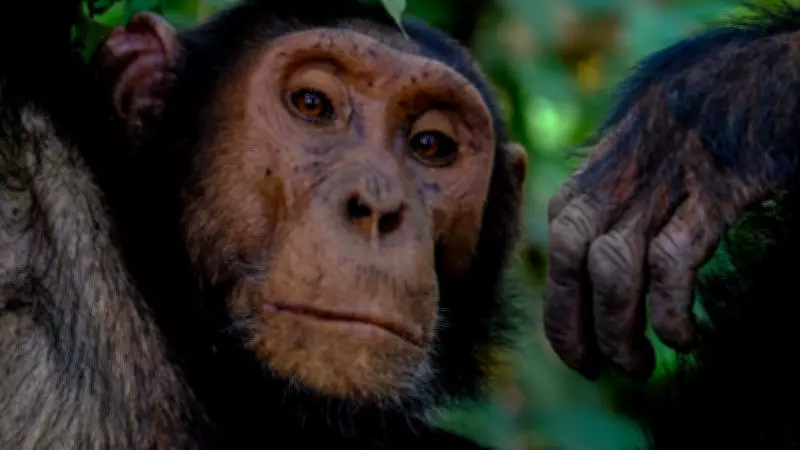
Chimpanzee Civil War in Uganda: A Mirror to Human Conflict
While war has long been considered an exclusively human concept, groundbreaking research conducted in Uganda's Kibale National Park under The Kibale Chimpanzee Project challenges this assumption. In the dense forests of this protected area, the largest recorded community of chimpanzees has fractured into two distinct groups, engaging in a brutal, years-long conflict that researchers have likened to human civil wars.
The Fracture of a Peaceful Society
The Ngogo chimpanzee community existed in remarkable harmony for nearly two decades, characterized by strong social bonds and cooperative relationships. This period of peace, however, dramatically unraveled between 2015 and 2018. A pivotal study titled 'Lethal conflict after group fission in wild chimpanzees' from the Department of Anthropology at the University of Texas identifies a critical catalyst: the deaths of older, influential males who served as essential 'social bridges' within the community.
Primatologist John Mitani observed, "They will do this even when those neighbors are former friends and allies," highlighting the profound transformation from peaceful coexistence to organized aggression. As leadership structures weakened and power dynamics shifted, the once-unified society splintered into two hostile factions.

Strategic Violence and Calculated Aggression
The ensuing conflict was not mere random brutality but exhibited characteristics of well-organized, premeditated violence. The smaller faction conducted targeted attacks, often focusing on isolated individuals. Over the course of the conflict, as many as 24 chimpanzees—including both adults and infants—were brutally killed.
These actions bore striking similarities to patterns observed in human warfare, including territorial incursions, coalition formation, and even infanticide. The violence appeared strategically designed to weaken opposing groups, echoing the famous Gombe Chimpanzee War documented by Jane Goodall, where former companions turned against each other.
Implications for Understanding Human Nature
This chimpanzee civil war offers profound insights into the evolutionary roots of conflict. Researchers note that chimpanzee wars typically emerge not from external threats but from internal stressors within communities—including social conflicts, hierarchical struggles, competition, and resource scarcity.
In the specific case of the Ngogo conflict, researcher Aaron Sandel emphasized that the departure of key individuals weakened social cohesion, making the community vulnerable to fracture. This challenges the notion of inherent human violence, suggesting instead that both cooperation and conflict have deep evolutionary foundations.
As chimpanzee habitats continue to shrink and environmental pressures mount, experts predict such intra-species conflicts will likely increase. This tragedy underscores the fragility of even highly organized societies, whether human or primate, and reminds us that the capacity for both harmony and violence is woven into our shared biological heritage.






