

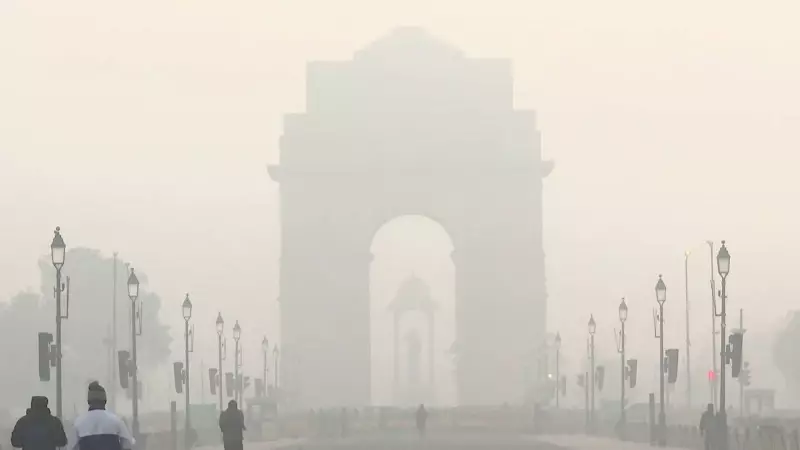
As a dense smog blanket continues to choke India's capital, prompting urgent government measures, an unexpected advisor has stepped forward with a proven blueprint for cleaner air. The Chinese embassy in India has detailed the multi-pronged strategy that transformed Beijing from one of the world's most polluted cities into a model of improvement, offering a potential roadmap for Delhi and the National Capital Region (NCR).
Beijing's Battle Plan: A Decade of Action
Yu Jing, the spokesperson for the Chinese embassy in India, emphasized the shared challenge of rapid urbanization and pollution. "Both China and India know the struggle with air pollution amid rapid urbanization," she stated on Wednesday, December 17. "While the challenge remains complex, China's sustained efforts over the past decade have delivered noticeable improvements."
The embassy outlined a comprehensive, step-by-step approach that moved beyond short-term fixes. The first major front was against vehicle emissions. Beijing implemented ultra-strict regulations equivalent to the Euro 6 standards (China 6NI) and systematically phased out old, high-emission vehicles. To directly curb the number of cars on the road, the city employed license-plate lotteries and strict odd-even driving rules. This was coupled with massive investments in public transport, building one of the world's largest metro and bus networks, and aggressively promoting a shift to electric mobility.

Industrial Overhaul and Regional Coordination
Perhaps the most impactful measures targeted heavy industry. China shut down or relocated over 3,000 heavy industrial plants from the Beijing area. A flagship example was the relocation of Shougang, one of the country's largest steelmakers, which alone led to a 20 per cent reduction in inhalable particulate matter. The vacated industrial sites were not merely abandoned; they were transformed into public parks, commercial zones, and cultural hubs. The former Shougang site, for instance, became a key venue for the 2022 Winter Olympics.
The strategy also involved a significant administrative and economic reshuffle labelled "relieving non-capital functions." Wholesale markets, logistics hubs, and some educational and medical institutions were moved out of the city center. This was part of a broader regional integration plan for the Beijing-Tianjin-Hebei area, where general manufacturing was shifted to neighbouring Hebei province, while Beijing retained high-value research, development, and service industries.
Delhi's Response: Work-From-Home and Stricter Checks
As the Chinese embassy shared these insights, Delhi's own government was announcing a fresh wave of emergency measures to combat the toxic air. Delhi's Environment Minister acknowledged the critically high pollution levels and warned that the coming days might not see much improvement compared to the previous year.
The Delhi government's new actions include:
- Implementing 50 per cent work-from-home for offices.
- Making Pollution Under Control (PUC) certificates mandatory for refuelling at petrol pumps.
- Banning the entry of trucks carrying non-essential construction materials into the capital.
- An appeal to visitors from outside Delhi to use vehicles compliant with the latest Bharat Stage 6 (BS6) emission norms.
The parallel narratives—one of a long-term, structural transformation from Beijing and the other of immediate crisis management from Delhi—highlight the scale and complexity of tackling urban air pollution. While the contexts differ, the core lessons on tackling industrial emissions, vehicle pollution, and regional planning offer a substantive case study for Indian policymakers as they seek sustainable solutions beyond the annual smog season.






