As the national capital grapples with a severe air pollution crisis, the Chinese Embassy in India has stepped forward to share insights from its own decade-long battle for cleaner air. The diplomatic mission initiated a social media series this week, detailing concrete measures that contributed to noticeable improvements in China's air quality.
Diplomatic Outreach Amid a Public Health Crisis
The initiative was announced on Monday by Yu Jing, the spokesperson for the Chinese Embassy in India. Acknowledging the shared struggle against air pollution during rapid urban development, Yu stated that China's sustained efforts over the past ten years have yielded significant results. The embassy promised to break down this complex challenge into a digestible, step-by-step series on the platform X (formerly Twitter).
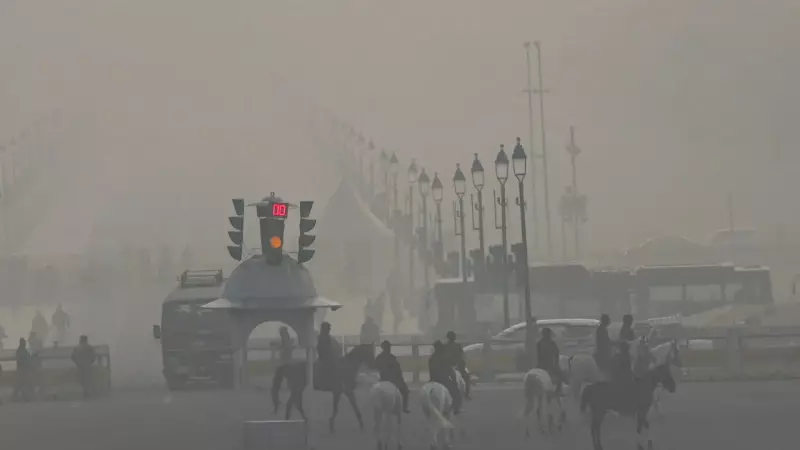
This exchange of experience comes at a critical time for Delhi. The city's air quality has plummeted to hazardous levels, compelling local authorities to enforce stringent pollution-control protocols. Data from the Central Pollution Control Board (CPCB) confirmed that several key areas, including Anand Vihar, Ghazipur, AIIMS, and India Gate, recorded air quality in the 'very poor' to 'severe' categories.

Step 1: A Multi-Pronged Attack on Vehicle Emissions
By Wednesday, the Chinese Embassy had detailed the first two pillars of its strategy. The initial focus was on tackling pollution from vehicles, a major contributor in urban areas.
The measures implemented were comprehensive and strict:
- Enforcement of ultra-strict vehicle emission standards, specifically the China 6NI norm, which is considered on par with the rigorous Euro 6 standards.
- A systematic phase-out of old, high-emission vehicles from the roads.
- Controlling the growth of private car ownership through mechanisms like license-plate lotteries and odd-even driving restrictions.
- Massive investment in public transit, resulting in one of the world's largest metro and bus networks.
- A strong push to accelerate the adoption of electric mobility.
- Regional coordination, particularly within the Beijing–Tianjin–Hebei zone, for synchronized emissions reduction efforts.
Step 2: Overhauling Industrial Landscape
The second step involved a fundamental restructuring of the industrial sector, which was a primary source of particulate matter.
This ambitious move included:
- Shutting down or relocating over 3,000 heavy industries. A landmark example was the relocation of Shougang, one of China's largest steelmakers, which alone led to a 20% reduction in inhalable particles.
- Transforming abandoned industrial sites into new public spaces. The former Shougang complex was repurposed as a venue for the 2022 Winter Olympics, becoming a park, commercial zone, and tech hub.
- Relieving urban congestion by moving non-essential functions like wholesale markets, logistics hubs, and some educational and medical institutions out of capital cities.
- Promoting regional integration by shifting general manufacturing to neighboring provinces like Hebei, while retaining high-value research, development, and service industries in Beijing.
The sharing of this blueprint represents a notable moment of cross-border dialogue on a critical environmental and public health issue. While the solutions are context-specific, the Chinese experience highlights the scale, coordination, and long-term commitment required to make a tangible impact on air quality. As Delhi implements its own emergency measures, these shared lessons offer a perspective on sustained, structural action beyond immediate crisis management.