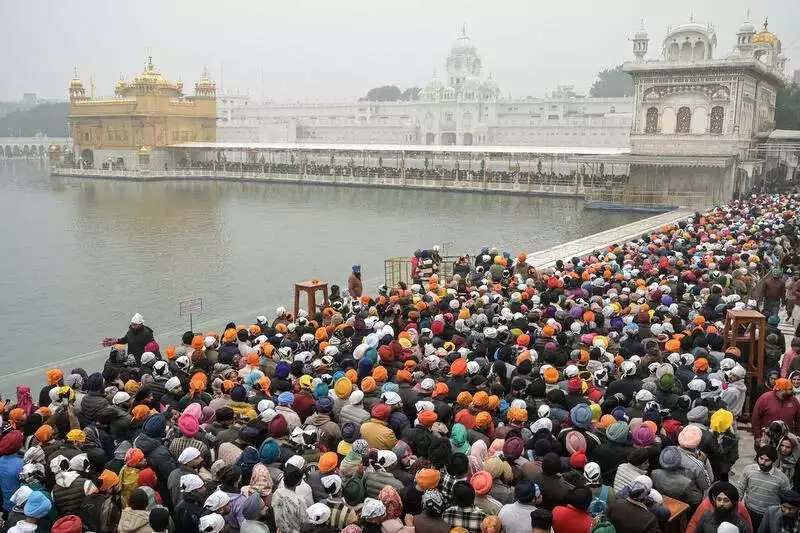
Residents of Punjab and Haryana were greeted with a surprisingly clear New Year's morning, as isolated light rainfall swept away the usual dense fog, offering normal visibility across both states. This marked a pleasant departure from the typical winter haze that blankets the region in early January.
Rainfall and Temperature Details
According to meteorological data recorded till 8:30 am on Thursday, Punjab received 0.6 mm of rainfall, which is considered normal for the day. Neighbouring Haryana recorded 0.5 mm of rain against a normal of 0.7 mm. Himachal Pradesh saw minimal precipitation, with only 0.1 mm of rain against a normal expectation of 2.3 mm.
While the morning was clear, cold day conditions persisted in isolated pockets over Himachal Pradesh, Punjab, Haryana, and the union territory of Chandigarh. The minimum temperatures ranged between 4°C and 12°C in several areas of Punjab and Haryana.

IMD Forecast: Fog Set to Make a Comeback
The clear skies are not expected to last. The India Meteorological Department (IMD) has issued a forecast predicting that dense to very dense fog conditions are very likely to return during night and morning hours at many places over Punjab and Haryana until January 6.
For Himachal Pradesh, the IMD predicts light isolated rainfall or snowfall on January 2, followed by dense fog conditions at isolated pockets from January 2 to 5.
State-Wise Temperature Trends
A notable rise in average minimum temperature was recorded on New Year's morning compared to Wednesday. In Punjab, the average minimum temperature rose by 1.8°C and was recorded as appreciably above normal by 5°C. Gurdaspur recorded the state's lowest minimum at 4.8°C, while Bathinda was the warmest at 12.3°C.
Haryana witnessed an even sharper rise, with the average minimum temperature increasing by 3.3°C from Wednesday, settling at 3.1°C above normal. Narnaul was the coldest recorded spot at 5.5°C, and Sirsa recorded the highest minimum temperature of 11.8°C.
The IMD has forecast no significant change in minimum temperatures over northwest India for the next 24 hours, followed by a fall of 2-3°C over the subsequent three days.