Climate Change Intensifies Coffee Production Challenges, Spiking Prices Globally
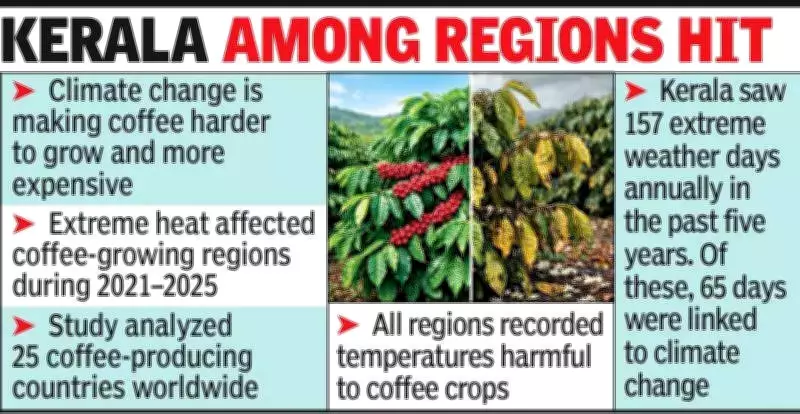
Climate change is significantly disrupting coffee production worldwide, leading to reduced harvests and higher consumer prices, according to a comprehensive analysis by Climate Central, a nonprofit organization specializing in climate science reporting. The study highlights how extreme weather patterns in key coffee-growing regions have directly contributed to recent price increases in the global market.
Extreme Heat Days Harm Coffee Crops Across 25 Countries
The research examined daily temperature data from 2021 to 2025 across 25 coffee-producing nations and their states. Findings indicate that all these regions experienced temperatures detrimental to coffee cultivation during this period. Specifically, temperatures exceeding 30°C (86°F) are extremely harmful for Arabica coffee plants and suboptimal for Robusta varieties, which together constitute the majority of the world's coffee supply.
Climate Central's analysis focused on how frequently climate change pushes temperatures past this critical threshold in the "bean belt" regions. The top five coffee-growing countries, responsible for 75% of global supply, faced an average of 57 additional days of coffee-harming heat annually due to climate change. This increased heat exposure during 2021-2025 has likely compromised both the quality and quantity of recent harvests, exacerbating supply chain pressures.

Kerala's Coffee Sector Grapples with Climate Impacts
In India, Kerala—the nation's second-largest coffee producer—has been notably affected. Data from the past five years shows that extreme weather events occurred on 157 days per year on average, adversely impacting coffee crops. Of these, 65 days were directly attributed to climate change, with temperatures surpassing the 30°C threshold and harming production.
Coffee plantations in Kerala are primarily located in Wayanad, Idukki, and Nelliyampathy, with Robusta being the dominant variety requiring temperatures between 20°C and 30°C. According to production estimates for 2025-26, Karnataka leads with approximately 280,275 metric tonnes (MT), followed by Kerala at 85,150 MT and Tamil Nadu at 20,315 MT.
Local Farmers Report Unpredictable Weather Patterns
C K Vishnudas, director of the Hume Centre for Ecology and Wildlife Biology in Wayanad, described the on-ground challenges: "In Wayanad, we observed coffee being affected by sudden rains and high temperatures. After the winter season, we would typically get one or two days of rainfall that trigger flowering. However, now there are periods of no rain for months, or immediate rainfall causing double flowering, which damages the coffee beans. These sudden rainfall events also promote excessive vegetation growth and increase pest populations."
This local testimony underscores how climate variability—ranging from unseasonal heat to erratic precipitation—is disrupting traditional farming cycles and exacerbating pest management issues, further straining coffee yields.
Broader Implications for Global Coffee Supply and Economy
The study underscores a growing concern for the global coffee industry, as climate-induced stressors threaten long-term sustainability. With coffee being a major agricultural commodity, price spikes driven by reduced supply could have widespread economic repercussions, affecting both producers in regions like Kerala and consumers worldwide.
As climate change continues to intensify, adaptive strategies in coffee cultivation—such as developing heat-resistant varieties or improving irrigation techniques—may become increasingly critical to mitigate these impacts and stabilize the market.