

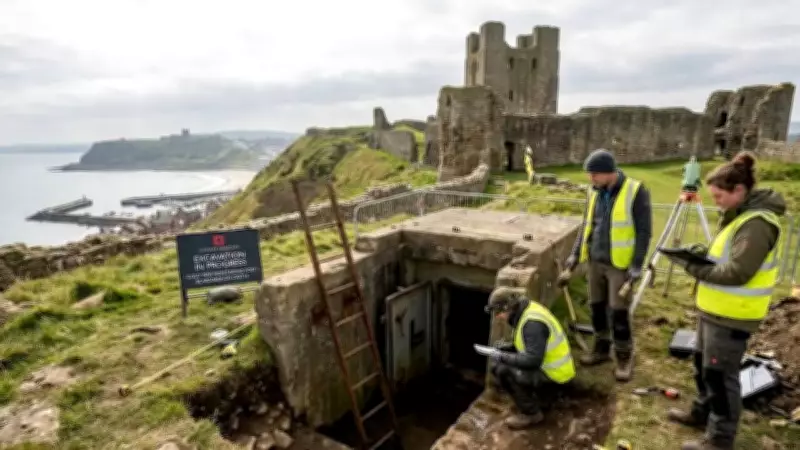
Cold War Nuclear Bunker Hidden for 50 Years Discovered Beneath Scarborough Castle
Archaeologists have made a remarkable discovery at the historic Scarborough Castle site, unearthing a Cold War nuclear bunker that had remained hidden from public view for nearly five decades. This significant find reveals a concrete military structure built in 1963 as part of the United Kingdom's nuclear defense preparations during one of the most intense periods of international conflict.
The Lost Bunker Revealed Through Modern Technology
The bunker was constructed as part of the Royal Observer Corps monitoring system, specifically designed to detect and report nuclear detonations across the United Kingdom. This particular installation was one of over 1,500 similar locations strategically positioned throughout the country during the Cold War era. Remarkably, the precise location of this bunker had been lost to history after it was officially sealed in 1968, following approximately five years of operational service.
Archaeological teams determined the bunker's location through an extensive examination of historical records combined with modern technological methods including ground penetrating radar. This multidisciplinary approach allowed researchers to pinpoint the exact position of the structure that had been forgotten for generations. The site is now available for public viewing, providing visitors with a unique perspective on how the United Kingdom prepared for potential nuclear attacks during the height of Cold War tensions.

Design and Purpose of the Nuclear Monitoring Station
According to English Heritage, the bunker was specifically designed to accommodate three Royal Observer Corps volunteers who were tasked with critical nuclear monitoring duties. Their responsibilities included detecting nuclear detonations and tracking radioactive fallout patterns, with particular attention to potential detonations occurring over the North Sea region.
The strategic location was chosen due to concerns about tidal surges that could result from nuclear explosions in nearby waters, making Scarborough's coastal position particularly significant for national defense monitoring. The structure itself is a substantial concrete building constructed primarily from reinforced bricks, engineered to withstand the effects of a nuclear blast despite its relatively modest size.
Interestingly, while built for durability against nuclear impacts, the bunker lacked basic amenities including any form of heating system, highlighting the austere conditions faced by volunteers who served at this remote monitoring post.
Scarborough's Enduring Military Significance Through History
The discovery of this Cold War-era structure continues Scarborough Castle's long tradition as a strategic military location spanning thousands of years. The castle's elevated position has served as a significant lookout point since prehistoric times, with evidence of Bronze Age settlements utilizing the high ground for defensive purposes.
- Roman forces established signal stations at this location to communicate with nearby settlements
- Medieval fortifications further developed the site's defensive capabilities
- The twentieth century saw continued military use with the 1963 bunker installation
This continuity demonstrates how Scarborough's geographical advantages have been recognized and utilized for national defense across multiple historical eras, culminating in the Cold War nuclear monitoring installation.
Preservation and Current Condition of the Historic Site
Despite being flooded nearly to ceiling level, the variable water levels within the bunker have paradoxically helped preserve many internal structures in remarkably good condition. English Heritage reports that wooden elements including doors have remained solid and well-preserved, with some surfaces appearing to retain what looks like a fresh coat of paint despite decades of submersion.
This unexpected preservation offers researchers valuable insights into the original construction and condition of Cold War-era monitoring facilities, providing a tangible connection to this pivotal period in twentieth-century history.

The Royal Observer Corps: From Aircraft Spotting to Nuclear Surveillance
The Royal Observer Corps represents a fascinating evolution in British civilian defense organizations. Originally formed to spot aircraft during both World Wars, the organization dramatically adapted its mission to address nuclear threats throughout the Cold War period.
- Volunteers at the Scarborough site operated as part of the UK Warning and Monitoring Organisation
- They utilized specialized instruments to plot ground zero locations of nuclear detonations
- Teams were trained to determine radiation levels and track fallout patterns
The discovery of this Scarborough bunker forms part of a larger project celebrating the Royal Observer Corps centenary, aiming to highlight aspects of national service that have received limited recognition despite the significant contributions and sacrifices made by corps members throughout their history.
This archaeological find not only uncovers a hidden chapter of Cold War history but also honors the volunteers who served in these remote monitoring stations, prepared to document nuclear events that fortunately never occurred during their watch.





