

Las Gaviotas: Colombia's Sustainable Village Proves Harsh Lands Can Thrive
In the 1960s, visionary Paolo Lugari embarked on an ambitious mission to demonstrate that if a sustainable civilization could survive in the harshest conditions, it could thrive anywhere on Earth. Lugari selected the Llanos region of Colombia, a vast area renowned as one of the planet's most challenging environments, to establish an experimental village. With the assistance of a dedicated scientific team, Las Gaviotas was founded in 1971, marking the beginning of a remarkable transformation.
Transforming Uninhabitable Land into Abundant Ecosystem
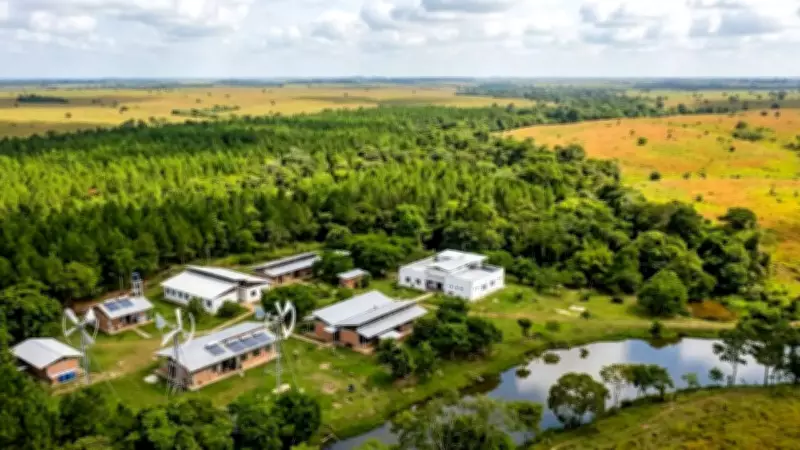
Through the relentless efforts of Las Gaviotas' founders and their team of scientists, the previously uninhabited area spanning nearly 20,000 acres was completely transformed into an abundant, self-sufficient tropical ecosystem. Today, trees and plants flourish without any reliance on chemical fertilizers or artificial pest control products. Remarkably, Las Gaviotas has developed more than 30 percent of their original land into a thriving tropical rainforest, proving through human ingenuity that the vegetated skin of our planet can indeed be restored even in the most adverse conditions.
Bioclimatic Urbanism and Community Governance
The radical concept that tropical countries can develop their own specific technologies rather than purchasing from northern developed nations forms the foundational philosophy of this groundbreaking project. According to the influential paper 'Sustainability in the Tropics,' this innovative thinking led to the development of 'bioclimatic urbanism,' where every structure is constructed in a manner perfectly suited to the unique weather conditions of the Llanos region.

One outstanding example is the community-based health center featuring subsurface air duct systems and double-wall facades that utilize the Venturi effect to enable natural ventilation and cooling. This ingenious design completely eliminates the need for conventional air conditioning systems that consume significant electricity and depend on external infrastructure.
The same approach to self-governance is evident through the village's distinctive 'all-archy' social structure, where decisions are made through genuine community consensus rather than traditional hierarchical or top-down methods. This democratic approach ensures that every resident has a voice in shaping their sustainable future.
How Las Gaviotas Increased Regional Rainfall by 10 Percent
According to environmental assessments, Las Gaviotas holds tremendous ecological importance for having planted more than 8,000 hectares of forest in an area previously considered too acidic for any substantial growth. The Gaviotans achieved this breakthrough by inserting a specifically chosen fungus called Pizolithus tinctorius into the roots of Caribbean pine trees, enabling these trees to extract nutrients from otherwise lifeless soil.
This artificial forest created a protective canopy for the ungerminated seeds of over 250 species of native tropical plants, allowing these seeds to become re-established throughout the region. The tremendous return of biodiversity has fundamentally altered the environmental conditions of the area, resulting in regional rainfall increasing by an impressive 10 percent. Beyond the increased precipitation, numerous animal species including tapirs and deer that had completely disappeared from this environment have made a remarkable return.
Sustaining Independence Through Innovation
The village has maintained its independence despite its isolated location by creating numerous low-cost, high-efficiency devices and generously making their designs available as open-source blueprints to the developing world. Notable engineering achievements documented in The Ecologist include:

- Double-action windmills capable of harnessing not only moderate winds but also very light breezes common in tropical environments
- Special sleeve pumps enabling a single person to lift water from depths of 40 meters with minimal physical exertion
- Solar-powered kettles for water sterilization
- A biodiesel plant producing fuel for the village's large machinery from locally grown palm oil
The implementation of these innovative technologies has allowed Las Gaviotas to remain both economically sustainable and environmentally neutral, demonstrating conclusively that a high standard of living can be achieved without destroying precious natural resources.
Las Gaviotas stands as a living testament to human creativity and environmental stewardship, offering valuable lessons for sustainable development worldwide.





