

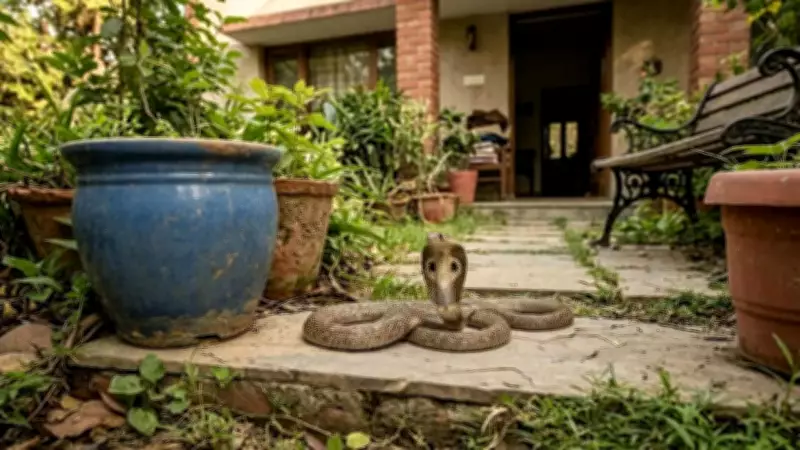
Understanding Common Snakes in Gardens and Homes: A Safety Guide
Encountering a snake in your home or garden can be a startling experience, often causing a moment of frozen panic. However, it is crucial to recognize that most snakes are not seeking confrontation. Typically, they have wandered into human spaces while chasing prey like mice or searching for a cool, shaded spot to rest, such as under a flower pot. As urban and suburban areas expand, we increasingly encroach on their natural habitats, leading to more frequent interactions. In most cases, the snake is just as frightened as you are, but due to the potential danger posed by some species, knowing how to identify and respond to different snakes is essential for safety. Familiarizing yourself with the snakes common in your region can help you stay calm and manage the situation effectively.
Snakes That Enter Homes and Gardens
Branded Grass Snake (Natrix helvetica)
Branded Grass Snakes are widespread in the wild and commonly found in gardens across Europe and the UK. According to The Wildlife Trusts, they are identifiable by a distinctive yellow and black collar behind their head. These snakes often use garden compost heaps as incubators for their eggs, taking advantage of the warmth generated from decomposing organic matter. If startled or cornered, they may hiss or play dead but pose no threat to humans or pets.

- Behaviour: Non-aggressive; may hiss or play dead when threatened.
- Habitat: Gardens with ponds or compost heaps.
Smooth Snake (Coronella austriaca)
Smooth Snakes are rare, non-venomous constrictors that can be mistaken for adders. They prefer sandy soil and are often found on heathland edges in garden settings. Unlike many snakes, they give birth to live young rather than laying eggs. As per The Wildlife Trusts, they are very secretive, spending most of their time hidden under flat rocks or logs, and primarily feed on lizards.
- Habitat: Sandy soil or heathland edges in gardens.
- Behaviour: Secretive; hides under cover like rocks or logs.
- Diet: Mainly lizards.
Adder (Vipera berus)
Adders are the only venomous snake native to the UK. Recognizable by dark zig-zag markings on their back and vertical pupils, as noted by Forestry Journal, they primarily inhabit open heathland but may venture into gardens bordering wild areas for thermoregulation. Adders are not aggressive and will only bite if attacked or stepped on. However, their venom is medically serious and requires immediate medical attention, especially for children or pets.
- Behaviour: Non-aggressive; bites only in self-defense.
- Habitat: Gardens near wild areas for temperature regulation.
- Risk factor: Venomous; urgent medical care needed if bitten.
Banded Krait (Bungarus fasciatus)
Banded Kraits are easily identified by their striking black and yellow striped bands and triangular body cross-section. According to iNaturalist, they are shy, nocturnal snakes that hunt other snakes, including venomous species, and may use gardens or farmsteads in South Asia as hunting grounds. Although they possess strong neurotoxic venom, they rarely bite during daylight hours.
- Behaviour: Shy and nocturnal; preys on other snakes.
- Habitat: Gardens or farmsteads in South Asia.
- Risk factor: Neurotoxic venom, but low daytime bite risk.
Saw-Scaled Viper (Echis carinatus)
The Saw-Scaled Viper, part of the 'Big Four' venomous snakes in India, is responsible for more snakebite deaths worldwide than any other species, as per iNaturalist. It inhabits dry, rocky areas such as gardens and agricultural fields. Known for stridulation—a sizzling sound made by rubbing scales together—its hemotoxic venom can cause severe internal bleeding and tissue damage.
- Behaviour: Produces stridulation sounds as a warning.
- Habitat: Dry, rocky gardens and agricultural fields.
- Risk factor: Hemotoxic venom leading to bleeding and tissue damage.
Russell’s Viper (Daboia russelii)

Another member of the 'Big Four', Russell’s Viper is characterized by three rows of dark, round patches on its brown body. iNaturalist describes it as very defensive, emitting loud hissing noises to warn threats in gardens or grasslands. While slow-moving, it can be aggressive when provoked and has potent venom.
- Appearance: Brown with oval spots.
- Behaviour: Defensive with loud hissing; aggressive if provoked.
- Habitat: Grasslands, farmlands, and occasionally gardens.
- Risk factor: Potent venom and distinctive warning hiss.
Indian Rat Snake (Ptyas mucosa)
The Indian Rat Snake is a fast-moving, non-venomous species commonly found in suburban areas. A study in Scientific Reports notes its adaptability to urban environments, where it hunts rodents on rooftops and in drains, providing natural pest control. With a long, slender body up to 2–3 meters in length, it is an excellent climber.
- Appearance: Slender, yellowish or brown body.
- Length: Up to 2–3 meters.
- Behaviour: Fast-moving and skilled climber.
- Habitat: Fields, gardens, rooftops, and drains.
- Why it enters homes: Seeks rodents in human settlements.
Spectacled Cobra (Naja naja)
The Spectacled Cobra, a medically significant species, is distinguished by its expandable hood marked with a dark, spectacle-shaped pattern. Observations on iNaturalist indicate its presence in domestic woodpiles and gardens, where it forages for rodents. It exhibits defensive behavior, raising its body and hooding when threatened.
- Appearance: Hood with spectacle pattern; colors range from tan to black.
- Length: Typically 1 to 1.5 meters.
- Behaviour: Defensive; hoods and raises body as a warning.
- Habitat: Termite mounds, dense gardens, and old buildings.
- Why it enters homes: Follows rodent scents into dark, quiet corners.
About the Author
TOI Lifestyle Desk
The TOI Lifestyle Desk is a dynamic team of dedicated journalists committed to curating vibrant lifestyle news for The Times of India readers. With unwavering passion, they delve beyond the obvious to provide daily inspiration and information on topics such as fashion, travel, food, and wellness, serving as a comprehensive lifestyle companion.





