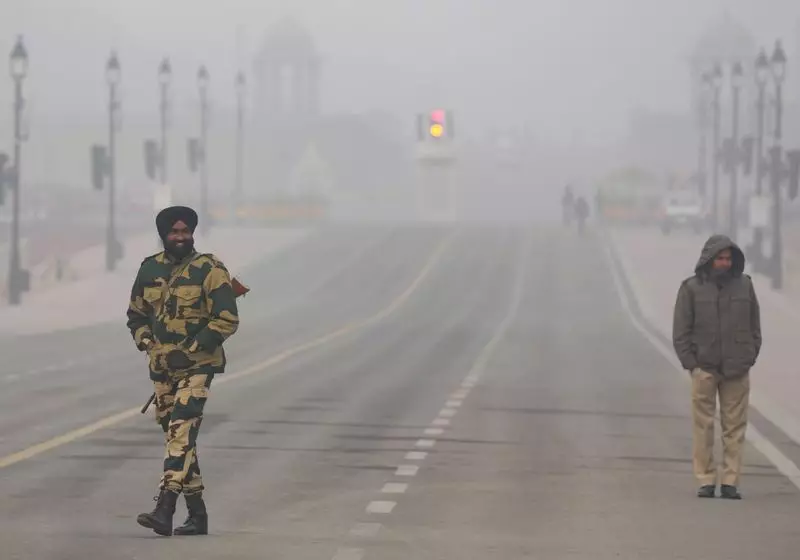
Residents of the national capital woke up to another day of compromised air quality and reduced visibility as Delhi's Air Quality Index (AQI) remained firmly in the 'Poor' category on Monday morning. The city also experienced shallow fog, adding to the chilly winter conditions.
Morning Conditions and Air Quality Status
According to data from the System of Air Quality and Weather Forecasting and Research (SAFAR), the overall AQI for Delhi was recorded at 256 in the morning hours, which falls under the 'Poor' classification. This indicates that the air quality was unhealthy for sensitive groups and could cause breathing discomfort for people with lung or heart diseases.
The weather department reported the observation of shallow fog across the city. The minimum temperature settled at 7.2 degrees Celsius, which is one degree below the season's average, contributing to the crisp and foggy morning atmosphere.

Forecast for the Coming Days
The India Meteorological Department (IMD) has provided a forecast suggesting that similar conditions may persist. The weather agency has predicted mainly clear skies for the day. However, they have also indicated the likelihood of shallow to moderate fog in the morning hours on Tuesday.
Regarding temperatures, the maximum temperature is expected to hover around 24 degrees Celsius. The minimum temperature is likely to remain in the range of 6 to 8 degrees Celsius over the next few days, maintaining the winter chill.
Understanding the AQI Scale and Health Implications
The 'Poor' AQI category, where Delhi's air currently resides, carries specific health advisories. An AQI between 201 and 300 is considered 'Poor'. The potential health impacts include:
- Breathing discomfort for most people on prolonged exposure.
- Increased aggravation of heart and lung diseases among individuals with existing conditions.
- Greater risk of respiratory effects for the general population.
Authorities and health experts often advise sensitive groups, including children, the elderly, and those with pre-existing respiratory or cardiovascular issues, to limit prolonged or heavy outdoor exertion when the AQI is in this range. It is also recommended to keep necessary medication handy and consult a doctor if symptoms like chest tightness, shortness of breath, or severe coughing occur.
The combination of poor air quality and foggy conditions underscores the ongoing environmental challenges faced by Delhi during the winter months, where factors like low wind speed, dropping temperatures, and local pollution sources often converge to degrade air quality.