

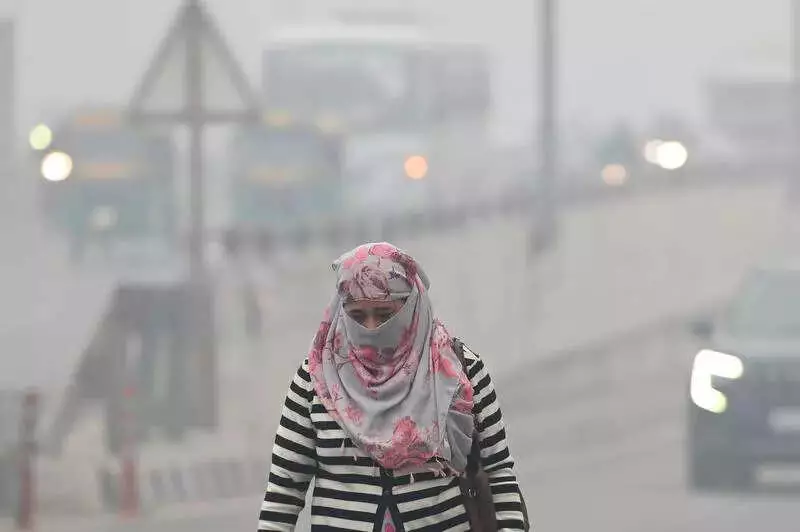
New Delhi witnessed one of its most toxic Novembers in recent memory, with the entire Delhi-National Capital Region (NCR) dominating a grim national list. According to a new analysis, all ten of India's most polluted cities in November 2023 were located within the NCR, painting a stark picture of the region's interconnected air quality crisis.
NCR Cities Dominate National Pollution Charts
The Centre for Research on Energy and Clean Air (CREA) revealed that Ghaziabad in Uttar Pradesh was the most polluted city in the country last month. It recorded a staggering monthly average PM2.5 concentration of 224 micrograms per cubic metre (µg/m³). This level is more than three times the national safe limit. The city endured 19 'very poor' air days and 10 'severe' air days, with not a single day meeting the National Ambient Air Quality Standards (NAAQS).
The national capital, Delhi, ranked fourth nationally. Its air quality saw a dramatic deterioration from October. The monthly average PM2.5 level in November was 215 µg/m³, which is double the October concentration of 107 µg/m³. Delhi's residents breathed through 23 'very poor' days and six 'severe' days, highlighting the intensity of the winter smog cycle.

A Regional Crisis with Local Sources
The list of the top ten most polluted cities included Noida, Greater Noida, Bahadurgarh, Hapur, Baghpat, Sonipat, Meerut, and Rohtak, firmly establishing the NCR as India's most polluted cluster. Uttar Pradesh accounted for six of these cities, followed by Haryana with three and Delhi. Barring Bahadurgarh, none of the top 10 cities recorded a single day of clean air in November.
Manoj Kumar, an analyst at CREA, pointed to a critical finding. "Despite a significant reduction in stubble-burning influence, 20 out of 29 NCR cities recorded higher pollution levels than the previous year, and many still did not register a single day within NAAQS limits," he said. "This clearly indicates that the dominant drivers are year-round sources such as transport, industry, power plants and other combustion sources. Without sector-specific emission cuts, cities will continue to breach standards."
Stubble Burning Role Diminishes, Local Emissions Take Centre Stage
In a significant shift, the contribution of stubble burning to Delhi's pollution was notably lower this November. On average, it accounted for only 7% of the capital's PM2.5 pollution, a sharp drop from 20% in November 2022. The peak contribution also fell from 38% to 22%.
This data underscores a pivotal change in the pollution narrative. It strongly suggests that local, perennial sources like vehicular emissions, industrial output, and power generation have become the primary drivers of the deadly winter smog in Delhi-NCR. The pollution in the NCR is deeply interconnected, with emissions from one city adversely affecting air quality across the entire region.
The CREA report serves as a urgent reminder that while seasonal factors like farm fires draw attention, the battle for clean air in North India requires a relentless, year-round focus on curbing emissions from transportation, industry, and energy sectors.






