

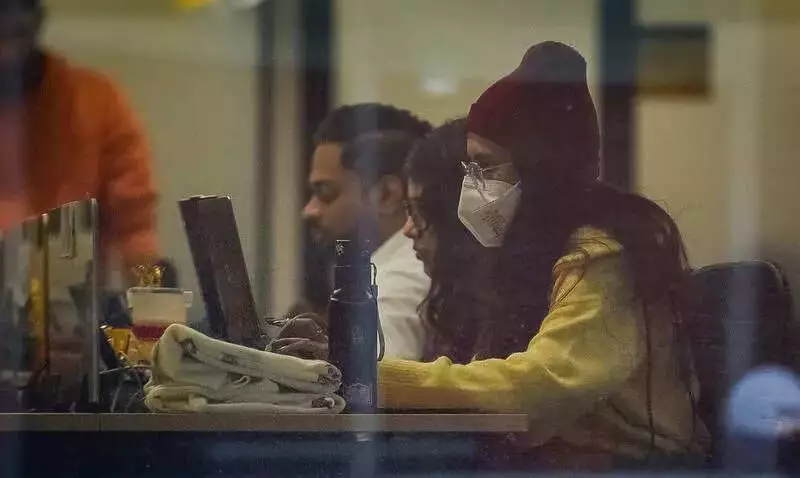
A fresh analysis of early winter air quality patterns in Delhi and the National Capital Region (NCR) has delivered a stark finding: the daily spikes in deadly particulate matter are being directly reinforced by pollutants spewed from the city's massive vehicle fleet. The study, conducted by the Centre for Science and Environment (CSE), shows a synchronized rise and fall of fine particles and toxic gases during peak traffic hours, painting a clear picture of a pollution crisis fueled locally.
The Synchronised Surge of Pollutants
The CSE analysis tracked pollution trends from October 1, focusing on the morning (7-10 am) and evening (6-9 pm) rush hours. It found that levels of PM2.5 (fine particulate matter) and nitrogen dioxide (NO2) rose and fell almost in tandem. This lockstep pattern occurs as traffic emissions surge and then get trapped near the ground by the shallow winter boundary layer, a meteorological condition that prevents pollutants from dispersing.
Another vehicle-emitted poison, carbon monoxide (CO), showed even sharper, immediate peaks corresponding directly to vehicular plumes, while PM2.5 displayed broader peaks as the fine particles linger and accumulate more slowly. The data on carbon monoxide, a highly toxic gas that impairs blood's oxygen-carrying capacity, was particularly alarming. Nearly 22 monitoring stations in Delhi recorded CO levels above the 8-hour standard on more than 30 out of 59 days since October began.

Dwarka Sector 8 emerged as the worst-hit location, with exceedances on 55 days, followed closely by Jahangirpuri and Delhi University's North Campus, each with 50 days of high CO levels. "This synchronised pattern clearly demonstrates that the daily particulate pollution spikes are closely reinforced by traffic-related emissions of both nitrogen dioxide and carbon monoxide, especially under low-dispersion winter conditions," the report states.
A Toxic Cocktail and a Policy Mismatch
Anumita Roychowdhury, executive director of research and advocacy at CSE, highlighted the increased toxicity of this pollutant mix. "This cocktail of pollutants also makes the air more toxic to breathe. Yet, every winter, anti-pollution efforts are dominated by dust-control measures with feeble action against polluting vehicles and industry as well as burning of waste and solid fuel," she said.
The organization emphasized that with the contribution of farm fires to Delhi's pollution decreasing this season, the role of local urban sources—primarily vehicles, industry, and waste burning—has become even more pronounced. While peak pollution levels in early winter were lower compared to the previous year due to fewer farm fires, the average winter trends have stubbornly remained the same.
The report notes a worrying long-term plateau. "Since 2022, the annual trend in PM2.5 levels plateaued and even took an upward turn, showing plateauing of pollution at an elevated level," CSE said. After a steady decline between 2018 and 2020, PM2.5 concentrations have remained "largely elevated and stable with slight variations" from 2021-22 onwards, indicating that Delhi continues to breathe extremely polluted air year-round without a sustained downward trend.
NCR Towns Suffer, CSE Prescribes a Clean-Up Roadmap
The pollution burden is not Delhi's alone. The analysis found that several NCR cities remained just as polluted, and often worse. During a region-wide smog episode, Bahadurgarh endured the most persistent conditions, with foul air lasting a full 10 days from November 9 to 18. "Smaller towns in the region display more intense and longer smog build-up. Even though peak pollution spikes are lower this winter due to lesser contribution of farm fires, the airshed is getting increasingly more saturated," explained Sharanjeet Kaur, deputy programme manager at CSE's urban lab, clean air unit.
To combat the entrenched crisis, the CSE report lays out a comprehensive set of recommendations:

- Meeting electrification targets for all vehicle segments in a strict, time-bound manner and accelerating the replacement of older, polluting vehicles.
- Upscaling integrated public transport networks with reliable last-mile connectivity and safe infrastructure for walking and cycling.
- Restraining the use of personal vehicles through mechanisms like parking caps and congestion pricing.
- Encouraging industries to switch to affordable cleaner fuels and closing the waste loop to stop open burning.
- Ensuring households have access to clean fuels and promoting the decomposition or ploughing back of paddy straw to enhance soil carbon.
The study underscores that without a decisive shift in focus towards tackling vehicular and industrial emissions, Delhi-NCR's winter air will remain a severe public health threat, brewed locally and trapped by the season's cold embrace.





