

Delhi Government Announces Four-Year Action Plan to Tackle Air Pollution
Chief Minister Rekha Gupta has outlined an ambitious strategy to improve Delhi's air quality over the next four years. The government aims to significantly reduce PM2.5 levels in the capital through a multi-pronged approach.
Expanding Public Transport and Promoting Electric Vehicles
The Delhi government plans a massive expansion of the city's bus fleet. Officials revealed specific targets for increasing the number of buses on Delhi's roads.
- The fleet will grow to 6,000 buses by the end of this year
- It will reach 7,500 buses by December 2027
- The target is 10,400 buses by March 2028
- Finally, 14,000 buses will operate by March 2029
Of these 14,000 buses, 500 will be smaller 7-meter-long vehicles. These smaller buses will strengthen last-mile connectivity across Delhi neighborhoods.

The government is also developing EV Policy 2.0. This new policy will provide subsidies to encourage residents to switch to electric vehicles. The incentives aim to accelerate adoption of cleaner transportation options.
Major Road Redevelopment and Dust Control Measures
Road infrastructure receives significant attention in the pollution control plan. Approximately 3,300 kilometers of roads require reconstruction or upgrading throughout Delhi.
- 800 kilometers of roads fall under the Public Works Department
- 1,200 kilometers come under Municipal Corporation of Delhi jurisdiction
- 1,000 kilometers are in unauthorized colonies
The redevelopment plan includes complete paving of road shoulders and central verges. Landscaping will accompany these improvements. To prevent repeated road cutting, the government will install underground utility ducts.
Officials stated that tenders for these projects will be issued within two months. They aim to complete the work within one year of awarding contracts.
For dust control, the government will deploy mechanical road sweeping machines. Water sprinklers and mist sprays will also help manage particulate matter from roads.
Enhanced Traffic Management and Parking Solutions
Traffic management receives a boost with 1,200 additional personnel. These staff members from Delhi Transport Corporation will assist Delhi Traffic Police in managing vehicle flow.
A smart parking management system becomes a key component of the pollution strategy. This system will help manage Delhi's rising number of vehicles more efficiently.
The government plans large-scale expansion of parking infrastructure across the city. Officials mentioned that smart pricing mechanisms will be introduced as part of this parking management approach.
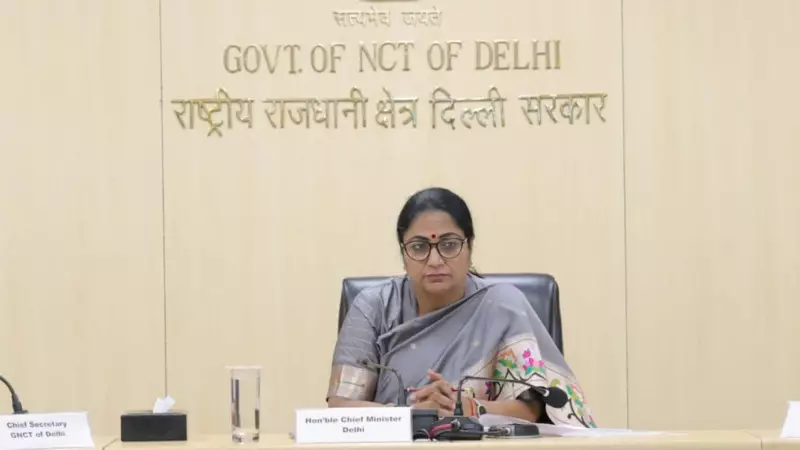
Chief Minister Gupta made these announcements after chairing a high-level review meeting at the Delhi Secretariat. The meeting focused specifically on air pollution control measures. The Chief Minister's Office issued a detailed statement outlining these comprehensive plans.
Gupta emphasized that the Delhi government is working continuously to ensure PM2.5 reduction targets are met within the four-year timeframe. The combination of public transport expansion, electric vehicle promotion, road improvements, and traffic management represents a holistic approach to Delhi's persistent air quality challenges.






