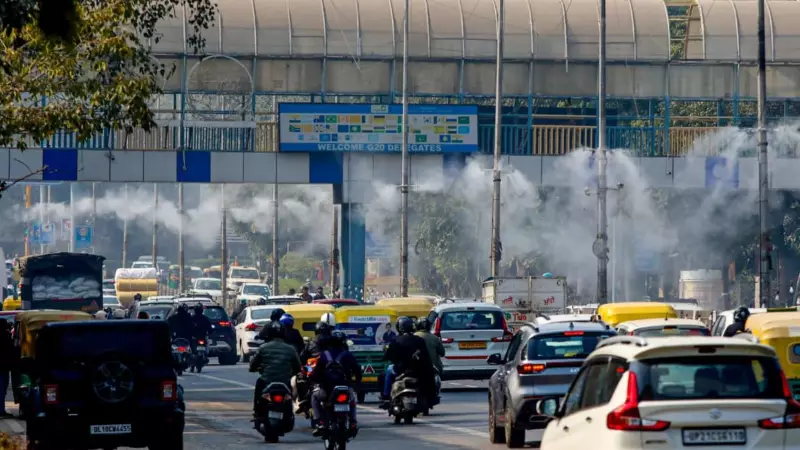
Each winter, as a thick white haze descends and residents pull out their mufflers, Delhi's air pollution is treated as a seasonal emergency. The standard response involves temporary measures like the odd-even vehicle scheme, shutting schools, and halting construction. However, the quality of the air Delhiites breathe is determined far more by daily transportation habits and the infrastructure that enables them than by these reactive steps.
Beyond Stop-Gap Measures: A Structural Shift in Mobility
The way people navigate the city—by car, bus, metro, two-wheeler, or on foot—is often less a matter of personal preference and more a result of structural constraints. This is why the Delhi government's recently announced plans to augment the bus fleet, redesign routes, and boost funding for regional rail and metro expansion warrant close scrutiny. Transport remains a primary contributor to Delhi's toxic air, and it is also a sector where policy can drive tangible, long-term improvement.
The proposed initiatives, which include introducing electric buses and better synergy with the Metro network, are not merely technical upgrades. They represent profound social interventions. These policies influence who can move through the city with ease, who disproportionately suffers from pollution, and whose daily life is limited by long, arduous commutes.

The Metro's Legacy and the Critical Role of Buses
In her book Metronama: Scenes from the Delhi Metro, author and professor Rashmi Sadana documents over 12 years of riding and researching the system. She observed the Metro's transformation from mere infrastructure into a social space that fostered a new commuting culture. It reshaped the urban geography, making distances feel shorter and creating a standardized travel experience from the city centre to its outskirts.
The Metro empowered a Badarpur college student to envision opportunities beyond her locality, enabled an East Delhi barber to commute to work with dignity, and allowed countless women to claim public space in a city that often restricts their mobility. Yet, the Metro cannot single-handedly support the city's entire mobility demand or absorb its pollution burden.
Buses continue to carry far more people on shorter, more varied routes. When bus services fail—due to overcrowding, unreliable schedules, or simple absence—commuters are forced to opt for two-wheelers, autos, and app-based cabs. This shift exacerbates traffic congestion and emissions. Therefore, renewed focus and investment in the Delhi Transport Corporation (DTC) bus system is crucial.
Integration is Key: From Fractured Transit to a Seamless Network
While electric buses are praised for cutting carbon emissions, their social impact is equally significant. Clean, frequent, and punctual buses can make public transport an attractive choice rather than a last resort. A modern bus system signals that public transit is a valuable civic asset, not a residual service for those who cannot afford private vehicles.
The true solution lies in integration. If the government is committed to its investment, it must create a cohesive system where metros, buses, and last-mile connectivity work in concert. Presently, many metro stations exist in isolation, poorly connected to bus stops, footpaths, or feeder services. It is at this fractured interface, or "seam," between modes that countless commuters abandon public transport for private cars or bikes.
Public perception shapes behavior; once a system is known to be inefficient, routines solidify around private transport. Meanwhile, harmful particulate matter accumulates not just from long vehicle journeys but also from these disjointed, multi-stage commutes.
There is a broader political dimension at play. Delhi's development has historically prioritized roads, flyovers, and car-centric visions of progress. This road infrastructure benefits a minority while polluting the air for the majority, especially those living near major roads or working outdoors. The pollution crisis starkly reveals how health outcomes are intertwined with class, caste, and locality.

Where private cars emit pollutants and consume disproportionate space, robust public transport redistributes urban benefits by sharing space and offering an affordable alternative. It converts transport mobility into social mobility, making the city more accessible to all.
If Delhi is earnest about tackling its air pollution, it must reimagine public transport as the fundamental backbone of urban life, not a supplementary option. This requires sustained budgetary commitment beyond pilot projects, fare policies that ensure affordability, and a cultural shift away from equating personal freedom with car ownership. It also means avoiding the trap of viewing electrification as a magic bullet; electric buses stuck in traffic still waste time and energy.
The air pollution emergency demands multi-pronged, structural solutions, not wishful thinking. Cleaner air will not emerge from asking people to stay indoors for a week. It will come from building a system that makes it easier, safer, and more desirable for millions of residents to move together every single day. Delhi already possesses the foundations of such a sustainable mobility network. The imperative now is to make it seamless, equitable, and central to the city's future vision.