

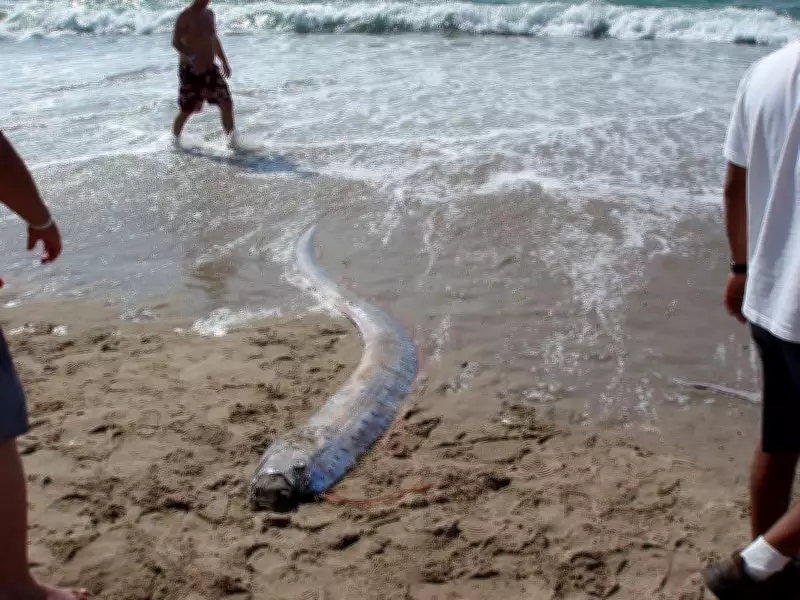
Rare Oarfish Sighting Near Mexico Beach Ignites Viral Debate on Doomsday Myths
A recent and unusual event has captured global attention after a rare oarfish, often dubbed the "doomsday fish," was spotted near a beach in Mexico. This sighting has rapidly gone viral on social media platforms, sparking intense discussions about whether the creature is a mythical harbinger of disaster or merely a natural occurrence with scientific explanations.
What Is the Doomsday Fish and Why Is It Feared?
The oarfish, a deep-sea dweller known for its elongated, serpent-like body, has long been shrouded in folklore and superstition. In many cultures, particularly in Japanese and other Asian traditions, it is believed that the appearance of an oarfish near shorelines signals impending natural disasters such as earthquakes or tsunamis. This association has earned it the ominous nickname "doomsday fish" or "earthquake fish," fueling fears and speculation whenever one is sighted in shallow waters.
The recent sighting in Mexico involved a live oarfish found close to a popular beach, an event that is exceptionally rare due to the species' typical habitat in deep ocean depths. Videos and photos of the fish quickly spread online, with users sharing theories and expressing concern over potential calamities. The viral nature of this event highlights how ancient myths can resurface in the digital age, blending with modern anxieties about environmental changes and natural hazards.

Scientific Perspectives on the Oarfish Sighting
While the myth persists, scientists and marine biologists offer a more grounded explanation for such sightings. Oarfish are known to inhabit depths of up to 1,000 meters, and their appearance near coasts is often linked to natural phenomena rather than supernatural omens. Experts suggest that factors like ocean currents, temperature changes, or illness in the fish could drive them closer to shore. There is no conclusive scientific evidence linking oarfish sightings to earthquakes, with many researchers emphasizing that correlation does not imply causation.
This incident underscores the importance of distinguishing between folklore and factual analysis. Marine biologists note that while oarfish are fascinating and poorly understood due to their elusive nature, their occasional beachings are more likely a result of environmental stressors than prophetic warnings. Public interest in such events can also raise awareness about marine conservation and the impacts of climate change on ocean ecosystems.
Global Reactions and Cultural Impact
The viral spread of the Mexico oarfish sighting has elicited a wide range of reactions worldwide. On social media, users have shared memes, expressed fears, and debated the validity of the doomsday myth. This highlights how cultural narratives can transcend borders in today's interconnected world, with people from different regions interpreting the event through their own lenses of belief and skepticism.
In Mexico, local authorities and environmental groups have used the opportunity to educate the public about marine life and dispel myths. They emphasize that while the sighting is rare and noteworthy, it should not incite panic. Instead, it serves as a reminder of the ocean's mysteries and the need for scientific inquiry to understand them better.
Key takeaways from this event include:
- The oarfish is a deep-sea species rarely seen near beaches, making such sightings highly unusual.
- Historical myths label it a doomsday omen, but science attributes its appearances to natural causes.
- Viral social media posts amplify both fear and curiosity, blending ancient lore with modern discourse.
- This incident encourages public engagement with marine science and myth-busting efforts.
As the debate continues, the Mexico oarfish sighting remains a compelling example of how nature can spark global conversations, bridging gaps between myth and reality in an era dominated by digital sharing and instant communication.






