

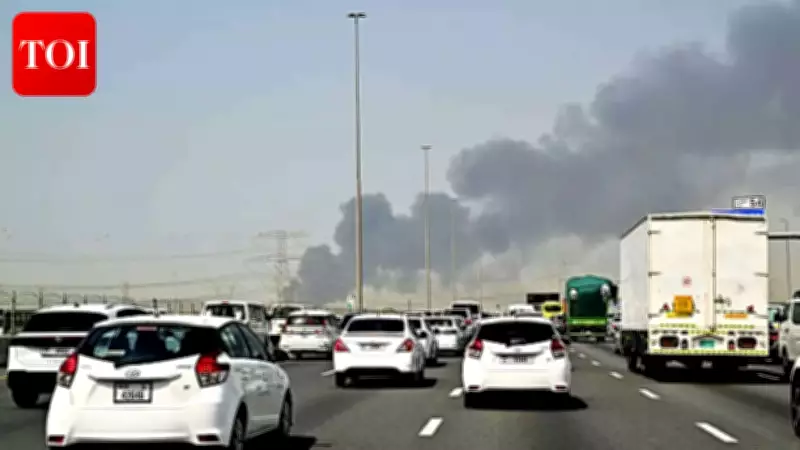
Dubai Maintains Normalcy as Regional Conflict Enters Fourth Week
The ongoing conflict involving Iran, the United States, and Israel has now stretched into its fourth week, with tensions escalating across the Middle East. Amid this volatile backdrop, the United Arab Emirates (UAE) has been actively defending against attacks from Iran while striving to uphold safety and stability for its diverse population.
Expat Insights Counter Widespread Panic Narratives
According to data from globalmediainsight.com, approximately 9.0 million expatriates reside in the UAE, representing over 200 nationalities. The country thrives in sectors such as renewable energy, healthcare, technology, real estate, and e-commerce, offering abundant opportunities. However, fears of regional instability have sparked rampant rumors about conditions in the UAE, leading to panic among expats who temporarily returned home.
In this climate of uncertainty, a post by Indian expat Varinder Bansal has gained significant traction on social media platform X. Bansal, founder of Omkara Capital, shared his experience traveling from Mumbai to Dubai via Emirates, countering narratives that depict the city as deserted. His post, which has amassed 1.1 million views, highlighted that his flight was fully booked, indicating continued travel activity.

Bansal noted a visible contrast in Dubai's atmosphere, stating, "The city definitely feels lighter—traffic is down significantly, and tourist presence is visibly lower. I would estimate traffic levels to be down by ~50%." Despite this reduction, he emphasized that life proceeds normally, with no apparent fear among residents as they engage in daily routines.
Daily Life and Economic Observations in Dubai
Bansal reported extensive outings to malls and restaurants, meeting friends without hesitation. He described a visit to Mall of the Emirates on a Saturday evening as bustling, though not overcrowded like peak tourist seasons. "Shops were active, some restaurants were full, and people were out enjoying themselves," he wrote, debunking claims of Dubai being a "ghost town."
While areas near the airport, such as Midrif, experienced disruptions due to frequent drone sightings, locations like Downtown Dubai and Sheikh Zayed Road showed minimal impact. Bansal, a former fund manager and CNBC India editor, also analyzed Dubai's real estate market, observing corrections of 10–20% in high-end villas priced above AED 20 million, though deals in this segment have stalled. The mid-market segment (AED 2–5 million) remains relatively stable, and he advised against believing claims of a 50–60% crash.
He acknowledged that tourism, real estate, construction, and smaller firms may face challenges and require time to recover, but expressed confidence in a return to normalcy. "Yes, Dubai feels different today—less crowded, less chaotic, and quieter due to fewer tourists. But it is far from being a ghost town. The city is functioning, people are working, and daily life continues," Bansal concluded, tagging the Dubai Media Office to underscore his points.
Authorities Urge Calm Amid Ongoing Developments
Tens of thousands of tourists have departed the UAE since the conflict intensified with US and Israel airstrikes on Iran beginning February 28, 2026. As social media rumors circulate panic, UAE authorities have urged the public to avoid sharing unverified information to maintain calm and normalcy while they address the evolving situation. This call for responsible communication aims to prevent unnecessary alarm and support the country's resilience during these turbulent times.






