

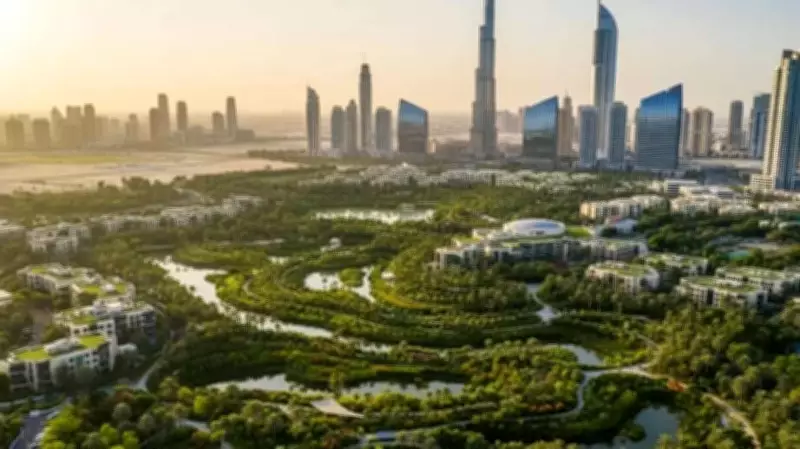
Dubai Embraces Sponge City Model in Landmark Shenzhen Partnership
In a significant step toward enhancing climate resilience, Dubai has officially adopted the innovative Sponge City urban model through a groundbreaking partnership with the Chinese technology hub, Shenzhen. Announced during the World Governments Summit (WGS) 2026, this collaboration is set to revolutionize how the emirate manages heavy rainfall and urban water systems.
What Is a Sponge City?
A Sponge City functions exactly as its name implies, designed to absorb, store, and purify rainwater naturally rather than allowing it to pool on impermeable surfaces or overwhelm conventional drainage systems. This model utilizes a combination of:
- Permeable pavements and roads
- Rooftop gardens and green roofs
- Specialized wetlands and rain gardens
- Underground reservoirs and smart drainage technologies
By signing a Memorandum of Understanding (MoU) with Shenzhen, a global leader in this field, Dubai is leveraging decades of expertise to ensure its infrastructure remains functional and dry even during intense desert storms.

China's Sponge City Initiative
China pioneered the Sponge City concept to address challenges such as flooding, water scarcity, and urban heat islands resulting from rapid, concrete-heavy development. In Shenzhen, this approach integrates:
- Permeable infrastructure and green spaces
- Natural water filtration and storage systems
- AI-driven monitoring for predictive management
Instead of relying solely on traditional pipes and pumps, Sponge Cities employ nature-based solutions enhanced by technology, allowing water to be absorbed at its source, temporarily stored during heavy rainfall, and reused for purposes like irrigation and cooling.
Benefits for Dubai
This initiative is a cornerstone of the Dubai 2040 Urban Master Plan, which aims to improve quality of life and double the city's green areas. The partnership with Shenzhen will facilitate the development of features such as Rain Gardens and Bio-Swell zones, which serve as both aesthetic landscapes and natural drainage systems. Key envisioned improvements include:
- Roads and pavements that absorb water rather than repel it
- Parks and plazas that temporarily store rainwater during storms
- Green roofs and shaded corridors that reduce heat while managing runoff
- Underground storage systems for water reuse in urban irrigation
- Smart, AI-based systems to predict rainfall and optimize drainage
His Excellency Dawoud Al Hajri, Director General of Dubai Municipality, highlighted that this effort goes beyond disaster prevention, focusing on urban aesthetics. By integrating nature into drainage strategies, Dubai will feature more parks and tree-lined streets that naturally cool the city while efficiently managing water resources.
Dubai-Shenzhen Collaboration Details
The agreement between Dubai Municipality and UPDIS (Urban Planning and Design Institute of Shenzhen) encompasses cooperation in:
- Urban planning and Sponge City development
- Smart technologies and low-carbon growth initiatives
- Future-ready city design and resilience strategies
Eng. Marwan Ahmed bin Ghalita, Director General of Dubai Municipality, stated that this partnership reflects Dubai's strategy of learning from global leaders to build sustainable, resilient, and people-centric cities. Yu Lu, President of Shenzhen's UPDIS, noted the similarities between the two cities, both being young, fast-growing, and innovation-driven, which enhances the effectiveness of their collaboration.
The partnership includes research exchanges, technical cooperation, and annual progress reviews to ensure the Sponge City concept is carefully adapted to Dubai's unique environment and long-term urban plans.
Impact on Daily Life
For residents, the implementation of Sponge City technology promises tangible benefits, such as:

- Elimination of waterlogged roads and reduced traffic delays during rainy seasons
- Significant increases in local greenery and enhanced urban aesthetics
- Improved air quality and natural cooling effects from expanded green spaces
By adopting the Shenzhen model, Dubai is positioning itself as a global leader in desert urbanism. H.E. Abdulla Al Basti, Secretary General of the Dubai Executive Council, emphasized that this partnership underscores the city's commitment to proactive governance, addressing future challenges today through international cooperation and advanced engineering.
This move not only addresses immediate climate risks but also sets a precedent for sustainable urban development in arid regions worldwide, showcasing how technology and nature can harmonize to create resilient cities.





