

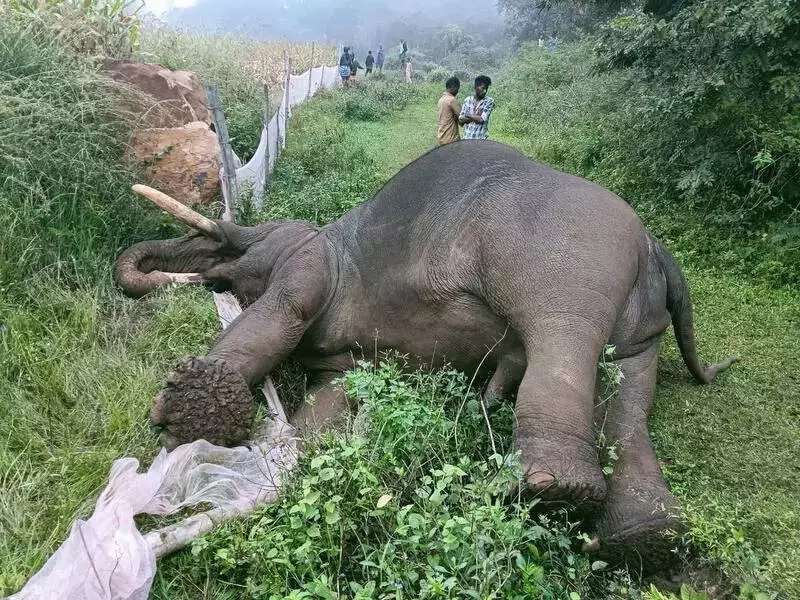
A male wild elephant tragically lost its life due to electrocution in the early hours of Thursday morning. The incident occurred when the tusker came into contact with an electrically charged fence surrounding a private property in Eretti, located within the Bargur east hills near Anthiyur in the Erode district.
A Month-Long Menace and Fatal Encounter
According to an official from the Bargur forest range, the elephant had strayed from the Eretti forest area over a month ago. Since then, it had been wandering through nearby residential zones and agricultural estates. During its prolonged stay, the animal was reported to have caused significant damage to crops, including maize and coconut trees, while also posing a persistent threat to the safety of local residents and farmers.
The fatal electric fence was installed at a private garden owned by an individual named S Vairavan. Following the tragic death of the protected animal, the forest department has taken formal action by registering a case and initiating a thorough investigation into the circumstances leading to the electrocution.

Local Allegations of Inadequate Forest Department Response
The incident has sparked discontent among the local community. Residents have come forward with claims that forest officials were alerted about the elephant's presence in human habitats repeatedly. They allege that while foresters did chase the animal away upon initial complaints, no permanent or effective measures were implemented to prevent the tusker from returning to the area.
Locals expressed frustration, stating that their repeated appeals for a lasting solution to drive the elephant back into the deep forest or to secure the area went unheeded. This perceived lack of decisive action, they claim, ultimately led to the situation where the elephant remained a danger and finally met its end on the private property's fence.
Ongoing Investigation and Broader Implications
The death of the elephant highlights the escalating human-elephant conflict in the region, a critical issue in many parts of Tamil Nadu and India where wildlife corridors intersect with human settlements and farmland. The forest department's investigation will likely scrutinize the legality and specifications of the private electric fence, as such installations are often regulated to prevent harm to wildlife.
This tragic event underscores the urgent need for proactive and collaborative strategies between forest authorities and local communities to manage wildlife straying into populated areas. Effective early warning systems, safe corridors for animal movement, and prompt, humane translocation efforts are essential to prevent loss of both human life and property, as well as protect endangered wildlife like the Asian elephant.






