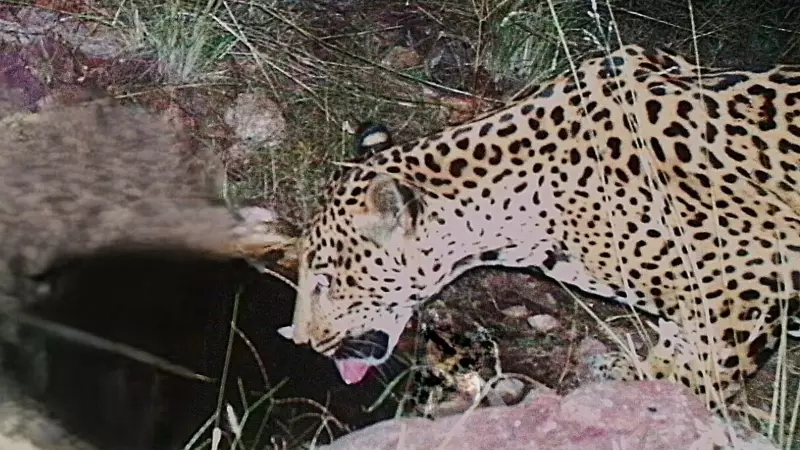
In an event that has thrilled wildlife enthusiasts and conservationists, a rare jaguar has been photographed roaming the mountains of southern Arizona. This marks only the fifth confirmed sighting of the endangered big cat in the United States over the past 15 years.
A Ghostly Presence Captured on Camera
The remarkable encounter was documented by a trail camera set up by wildlife biologist Jason Miller. The image, captured in the Huachuca Mountains, shows the solitary, spotted cat moving through the rugged terrain. Miller, who has dedicated years to monitoring the region's wildlife, shared the photo with the Arizona Game and Fish Department for official verification.
This sighting is significant as it continues a pattern of sporadic appearances by these elusive felines in the American Southwest. The last confirmed visual evidence of a jaguar in Arizona was recorded in 2022. Before that, sightings were logged in 2017, 2015, and the first groundbreaking return in 2007, which ended a period of decades with no confirmed jaguars in the state.

The Long Journey Back to Historic Habitats
Jaguars, the largest big cats in the Americas, once roamed freely from Argentina to the Grand Canyon. However, habitat loss and extensive hunting campaigns in the 20th century drove them to local extinction in the United States. The recent sightings are believed to be of male jaguars dispersing from a core breeding population located in the Mexican state of Sonora, approximately 130 miles south of the border.
Conservationists emphasize that these are not isolated wanderers but signs of a potential natural recolonization. "Each sighting reinforces the importance of cross-border habitat connectivity," explained a spokesperson from the Center for Biological Diversity. "These cats are telling us that the corridors linking the US and Mexico are still functional and vital for their survival."
Challenges and Hopes for the Future
Despite the excitement, the path to a stable jaguar population in Arizona faces steep challenges. The primary hurdle is the proposed border wall, which fragments the crucial landscape connectivity these wide-ranging predators need. Wildlife advocates argue that such barriers block migratory routes and genetic exchange, threatening long-term recovery efforts.
Furthermore, all recent sightings have been of individual males. For a true population to establish itself, female jaguars must also make the journey north to breed. The US Fish and Wildlife Service has designated critical habitat for jaguar recovery in Arizona and New Mexico, covering nearly 765,000 acres. This legal protection aims to safeguard key areas of woodland and water sources essential for the cats' survival.
The recent photograph is more than just a lucky snapshot; it is a powerful symbol of resilience. It proves that with protected corridors and reduced human-wildlife conflict, even species pushed to the brink can find their way home. For Arizona's wildlife community, the fleeting image of the spotted ghost in the Huachucas is a beacon of hope, a reminder that the wild heart of the American Southwest still beats strong.