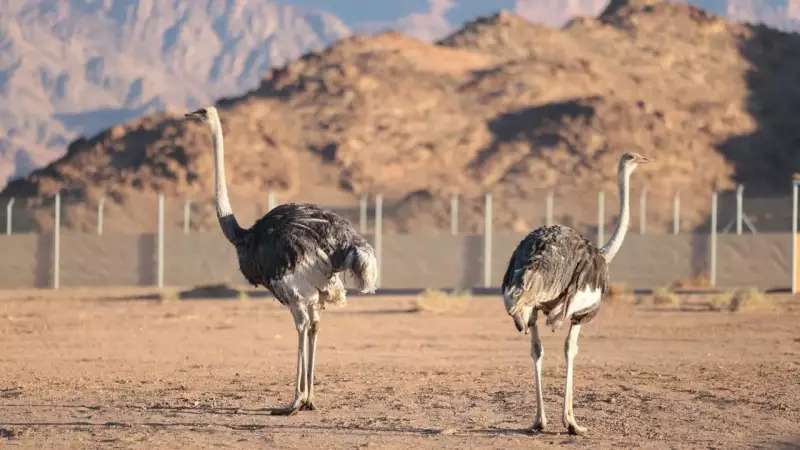
In a landmark move for wildlife conservation, the vast deserts of Saudi Arabia are witnessing the return of a giant. The red-necked ostrich, historically known as the 'camel bird,' has been reintroduced to the Prince Mohammed bin Salman Royal Reserve. This event marks the end of an almost century-long absence for the species from the Arabian Peninsula.
The Return of a Lost Icon
Once a common sight across the Arabian deserts, the Arabian ostrich (Struthio camelus syriacus) was celebrated in local culture and poetry for its remarkable speed and strength. However, relentless overhunting and the loss of its natural habitat led to its tragic extinction in the early 1900s. Today, ancient sandstone petroglyphs within the reserve, showing ostrich herds and hunting scenes, are poignant reminders of its past glory.
Guided by these historical records, scientific studies, and fossil evidence, conservationists have embarked on an ambitious rewilding project. The chosen successor is the red-necked ostrich (Struthio camelus camelus), also called the North African ostrich. This bird is the closest living genetic relative to the extinct Arabian subspecies and is perfectly adapted to survive in harsh, arid conditions.

A founder population of five birds has been released into the massive 24,500 square kilometre reserve. This initiative is a critical part of a broader strategy to restore the region's ecological balance by bringing back species that once roamed there.
More Than Just a Bird: The Ostrich as Ecosystem Engineer
The reintroduction is not merely a symbolic gesture. Ostriches play a vital role as 'ecosystem engineers.' Their presence benefits the entire desert landscape in several key ways:
- Seed Dispersal: They help spread plant seeds across vast distances.
- Insect Control: They naturally regulate insect populations.
- Rangeland Health: Their activities contribute to maintaining healthy grasslands for other species.
This effort is especially crucial given the precarious state of the red-necked ostrich in the wild. Currently, fewer than 1,000 individuals survive, scattered across Africa's Sahel region. The Saudi project, led by the National Center for Wildlife in collaboration with NEOM, Aramco, and the AlUla Royal Commission, therefore serves a dual purpose: reviving a historic species and bolstering global conservation for a critically endangered bird.
A Blueprint for Middle Eastern Rewilding
The Prince Mohammed bin Salman Royal Reserve is a biodiversity hotspot, housing 15 distinct ecosystems and supporting over 50% of Saudi Arabia's species. The ostrich is the 12th out of 23 historically occurring species to be reintroduced here, joining others like the Arabian oryx, Persian onager, and sand gazelle.
According to Andrew Zaloumis, CEO of the reserve, restoring lost species or their ecological equivalents is fundamental to fully rehabilitating these fragile desert ecosystems. The return of the ostrich represents a landmark achievement in this long-term strategy.
This conservation drive is firmly aligned with Saudi Arabia's Vision 2030 and the Saudi Green Initiative. These national goals aim to protect 30% of the Kingdom's land and marine areas by 2030, enhance biodiversity, and restore degraded environments. The reserve's work sets a powerful precedent for rewilding efforts across the Middle East.
The successful return of the 'camel bird' is more than a conservation victory; it re-establishes a living connection to Arabia's rich natural heritage. It signifies a bold step toward securing a sustainable and ecologically resilient future for the Kingdom and the region.