

Mass Gathering at India Gate Despite Police Warnings
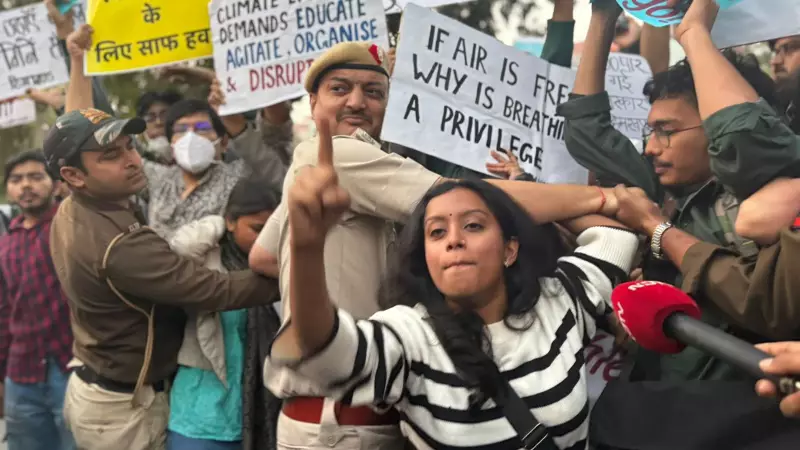
On Sunday evening, approximately 400 citizens gathered at India Gate in New Delhi to protest against the dangerously deteriorating air quality in the capital region. The demonstrators, wearing protective masks and carrying banners, assembled to voice their frustration over what they termed a severe public health crisis.
The Delhi Police confirmed that they had registered an FIR (First Information Report) on Monday against unidentified individuals for violating prohibitory orders under the jurisdiction of the Kartavyapath police station. According to police officials, the gathering was conducted despite explicit non-approval from authorities.
Legal Action and Police Response
An officer stated that Section 163 of the Bharatiya Nagarik Suraksha Sanhita (BNSS) was actively imposed in the entire New Delhi District area, with the exception of the designated protest site at Jantar Mantar. The police emphasized that they had repeatedly requested the protesters to relocate to the approved location.

"The protesters were repeatedly asked to shift to the Jantar Mantar site. Despite our regular requests to leave the site, the people did not leave," the officer explained. Prior to the event, the Additional Deputy Commissioner of Police's office had issued a formal letter to organizers citing security, law and order, and traffic concerns, along with compliance with a Supreme Court order from July 23, 2018.
Confrontation and Detentions
The situation escalated when clashes broke out between demonstrators and police personnel. At least 100 protesters were detained and transported to the Bawana police station before being released later. Among those participating was environmental activist Vimlendu Jha, who voiced strong criticism of the government's handling of the pollution crisis.
"In the last 15 days, the AQI has been at hazardous levels. Delhi's citizens don't even know how polluted the air is," Jha asserted. He further alleged that AQI readings at 22 monitoring centers had surpassed 400, indicating severe pollution levels, and accused authorities of attempting to manipulate data through measures like water sprinkling.
Jha powerfully summarized the protesters' motivation: "People are asking for their right to breathe. This is as fundamental as breathing... and asking for it in India's capital is something illegal according to the government and the police." The incident highlights the growing tension between citizen activism and administrative regulations amid Delhi's persistent air quality emergency.






