

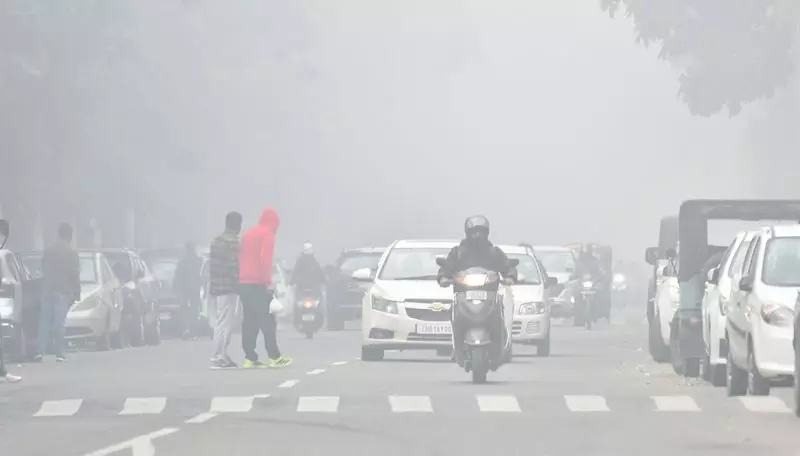
A thick blanket of fog engulfed the Tricity region of Chandigarh, Panchkula, and Mohali on Wednesday, leading to a dramatic and unexpected plunge in daytime temperatures. The dense fog significantly reduced visibility and blocked sunlight, causing maximum temperatures to drop by a substantial 5 to 6 degrees Celsius below normal.
Visibility Drops, Mercury Plummets
The India Meteorological Department (IMD) reported that the minimum temperature in Chandigarh settled at 7.2 degrees Celsius, which was close to the season's average. However, the real story unfolded during the day. The persistent fog layer prevented the sun's warmth from reaching the surface, causing the maximum temperature to struggle. Chandigarh recorded a high of only 19.4 degrees Celsius, a sharp fall from the expected range.
Similar conditions were reported in the neighboring cities. Panchkula and Mohali also experienced severely reduced visibility and a similar sharp decline in their day temperatures due to the foggy conditions. The IMD had accurately forecasted this occurrence of "cold day" conditions, where the maximum temperature drops significantly below normal even if the minimum temperature is not exceptionally low.

IMD's Forecast: More Cold Days Ahead
The weather office has indicated that these challenging conditions are likely to persist. The forecast for Thursday predicts dense to very dense fog in the morning hours across the region. The IMD bulletin warns of continued "cold day" conditions for the next two days. Residents can expect the daytime temperatures to remain appreciably below normal, while the night temperatures may also see a slight dip.
The sudden chill has disrupted daily life, affecting commuters, outdoor vendors, and the general public who were not prepared for such a significant daytime temperature drop. The fog has also led to increased travel times and caution on the roads.
Staying Prepared for the Winter Bite
With the IMD's forecast in mind, authorities are advising citizens to take necessary precautions. The combination of poor visibility and cold temperatures requires extra care while driving, especially during early mornings and late evenings. The public is urged to stay updated with the latest weather bulletins and to dress in layers to protect against the unseasonal daytime cold.
This early winter phenomenon underscores the variable nature of the region's weather patterns. The IMD continues to monitor the situation, and further updates are expected as the western disturbance influencing the region evolves.






