A significant step towards complete wildlife autonomy was taken this weekend in Uttar Pradesh's Dudhwa Tiger Reserve (DTR). A specialized team from Assam successfully conducted an operation to remove tracking collars from four free-ranging rhinos, granting them what experts term "exclusive freedom." This move aims to eliminate technological interference and allow the animals to roam and breed naturally, thereby enhancing the genetic diversity of the population.
The Operation: A Delicate Mission on Elephant Back
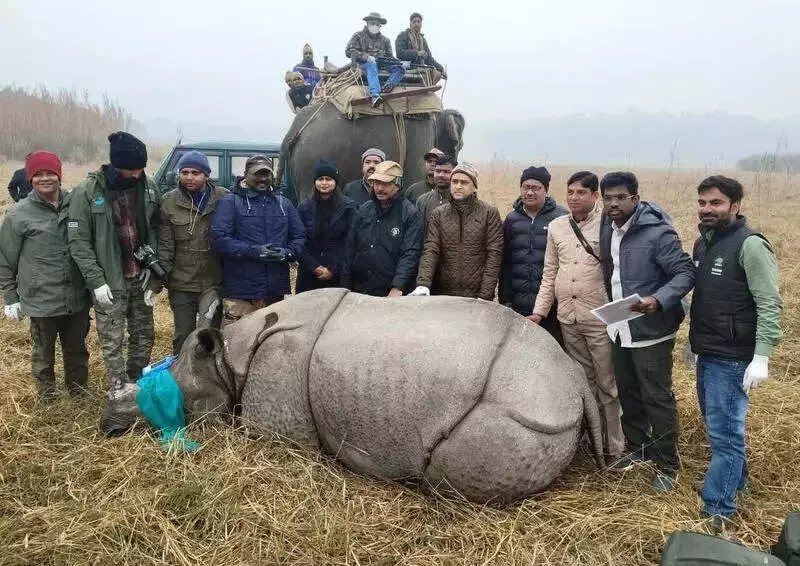
The operation, which concluded on Saturday, was led by Amit Sharma, the National Lead for Rhino Conservation at World Wide Fund for Nature - India (WWF-India). The team included the renowned veterinary expert and Padma Shri awardee, Dr. Kushal Konwar Sharma, who was responsible for conducting final health assessments before the devices were taken off.
These four rhinos – one male and three females aged between 10 and 15 years – were originally fitted with Iridium Satellite (IRSAT) collars. They were released in two phases between November last year and March this year from rehabilitation enclosures. The collars were used to meticulously monitor their movement and behaviour post-release, a strategy designed to prevent inbreeding risks.

According to Dr. Mudit Gupta of the Rhino Core Group, the ultimate goal was always this moment of liberation. "This move is designed to empower the animals with exclusive freedom and promote genetic diversity by allowing them to range naturally without technological interference," he explained.
Field Execution: Elephants, Darts, and Careful Observation
The field director of DTR, H. Rajamohan, detailed the intricate process. Using the constant signals from the collars, the team first located a female rhino with her calf. With the crucial assistance of the reserve's camp elephants, the team approached. "She was successfully darted by a team of veterinary officers, which also included the reserve's two veterinarians, Dr. Mahammad Talha and Dr. Daya Shankar," Rajamohan stated.
While the mother was sedated, the calf was cautiously guarded by the elephants—a testament to the gentle giants' role in sensitive forest operations. A thorough medical examination confirmed the mother was physically fit, with no adverse effects from the radio collar or any related neck injury. After administering the reversal dose, the rhino regained her senses and walked into true freedom.
The experts minutely observed the movement and behaviour of the mother rhino post-release. Finding everything normal, they concluded this first successful round of collar removal. The team noted that the free-ranging rhinos have been moving in a stretch of approximately 35 square kilometres within the reserve.
Coordinated Efforts for Conservation Success
The operation was a model of coordination. DTR deputy director Jagdish R managed the field supervision from atop an elephant, while Rajamohan and Dr. Mudit Gupta held the overall operational strings. WWF-India biologist Rohit Ravi and Dr. Miraj Anwar worked closely with the guest expert team from Assam to ensure seamless field execution.
This landmark event marks a new chapter for rhino conservation in Dudhwa. By removing the last vestige of human monitoring, the authorities have placed their trust in the natural instincts of these translocated animals. The success of this operation paves the way for similar initiatives, reinforcing India's commitment to creating self-sustaining, genetically robust wild populations of its iconic species.