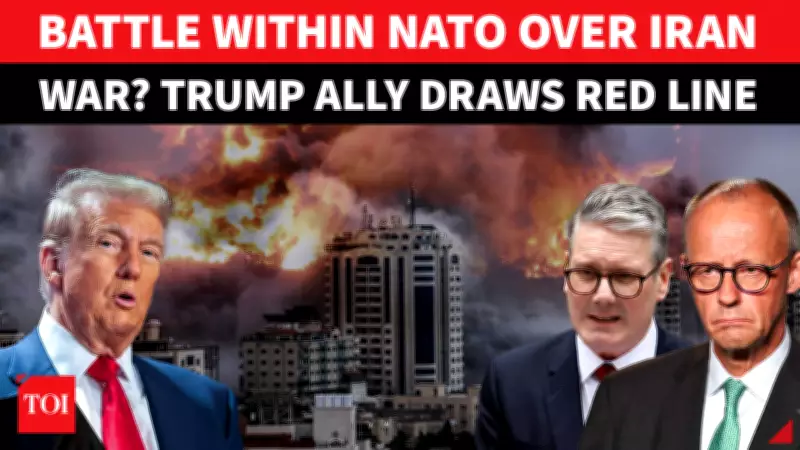
Germany Declines to Join US-Israel Military Campaign Against Iran
In a significant development that underscores growing divisions within NATO, Germany has formally ruled out participation in the United States and Israel's expanding military campaign against Iran. German Foreign Minister Johann Wadephul made the definitive statement, emphasizing that the country lacks the necessary military resources and has no intention of joining offensive strikes targeting Tehran.
Official Statement on Military Limitations
Foreign Minister Wadephul's remarks came amid widespread reports that Berlin had been carefully evaluating potential involvement should Iran continue its aggressive attacks across the volatile Middle East region. The German government's position represents a clear diplomatic stance that prioritizes resource constraints and strategic non-participation in what is becoming an increasingly complex multinational conflict.
"We do not possess the required military capabilities for such operations," Wadephul stated unequivocally. "Germany has no plans to engage in strikes against Iranian territory or forces."

Following the United Kingdom's Lead
Germany's decision comes shortly after the United Kingdom adopted a similar position, declining to join offensive military actions while maintaining limited defensive cooperation with allied forces. This sequential refusal by two major European powers highlights emerging fractures within the NATO alliance regarding appropriate responses to Middle Eastern hostilities.
The coordinated stance suggests a growing European reluctance to be drawn into direct military confrontation with Iran, despite increasing pressure from Washington and Tel Aviv to broaden international participation in their campaign.
Background of Escalating Tensions
The German foreign minister's announcement occurs against a backdrop of:
- Intensifying Iranian attacks across the Gulf region
- Expanding US and Israeli military operations
- Growing concerns about regional stability
- Increasing diplomatic pressure on European nations to choose sides
Berlin's careful deliberation before reaching this conclusion indicates the complexity of balancing alliance obligations with national military capabilities and strategic interests. The decision reflects both practical limitations and political calculations about Germany's role in international conflicts.
Implications for NATO Unity
This development raises important questions about:
- NATO's collective response mechanisms to Middle Eastern conflicts
- The allocation of military resources among member states
- European autonomy in foreign policy decisions
- The future of transatlantic security cooperation
As the conflict continues to evolve, Germany's position may influence other NATO members considering their level of involvement. The consecutive refusals by the UK and Germany could signal a broader European hesitation to engage militarily beyond defensive parameters, potentially creating strategic challenges for the US-led campaign.
The situation remains fluid, with diplomatic channels reportedly active as all parties assess their next moves in this high-stakes international confrontation.