

Glaciers Under Stress: Processes, Drivers and the Future of India's Water Security
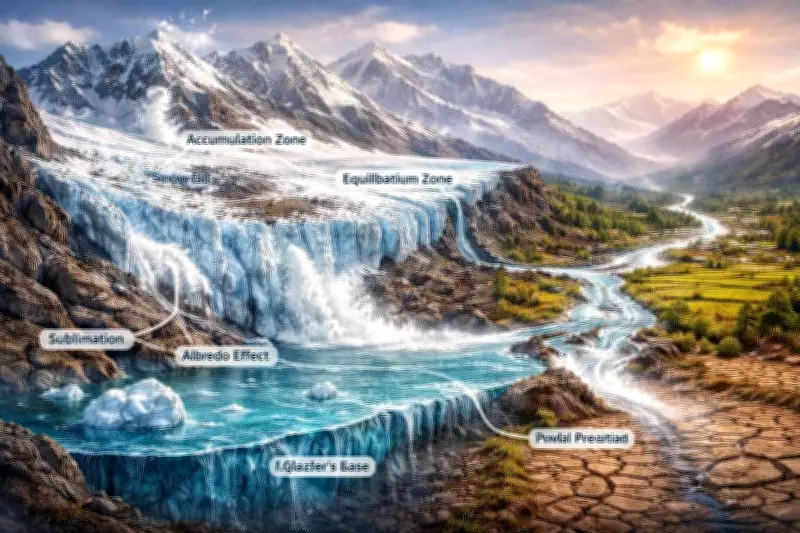
Glaciers represent dynamic masses of perennial ice, meticulously formed through the gradual compaction and recrystallisation of snow over centuries. Far from being static blocks, these slow-moving rivers of ice are continuously shaped by the powerful forces of gravity, temperature variations, and underlying topography.
The Critical Role of Glaciers in India's Hydrology
For a nation like India, glaciers serve as indispensable freshwater reservoirs, feeding major river systems that sustain agriculture, industry, and millions of livelihoods. The Himalayan glaciers, in particular, are vital for the perennial flow of rivers such as the Ganges, Indus, and Brahmaputra. Their health directly correlates with the water security of the entire subcontinent.
Understanding Glacial Melting: Key Processes and Drivers
The accelerated melting of glaciers is driven by a complex interplay of climatic and environmental factors. Primary drivers include:

- Rising Global Temperatures: Increased atmospheric heat accelerates surface melting and reduces snow accumulation.
- Black Carbon Deposition: Soot and particulate matter from industrial and agricultural activities darken glacier surfaces, enhancing heat absorption.
- Altered Precipitation Patterns: Changes in snowfall and rainfall regimes affect glacier mass balance.
- Geological and Topographical Influences: Slope, aspect, and debris cover modulate melting rates.
These processes lead to glacial retreat, altered streamflow regimes, and increased risks of glacial lake outburst floods (GLOFs), posing significant challenges to downstream communities and infrastructure.
Relevance for Civil Services Aspirants
For candidates preparing for the Union Public Service Commission (UPSC) examinations, glaciers hold substantial importance across multiple papers. In GS Paper 1 (Physical Geography), topics such as geomorphology, climatology, and hydrology extensively cover glacial systems. Geography optional students must delve deeper into:
- Glacial Landforms and Processes: Understanding erosional and depositional features.
- Climate Change Impacts: Analyzing how global warming affects cryospheric components.
- Environmental Change: Studying the socio-economic consequences of glacial melt.
- Water Resource Management: Linking glacial science to sustainable policy frameworks.
Mastery of these areas is crucial for answering questions on contemporary environmental issues and India's strategic water security concerns.
The Future of India's Water Security
The ongoing stress on glaciers necessitates urgent action. Policymakers, scientists, and communities must collaborate to:
- Enhance monitoring and research on glacial health.
- Develop adaptive water management strategies.
- Promote sustainable practices to mitigate climate change drivers.
- Integrate glacial science into national security and development planning.
As glaciers continue to recede, their impact on river flows, agriculture, and hydropower will intensify, making informed understanding and proactive measures imperative for safeguarding India's water future.






