

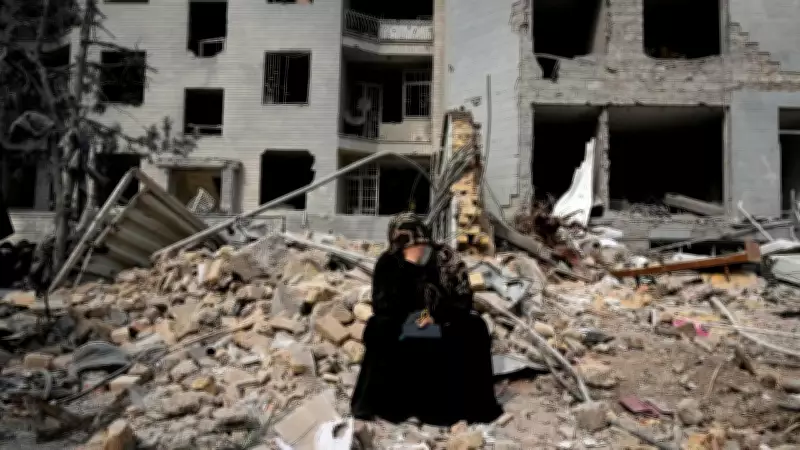
Global Terrorism Enters Dangerous New Phase Following Khamenei Assassination
A special supplement to the 2026 Global Terrorism Index (GTI), released on Thursday, has issued a stark warning that the killing of Iran's Supreme Leader Ali Khamenei may signal the beginning of a broader and far more unpredictable era of global terrorism. The report, published by the Institute for Economics and Peace alongside the main GTI which ranks Pakistan as the most terrorism-affected nation, analyzes how the Iran conflict is transforming security landscapes worldwide.
From Military Confrontation to Transnational Threat
The comprehensive report notes that what initially began as a military confrontation between nations is now demonstrating clear signs of evolving into a diffuse, transnational threat. While the immediate battlefield remains concentrated in West Asia, the consequences documented in the analysis are undeniably global in scope and impact.
At the heart of this escalating crisis lies a fractured Iranian command structure. Coordinated strikes by the United States and Israel have systematically dismantled key elements of Iran's military leadership, compelling the Islamic Revolutionary Guard Corps (IRGC) and its extensive proxy networks to operate with significantly greater autonomy than ever before. "The decentralisation of Iran's operational networks may increase the likelihood of less predictable and harder-to-detect attacks," the report explicitly states, highlighting a critical shift in operational dynamics.

Asymmetric Warfare Expands Globally
Iran's longstanding military strategy has heavily relied on asymmetric warfare tactics. According to the GTI supplement, that established playbook is now expanding dramatically in both scope and methodology. "Iran's response is likely to rely heavily on asymmetric tactics, including proxy groups, criminal networks, and lone actors," the report reads, indicating a diversification of threat vectors.
This emerging threat began materializing within days of the initial strikes. The report specifically points to several incidents as early indicators: the Austin, Texas shooting on March 1, a targeted attack on an Iranian-Canadian dissident's gym in Ontario, and a car attack on a synagogue in Michigan. Investigators believe these events may represent merely the preliminary phase of a much broader, coordinated campaign that could spread across multiple continents.
Redrawing the Map of Militant Activity
Beyond isolated individual attacks, the ongoing conflict is fundamentally reshaping the global landscape of militant activity. Iran-backed militias in Iraq, comprising at least 160,000 fighters across 67 distinct groups, have significantly intensified drone and missile strikes targeting US positions throughout the region.
Meanwhile, Hezbollah, despite experiencing operational weakening, maintains between 40,000 and 50,000 active fighters and has already escalated attacks against Israel while expanding its target range beyond traditional regional boundaries.
The security risks extend far beyond state-backed actors alone. Security experts cited in the report warn that the diversion of Western military resources to the Iran conflict has created dangerous security gaps in other volatile regions. In Syria, "between 15,000 and 20,000 individuals linked to extremist networks escaped from the Al-Hol detention camp following a massive, coordinated prison break," raising legitimate fears of a powerful resurgence of groups like Islamic State.
Economic Shockwaves and Global Stability
The conflict has triggered severe economic disruptions with direct implications for worldwide stability. Iran's strategic closure of the Strait of Hormuz, through which approximately 20% of global oil passes, has severely disrupted international shipping lanes and dramatically driven up energy prices worldwide.

Tanker traffic through this critical chokepoint dropped precipitously, leaving hundreds of commercial vessels stranded. The economic fallout could prove devastating, the report cautions. Analysts estimate that if oil prices surge to $120 per barrel, global inflation could increase by 1.2% while economic growth contracts by 0.4%. A prolonged disruption could push prices even higher, amplifying inflationary pressures, straining fragile food supply chains, and slowing economic growth across the planet.
Historical Warnings and Future Trajectories
History provides sobering warnings about potential future developments. The report explicitly points to how past regime collapses in Iraq, Syria, and Afghanistan were consistently followed by prolonged instability, devastating civil wars, and dramatic surges in terrorist activity. Without a clear, coordinated post-war plan, Iran risks following a similar destructive trajectory, with internal fragmentation and proxy conflicts spilling uncontrollably across international borders.
The 2026 Global Terrorism Index supplement presents a comprehensive analysis concluding that the world may be entering a new, more volatile chapter in counterterrorism, where threats become increasingly decentralized, unpredictable, and globally dispersed in the aftermath of the Khamenei assassination and the ongoing regional conflict.





