

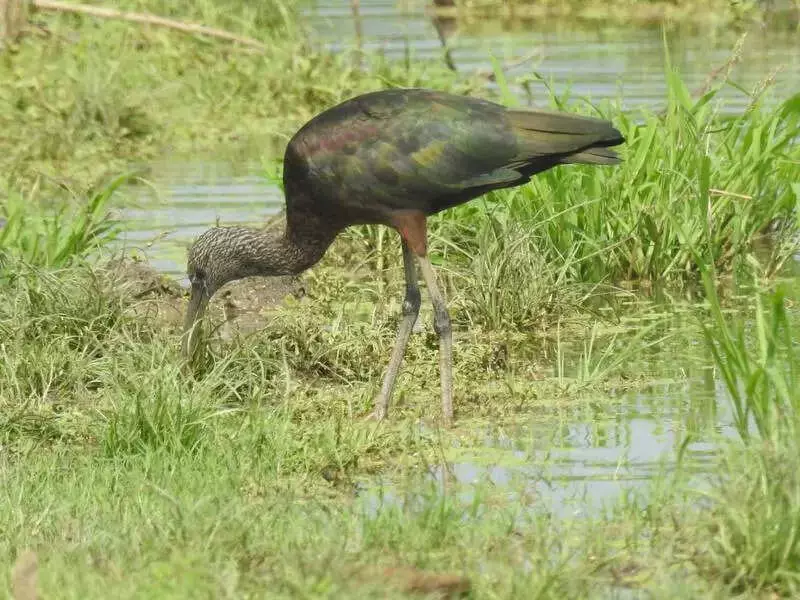
In a promising sign for local biodiversity, the elegant Glossy Ibis birds have made a welcome return to the water bodies of Bhilwara district in Rajasthan this winter. This marks the second consecutive year of their appearance following the first-ever scientifically recorded breeding of the species in the state last year.
A Groundbreaking Discovery Confirmed
The initial discovery was made by Dr. Anil Kumar Sharma, a zoology professor at the government college in Bhilwara. His diligent observation at Nehru Talai in Bhilwara district led to the first confirmed evidence of Glossy Ibis nesting in Rajasthan. Dr. Sharma maintained a daily watch over the site for an impressive three months, meticulously documenting the entire process from nest building to the raising of offspring.
His significant findings were published in the respected research journal 'Indian Birds', putting Bhilwara on the ornithological map. This year, Dr. Sharma has again confirmed the sightings of these birds across various rivers, ponds, and dams in both urban and rural parts of the district, signaling a potential new pattern.

Getting to Know the 'Chhota Bujja'
Known locally as 'Chhota Bujja', the Glossy Ibis is a medium-sized wading bird. Dr. Sharma describes it as measuring between 48 to 66 cm in length with a wingspan of 80 to 95 cm, supported by long, thin legs. While appearing black from afar, a closer look reveals a stunning deep maroon, bronze, purple, and green metallic sheen, especially vivid during the breeding season.
Key identifying features include slate-coloured facial skin and light white stripes on the head and neck. Its legs range from dark brown to olive-grey. Males and females are similarly coloured, though females are slightly smaller. These social birds live and nest in flocks, using their long, curved beaks to probe mud and shallow water for a diet of insects, shrimps, crabs, small fish, and frogs.
An Uncommon Visitor Now Returning
Bird experts note that the Glossy Ibis typically breeds in southern India and is a common sight in Gujarat. Until Dr. Sharma's pioneering study, no one had officially documented their nesting or offspring within Rajasthan's borders. The return of these birds to the district's water bodies after their breeding season is therefore ecologically significant.
It suggests that the habitats in Bhilwara are providing suitable conditions for feeding and possibly for future breeding cycles. This repeat visitation offers hope that the district could be becoming a regular seasonal home for these beautiful birds, enriching the local avian population and offering a delightful spectacle for nature enthusiasts.






