Goa's Coastline Faces Significant Erosion: Stable Shore Drops Dramatically
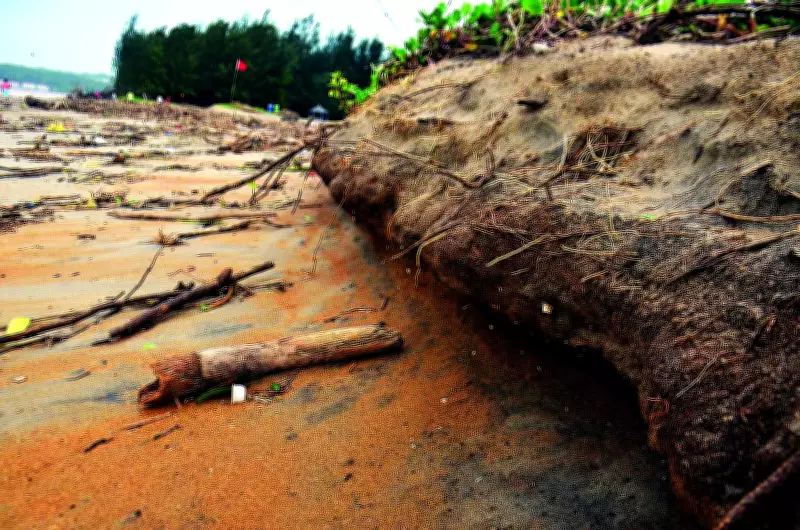
A recent shoreline change report from the National Centre for Sustainable Coastal Management (NCSCM) in Chennai has unveiled alarming data about Goa's coastline. The study indicates that of Goa's 193.9-kilometer-long coast, the stable portion has decreased from 21% to just 14%, resulting in a loss of 2.7% of the beach area to erosion. This translates to only 27 kilometers of Goa's coast being classified as stable, a stark decline from previous assessments.
Historical Comparison and Definition of Stability
The current findings contrast sharply with an earlier study conducted by ISRO's space applications centre in Ahmedabad, which covered the period from 2004-06 to 2014-16. That report identified 116.7 kilometers of Goa's coast as stable, ranking it among the most stable coastlines in India. According to NCSCM criteria, a coastline is deemed stable if the erosion rate does not exceed 0.5 meters per year or the accretion rate is not higher than 0.5 meters annually. For instance, in Pernem, erosion rates have been observed at 0.7 meters per year, exceeding this threshold.
Causes and Impact of Shoreline Changes
The shoreline alterations are attributed to a combination of natural processes and human activities. Destabilization of sand dunes due to human interference has rendered more coastal areas susceptible to erosion. Chief Minister Pramod Sawant, who also serves as the environment minister, presented these observations during the recent assembly session. He noted that 50% of Goa's coast is sandy, while the other half is rocky. Erosion has increased from 22% to 27%, marking a 5% rise, whereas accretion—the accumulation of coastal matter—has only grown by 2%, from 7% to 9%.

Hotspots and Specific Locations Affected
The report highlights several erosion hotspots across Goa. Cavelossim beach is the most impacted, with erosion occurring at eight spots, followed by Baina with seven locations. In Mormugao, erosion is evident at seven stretches along Baina, two each at Japanese Garden, Velsao, and Arossim, and one at Bogmalo. Other affected areas include:
- Pernem Taluka: Five stretches in Mandrem and Ashvem, four in Morjim, three in Querim, two in Arambol, and one in Paliem.
- Bardez: Five in Candolim, two each in Anjuna and Vagator, three in Calangute, and one in Ozram beach.
- Tiswadi: One stretch each on beaches in Miramar, Caranzalem, Dona Paula, Vainguinim, Odxel, and Bambolim.
- Salcete: Utorda, Gonsua, Betalbatim, Colva, Sernabatim, Benaulim, and Varca.
Many of these beaches support tourism activities, fish landing, coastal plantations, and critical habitats like the turtle nesting site in Morjim.
Seasonal Dynamics and Government Response
Shoreline changes are highly dynamic and seasonal, with some beaches exhibiting only temporary shifts. In response, the National Green Tribunal has advocated for replacing hard structures such as seawalls and groynes with softer alternatives like beach nourishment. Accordingly, the Goa government has partnered with Deltares, an institute linked to the Netherlands government, to assist in restoring eroded beaches.
Chief Minister Sawant confirmed that beach replenishment efforts are underway in collaboration with Deltares. The institute has identified eight erosion hotspots for pilot restoration projects: Palolem, Majorda to Cavelossim, Velsao, Candolim, Anjuna, Morjim, Mandrem, and Querim. Deltares's initial assessment suggests that natural solutions can effectively manage erosion along Goa's coastline. Monitoring of erosion is being conducted through satellite imagery to track changes and inform restoration strategies.