

Green Cave Controversy in Bastar: Forest Department Defends Actions as Scientists Urge Caution
The ongoing dispute over Bastar's fragile Green Cave has entered a more complex and nuanced phase. The Chhattisgarh forest department is strongly defending its actions to make the cave more protective through limited construction work. Simultaneously, scientists and ecologists continue to caution against any human interference in the sensitive cave ecosystem, creating a significant conservation dilemma.
The Heart of the Controversy: Salma Sitara Gufa
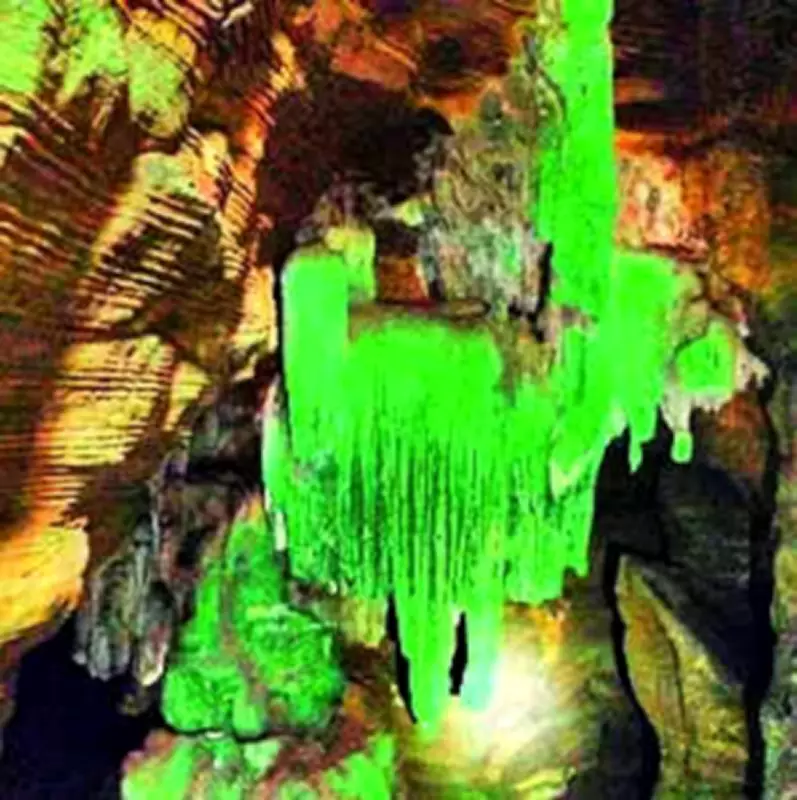
The debate centers specifically on the cave locally known as Salma Sitara Gufa, which forms part of the famous Kutumsar cave complex within Kanger Valley National Park. Recent visuals from the site have triggered claims that dust from construction activities has dulled the cave's distinctive green formations. However, Principal Chief Conservator of Forests Arun Pandey has countered these allegations, stating that the perceived discoloration is being misinterpreted.
The matter has now attracted judicial attention, with the High Court directing the Kanger Valley National Park director to file an affidavit detailing safety and conservation measures. This affidavit must be submitted before the next hearing scheduled for March 3, placing the cave's management under formal legal scrutiny.

Conflicting Perspectives on Cave Management
Cave ecologist and former Pt Ravishankar Shukla University professor Atanu Kumar Pati has studied the Kutumsar cave complex for over two decades. He strongly advocates for a more conservative approach to the Green Cave's management. Professor Pati emphasizes that the Green Cave is not an isolated geological feature but rather an integral component of an interconnected cave ecosystem.
"Thousands enter Kutumsar on national holidays and accidental damage to stalactites is common," Pati explained. "These formations take centuries to grow. Once broken, they cannot be recreated." He has proposed a restricted access model that would permit only regulated, genuine research activities while keeping highly sensitive caves completely isolated from mass tourism.
In contrast, Principal Chief Conservator of Forests Arun Pandey has provided detailed explanations of the forest department's current activities. "The department is using natural materials — bamboo and stones — to create safer movement routes," Pandey stated, while stressing that "no concrete work" is being undertaken. He explained that the cave's entrance is being secured primarily to prevent entry by animals and anti-social elements.
Safety Concerns and Conservation Mandates
Pandey further justified the safety measures by highlighting that current entry methods involve climbing and unsafe movement patterns, which increase the risk of both vandalism and accidental damage to the delicate formations. He connected these protective measures to broader conservation management objectives, noting that Kanger Valley has been placed on UNESCO's tentative World Heritage list.
"Kanger Valley has special floral and faunal diversity and unique geomorphological structures like limestone caves," Pandey elaborated. "If such uniqueness remains inaccessible, what does uniqueness mean?" The forest department has sought expert advice from the Geological Survey of India to inform their conservation approach.
Biodiversity Considerations and Scientific Perspectives
A wildlife expert has raised significant biodiversity concerns regarding the Green Cave area. The region surrounding the cave is frequented by protected species including sloth bears and the Small Indian Civet, both classified as Schedule I animals under wildlife protection laws. The expert warned that increasing human activity in such habitats could potentially conflict with the fundamental conservation mandate of a national park.
Responding to allegations about visual evidence showing dulled green algae formations, a forest department officer offered a technical explanation: "There is no dust settling. What people are seeing is a high-resolution camera effect."

Cave scientist Dr. Jayant Biswas has presented an alternative perspective, suggesting that conservation should not automatically equate to complete closure. He clarified that the so-called Green Cave is not a separate discovery but rather a green chamber linked to the broader Kutumsar cave system. Dr. Biswas highlighted that only a small fraction of Kanger Valley's caves have been properly mapped to date.
The Larger Context: Speleology and Visitor Management
Dr. Biswas identified several critical issues in current cave management practices. Visitor pressure at Kutumsar is already increasing without any scientifically defined carrying capacity for the fragile ecosystem. He suggested that opening another cave under strict safeguards could potentially help distribute footfall more evenly while simultaneously improving public awareness and supporting local livelihoods.
The scientist also flagged a significant institutional gap, noting that speleology (the scientific study of caves) remains outside mainstream higher education in India. This educational deficit contributes to limited scientific understanding of cave ecosystems and fosters public mistrust around cave management decisions.
Crossroads of Competing Conservation Philosophies
Currently, the Green Cave stands at the intersection of two fundamentally competing conservation philosophies. One perspective views controlled, regulated access as a pathway to greater public awareness and ultimately better conservation outcomes. The opposing viewpoint maintains that even minimal human presence could irreversibly alter geological systems that have developed over millennia.
As Bastar weighs the complex balance between public access and ecological preservation, the Green Cave has transformed from a mere geological curiosity into a significant test case for conservation policy. The ongoing debate reflects broader questions about how India manages its unique natural heritage while balancing scientific preservation with public engagement and local economic considerations.
The forest department maintains that their interventions are purely protective, utilizing natural materials to enhance safety without commercial motivations. Meanwhile, conservation scientists continue to emphasize the extraordinary fragility of cave ecosystems and the potential for irreversible damage from even well-intentioned human activities.





