Gujarat's Water Revolution: From Traditional Tanka to Community-Led Management
On the outskirts of Ahmedabad in Rancharda, architect Rishit Shroff demonstrates how urban homes can rely on ancient wisdom. For nine months, his family draws drinking water from a tanka, the traditional underground reservoir. "As per rules, the rainwater harvesting system has to be there. But apart from that, it is our duty too as citizens. We have consciously done that," Shroff explains. His family of six uses layered filters and reports low Total Dissolved Solids (TDS), proving that modern urban living can harmonize with traditional water conservation methods.
Urban Innovations and Community Outreach
Across the town in Shela, homeowner Arpan Gadhvi has transformed an old bungalow on a large plot into a model of water efficiency. "We have used porous blocks on our plot. We use rainwater extensively, and we are recycling the water for gardening, so our net water usage is negative," Gadhvi states. He actively spreads awareness by inviting neighbors and acquaintances to witness how sustainable water management can be practically implemented.
These individual efforts reflect a broader movement sweeping across Gujarat, where personal initiatives are evolving into comprehensive community-based water-management systems. This year's World Water Day theme, ‘Water and Gender,’ is vividly embodied in grassroots actions from the Dangs to Mehsana, with women leading the charge in reshaping how communities plan, measure, and share water resources.

Women Leading the Charge in Rural Transformation
In Mehsana's Diwanpura, Minaxi Panchal (45) transitioned from ASHA work to the Water Security Project under a Corporate Social Responsibility (CSR) initiative in 2024, collaborating with the city-based Development Support Centre (DSC). Her team introduced village-level "water budgets" that intricately link rainfall, recharge, and usage. They conducted detailed surveys of crop and livestock demand, measured pond capacities, analyzed irrigation practices, and adopted simple technologies like rain gauges, flow meters, and cut-through flumes.
Panchal's emphasis on groundwater-level monitoring, real-time rainfall updates via messaging apps, and the promotion of micro-irrigation techniques such as drip and sprinkler systems has enabled two villages to overcome the intermittent water shortages that previously disrupted farming cycles.
Decade-Long Commitment in Hilly Terrains
Further south, Nita Patel of the AKRSP network has dedicated over a decade to working with communities in the Dangs and adjoining districts, ensuring reliable water access for more than 30,000 households. "The district is often seen as a region with excess rainfall – but its hilly terrain is not very conducive for groundwater recharge," Patel notes. Historically, women trekked kilometers for domestic water as monsoon runoff vanished by early summer.
Patel's strategy integrates local committees with significant female membership and constructs small-scale infrastructure: farm ponds, check walls, and solar-powered mini lift irrigation systems. The results are fundamental yet transformative: saved time, stabilized crop yields, and the establishment of village institutions that actively monitor and manage their water resources.
Innovative Infrastructure and Agricultural Adaptation
Contractor and rainwater-harvesting consultant Setu Shah advocates for reimagining everyday structures. "In large spaces where we need catchment areas, boundaries can be made porous with think walls and used as a means for water harvesting. A wall can also be used as a storage device," Shah proposes, highlighting how conventional elements can double as water conservation infrastructure.
In north Gujarat, DSC director Mohan Sharma points to farmers like Kailash Patel of Visnagar, who have significantly reduced water consumption by altering on-field practices rather than seeking additional supply. By adopting line sowing and improving soil moisture, Patel cut her wheat irrigation requirement from 10.4 lakh liters to 7.12 lakh liters last year. She now mentors fellow farmers, incorporating low-cost inputs such as vermicomposting into sustainable agricultural methods.

Grassroots Expertise and Data-Driven Management
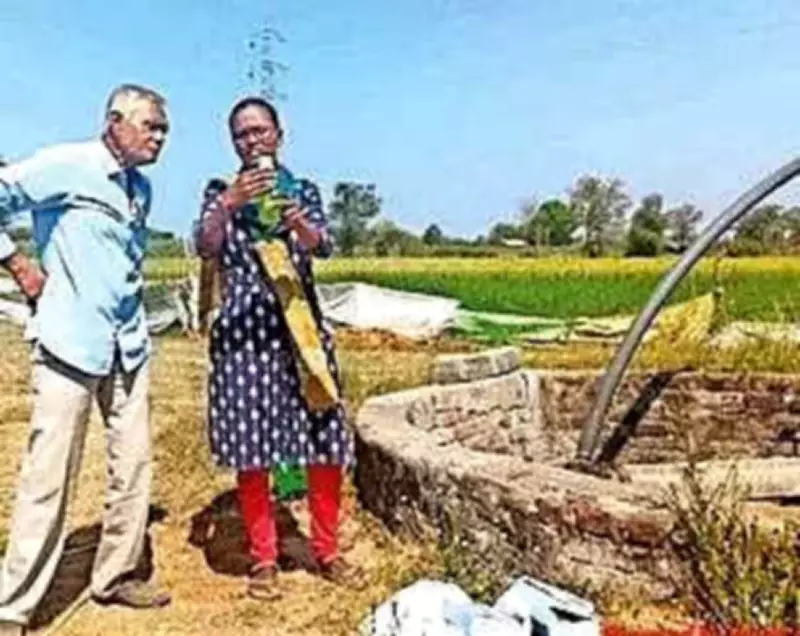
Also in Visnagar, Neelam Patel (34), an MA graduate and Community Resource Person (CRP), serves as a ‘bhujal jaankaar’ (groundwater expert). She measures TDS and pH levels, tracks rainfall patterns, and presents straightforward dashboards to village committees. Her data-driven approach has facilitated water budgets for five villages, encouraged farmers to construct recharge wells, and promoted crop diversification and rotation—strategies that distribute risk while alleviating pressure on aquifers.
Each of these initiatives may appear modest in isolation, but collectively, they outline a state progressively learning to live within its hydrological limits. Through a blend of traditional knowledge, community collaboration, and innovative technology, Gujarat is sketching a blueprint for sustainable water management that balances human needs with environmental stewardship.