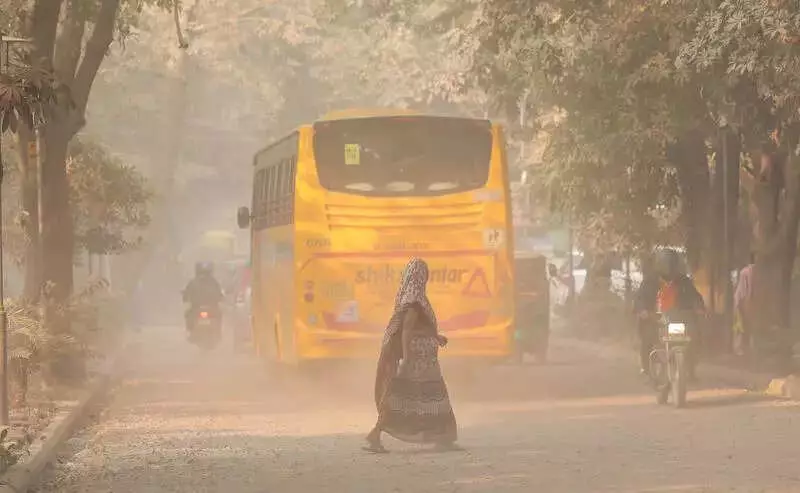
A recent surprise inspection by the Commission for Air Quality Management (CAQM) in Gurgaon has laid bare significant lapses in basic civic maintenance, directly linking municipal failures to the city's persistent air pollution woes. The probe, part of the ongoing Operation Clean Air, found that the Municipal Corporation of Gurgaon (MCG) is falling critically short in controlling road dust and managing solid waste, creating a major public health hazard.
Shocking Numbers from On-Ground Inspection
On December 26, a total of 18 inspection teams—16 from the Haryana State Pollution Control Board (HSPCB) and two from the Central Pollution Control Board (CPCB)—conducted a meticulous survey of 125 roads under MCG's jurisdiction. Each site was geo-tagged and photographed for evidence. The findings were alarming: only four road stretches were completely free of visible dust. A staggering 34 roads were found to have high dust levels, 58 had moderate dust, and 29 had low levels.
The problem, however, extended far beyond just dust. Inspectors reported that many of the heavily dusty stretches were also marred by mounds of uncollected garbage and illegally dumped construction and demolition (C&D) debris. Instances of open burning were also noted, painting a picture of weak enforcement, inadequate waste collection, and poor supervision at the ward level. The inspected roads included arterial stretches, internal ward roads, and areas across various sectors and residential colonies, indicating a widespread, systemic issue.

A Persistent Threat to Public Health
The pollution board has detailed the severe health implications of such neglect. Dust particles larger than 10 µg/m³ and 2.5 µg/m³ can cause skin and eye irritation, conjunctivitis, and higher susceptibility to eye infections. The more dangerous inhalable particles, smaller than these sizes, get trapped in the nose, mouth, and upper respiratory tract, leading to disorders like asthma, pneumonia, allergic rhinitis, and silicosis. The finest particles can enter the bloodstream via the lungs, potentially affecting all internal organs and triggering cardiovascular problems.
Areas identified as particularly problematic include MG Road, Udyog Vihar, Sector 29, Sushant Lok 1, Galleria Market Road, IFFCO Chowk, Atlas Chowk, and the Gurgaon-Faridabad Road. Here, exposed soil, loose construction material, and incomplete road work are major local pollution contributors.
CAQM Directs Immediate Action, Warns of Continued Scrutiny
In response to the damning report, the CAQM has emphatically directed MCG to ramp up its on-ground operations. The mandated measures include:
- Regular mechanical sweeping of roads.
- Timely scientific collection and disposal of waste.
- Consistent water sprinkling to suppress dust.
- Strict prevention and penalization of open burning.
The commission warned that without these steps, dust would simply resettle on roads, nullifying any temporary efforts. An HSPCB official stated, "The inspection has clearly shown that road dust, unmanaged solid waste, and instances of open burning continue to be major contributors to poor air quality. We have asked the corporation to immediately strengthen mechanical sweeping, waste lifting, and on-ground enforcement."
This inspection followed earlier actions taken after a high-level review meeting on NCR air pollution chaired by the Union Environment Minister on December 16. Subsequently, on December 17 and 18, HSPCB had issued show-cause notices to MCG and the Manesar corporation for unregulated dumping of C&D waste at multiple sites. Within MCG limits, waste was found along the Delhi-Jaipur highway at Narsingpur and Kherki Daula, Sector 37, Rao Daula Marg in Sector 74, and near Aklimpur-Teekli and Palra Road. In Manesar, CPCB teams identified similar dumping at 11 locations.
The CAQM has reiterated that Operation Clean Air inspections will persist across the National Capital Region (NCR) to ensure compliance with statutory directions and the Graded Response Action Plan (GRAP). The message is clear: municipal bodies must translate plans into visible, on-ground action to safeguard citizens' health from avoidable pollution.