

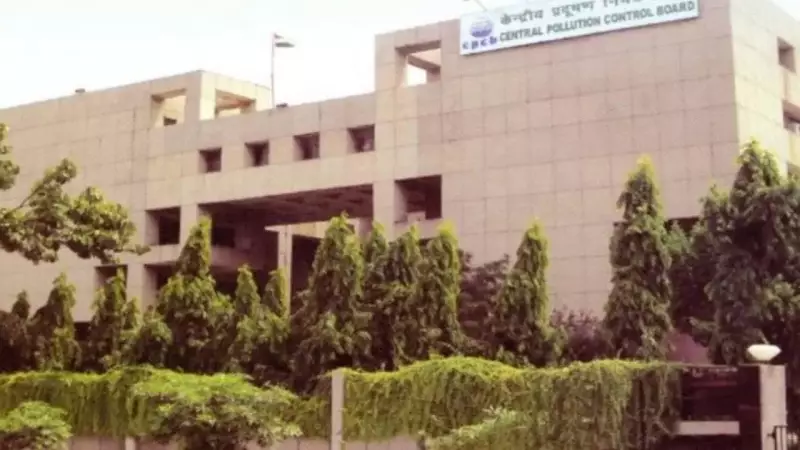
Alarming data presented in Parliament has exposed a critical staffing crisis in India's frontline agencies battling air pollution. At a time when most major cities are grappling with hazardous air quality, close to half of all sanctioned scientific and technical positions across the country's pollution control boards remain unfilled.
A Persistent Five-Year Staffing Crisis
Answers to parliamentary questions this year show that the severe shortage of personnel is not a new phenomenon but a persistent issue plaguing the system for the last five years. The vacancies have consistently ranged between 44% and 51% during this period.
The structure includes the Central Pollution Control Board (CPCB), 28 State Pollution Control Boards (SPCBs), and 8 Pollution Control Committees (PCCs) in Union Territories including Delhi. Collectively, they have a sanctioned strength of 6,932 scientific and technical posts, of which a staggering 3,161 (45.6%) are vacant. As of November, the CPCB itself had a 16.3% vacancy. The situation is worse in PCCs (43.8% vacancy as of August) and SPCBs (47.6% vacancy as of August).

States and UTs with Highest Vacancy Rates
When considering all posts, not just technical ones, the picture is even grimmer. An answer in March revealed that of 11,562 sanctioned positions in SPCBs and PCCs, 5,671 (over 49%) were vacant.
Twelve of the 28 state boards had more than half their positions empty. Sikkim's SPCB reported a 100% vacancy rate, followed by Jharkhand and Andhra Pradesh, both lacking more than 70% of their staff. Kerala stood out as the only large state with a vacancy rate below 10%. Goa had a 9.3% vacancy, while Arunachal Pradesh and Nagaland reported no vacancies.
Among Union Territories, the pollution control committee in Delhi had a 44.5% vacancy. The figure was 69% in Ladakh and in the combined territory of Dadra & Nagar Haveli and Daman & Diu. Lakshadweep had zero vacancies, and Chandigarh had only 11.1% of its posts vacant.
Poor Fund Utilisation in Critically Polluted Cities
Compounding the problem of staff shortages is the dismal utilisation of funds allocated under the government's flagship National Clean Air Programme (NCAP). Data from 44 urban agglomerations places key cities in the National Capital Region at the bottom of the list.
A March parliamentary answer showed that Delhi utilised only 32% of the ₹42 crore released to it. The performance was even worse in satellite cities: Noida used just 11.1% of its funds, and Faridabad utilised 39%. This stands in stark contrast to cities like Surat, which utilised 100% of its allocation, Chennai (99%), and Kolkata (87%).
The combination of chronic understaffing and poor fund deployment in some of India's most polluted cities raises serious questions about the operational effectiveness of the nation's air quality management framework. The Environment Ministry is yet to provide an official response on the reasons behind the high vacancy rates across these critical regulatory bodies.






