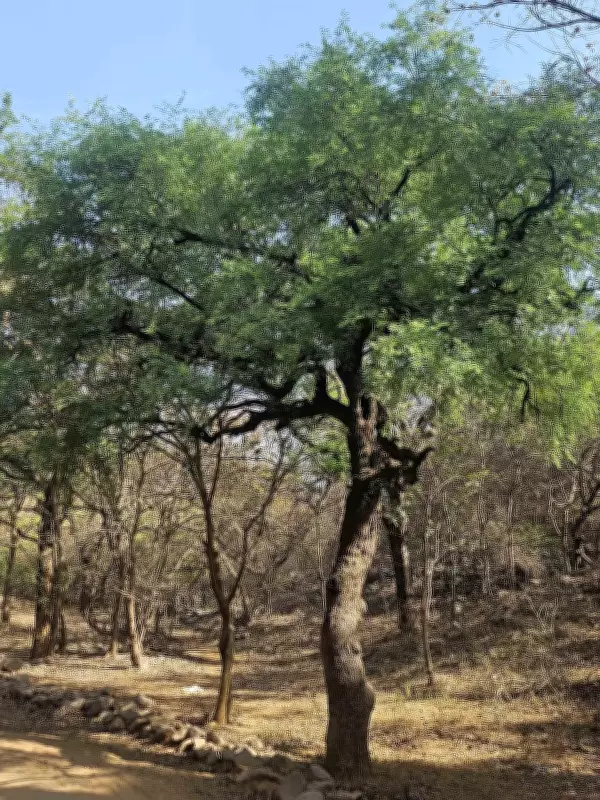
Gurgaon: Haryana farmers will be rewarded with at least Rs 500 for every tree they conserve, as the state looks to arrest the decline of native trees outside forests and boost biodiversity conservation.
New Scheme for Tree Conservation
The Haryana government has begun work on a first-of-its-kind scheme — Haryana Kisan Vriksh Protsahan Yojana — that will pay farmers for preserving rare and threatened indigenous tree species on their agricultural land. Officials believe the programme could become one of Haryana’s most significant biodiversity conservation measures involving private landowners.
The forest department has constituted a committee of senior officers to finalise the implementation framework for the scheme, which was announced in the 2026-27 state budget. The panel has been tasked with preparing guidelines and a draft notification for the scheme, which seeks to financially reward farmers for protecting ecologically important trees growing naturally on their farms.

Payment Structure and Coverage
Under the proposed framework, farmers will receive Rs 500 per eligible tree in the first year, Rs 600 in the second year, Rs 700 in the third year, Rs 800 in the fourth year and Rs 1,000 in the fifth year. The scheme aims to cover five lakh trees across Haryana during its initial five-year period. The state has estimated a budget requirement of Rs 25 crore in 2026-27, which is expected to rise to Rs 50 crore by 2030-31. Additional allocations have also been proposed for the creation of a dedicated online portal, GIS-based verification and awareness campaigns.
Concept of Payment for Ecological Services
Conservator of forests (South Haryana) Subhash Yadav told TOI, “The initiative is based on the concept of payment for ecological services (PES), under which farmers are compensated for the environmental benefits generated by trees on their land. Instead of focusing only on new plantations, the idea is to conserve mature indigenous trees that are already providing ecological services such as soil conservation, biodiversity support and climate resilience.”
Eligible Tree Species
The scheme will cover a range of indigenous species, including khejri (jand), rohida, neem, peepal, banyan, gular, jal, desi ber, desi kikar, ronj, firas, kadam, tamarind and kaith. Many of these species are considered important for maintaining biodiversity, improving soil fertility and supporting wildlife in semi-arid ecosystems. Only trees with a trunk girth of at least 60 centimetres at chest height and located on private agricultural land will be eligible for incentives. Trees already covered under Haryana’s Pran Vayu Devta Pension Scheme will not qualify.
Focus on Mature Trees
Unlike conventional plantation drives that focus on planting new saplings, the scheme seeks to conserve mature indigenous trees already standing on private farmland. Forest officials say many native species that once dominated Haryana’s rural landscape have steadily declined because of agricultural mechanisation, changing land-use patterns and tree felling.
According to the concept note prepared by the department, the programme is particularly important for southern and western Haryana, where arid conditions make natural regeneration difficult and where native species such as khejri have historically played a crucial role in supporting rural livelihoods and ecological stability.
Application and Verification Process
To avail themselves of the benefits, farmers will be required to register through a dedicated portal and submit details of land ownership, bank accounts, photographs of trees and location information. Verification will be carried out by village-level committees comprising the village secretary, patwari and a forest department representative. Applications will then be scrutinised by forest officials and approved by a district-level committee headed by the deputy commissioner. The department also plans to use GIS-based verification through agencies such as HARSAC.

Importance for Green Cover
The move comes as Haryana struggles to increase its green cover, which has remained around 7% for decades despite successive plantation drives. Forest officials argue that conserving mature native trees can deliver far greater ecological benefits than planting new saplings, making their protection critical for climate resilience and biodiversity conservation.