

From Barren Hills to Thriving Forest: Hikmet Kaya's 30 Million Tree Legacy
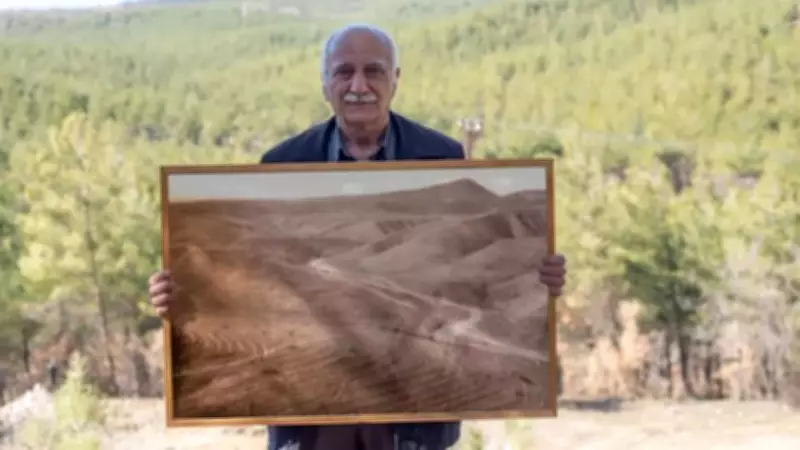
Hikmet Kaya stands before rolling green hills now thick with forest, holding a faded photograph of the same landscape as it appeared decades earlier. In the old image, the land is bare, eroded and lifeless. What surrounds him today tells a radically different story.
A Decades-Long Transformation Effort
Over roughly two decades, Kaya led a state-backed reforestation effort in Boyabat, in Turkey's Sinop province, planting an estimated 30 million saplings and transforming nearly 10,000 hectares, or about 25,000 acres, of degraded land into continuous forest. What was once a barren landscape is now alive with trees, wildlife and stabilised soil.
Kaya has often described the transformation as the greatest achievement of his life. "It is my biggest source of pride that all these barren hills have become a forest," he has said. "This work required sacrifice, effort and love for humanity."

The Beginning of a Lifelong Mission
Kaya began his career in the late 1970s as a forestry operations chief in the Boyabat district, an area long affected by deforestation and soil erosion. The region's stepped hills had lost much of their vegetation, leaving little protection against flooding and land degradation.
As a forest official, Kaya was tasked with managing and restoring state land. Rather than pursuing short-term planting drives, he committed to a long-term programme that focused on:
- Steady expansion of forest cover
- Protection of newly planted areas
- Continuous maintenance year after year
The Immense Scale of the Reforestation Project
The scale of the project was immense. Millions of saplings were planted over decades, with careful planning around:
- Species selection suited to local conditions
- Proper soil preparation techniques
- Optimal seasonal timing for planting
Pine and other hardy species suited to the local climate formed the backbone of the programme. Protection of young trees from grazing, fire and erosion was as important as planting itself.
Kaya has emphasised that the forest did not appear overnight. "Trees grow slowly," he has said in interviews. "You must be patient and you must believe in the work even when you cannot yet see the result."
Community Involvement and Collaborative Success
Although Kaya played a central role, he never claimed the forest as a one-man achievement. Local villagers were deeply involved in planting and caring for saplings, providing:
- Essential labour for planting operations
- Valuable local knowledge about the terrain
- Long-term stewardship of the growing forest
This cooperation proved essential for survival rates and long-term success. Year after year, teams returned to the hills to plant, repair damage and expand forest cover. Many early plantings failed, but persistence remained the defining feature of the effort.
Measurable Environmental Benefits
The transformation of tens of thousands of acres brought measurable environmental benefits:
- Forest cover significantly reduced soil erosion
- Improved water retention in the watershed
- Wildlife returned to areas where it had long disappeared
- Mature forests now store large amounts of carbon
While reforestation alone cannot solve climate change, projects of this scale demonstrate how sustained land restoration can play a meaningful role alongside broader policy measures.
The Image That Captured Global Attention
Public attention arrived long after most of the work was done. A photograph of Kaya standing in the forest while holding an image of the same land in its barren state spread widely online. The contrast required no explanation.
The image resonated because it showed the outcome of decades of quiet, uncelebrated work. Many viewers described it as a powerful reminder that lasting environmental change is slow, cumulative and often invisible until it is complete.

A Model of Public Service and Community Partnership
Kaya's story is often compared with other long-term reforestation efforts driven by individuals around the world. Unlike purely grassroots projects, his work was carried out within Turkey's public forestry system, combining institutional resources with community labour.
The result shows how effective public service can be when paired with commitment, continuity and local participation.
A Legacy Rooted in Patience and Persistence
Now retired, Kaya continues to speak modestly about his role, framing the forest as a gift to future generations rather than a personal triumph. He has said that seeing trees where there were once only rocks and dust brings him lasting satisfaction.
His story stands as evidence that environmental restoration does not require grand speeches or rapid results. Sometimes, it requires a lifetime of planting, protecting and waiting.





