Hindon River Survey Uncovers Critical Water Quality Crisis
A comprehensive five-day research survey of the Hindon river has unveiled alarming findings regarding its water quality, with preliminary tests indicating zero dissolved oxygen (DO) levels at several key locations. This condition renders the water effectively "uninhabitable" for the majority of aquatic organisms, raising urgent environmental concerns.
Detailed On-Site Assessments Reveal Severe Degradation
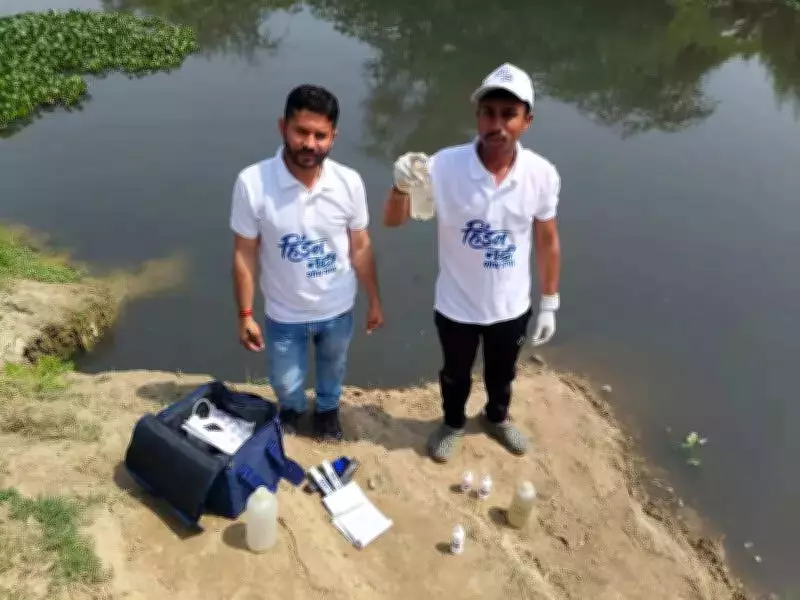
Field teams conducted meticulous on-site evaluations of critical parameters including pH, total dissolved solids (TDS), and dissolved oxygen. Additional water samples have been dispatched for thorough laboratory analysis to confirm the initial results. The survey, part of the Hindon River research expedition running from March 15 to 19, involves participants traveling along the river's course and engaging with local communities, public representatives, and civil society organizations to discuss pollution, water conservation, and pressing local issues.
Prem Narayan, an environmental scientist at the People Science Institute (PSI) in Dehradun and a member of the survey team, provided specific data from the collected samples. "The first sample, obtained from a drain near Star Paper Mill in Paragpur, Saharanpur, recorded a pH of 7.83 and TDS of 1,617 mg/L, with absolutely no dissolved oxygen present," he stated. "A second sample from the Hindon near Nanhoora Khurd in Rampur Maniharan, Muzaffarnagar, showed pH 7.72 and TDS 512 mg/L, again registering zero DO. A third sample from Nyamu in Charthawal, Muzaffarnagar, recorded pH 7.48 and TDS 448 mg/L, with DO still at zero. This alarming pattern has also been observed in Baghpat."
Contrast with River Origin Highlights Pollution Impact
In stark contrast, a sample taken from the river's origin in Saharanpur exhibited relatively clean water characteristics, with a pH of 8.20, TDS of 256 mg/L, and a healthy dissolved oxygen level of 8 mg/L. This disparity underscores the severe pollution accumulating along the river's path.
Priyanshu Gupta, another PSI scientist, emphasized the gravity of the situation. "A healthy river typically maintains dissolved oxygen levels around 5 mg/L or higher to support aquatic life," he explained. "The complete absence of DO signifies severely degraded conditions where aquatic organisms simply cannot survive. This is a critical indicator of ecological distress."
Historical Context and Ongoing Health Concerns
Previous reports have documented the river's detrimental impact on public health, including cases of serious illnesses such as cancer in numerous villages along its banks. Residents in hundreds of villages along the Hindon's tributary, Krishni, have also been affected, with repeated directives from regulatory bodies failing to translate into effective on-ground improvements.
Raman Kant Tyagi of the NGO Neer Foundation, one of the organizers of the research expedition, highlighted the persistent implementation gaps. "Our aim is to raise awareness and drive action," he said. "Despite multiple orders from various regulatory bodies, including the National Green Tribunal (NGT), to halt untreated industrial discharge and sewage flow, enforcement remains largely theoretical. Civil society must also take ownership of cleaning the system to achieve tangible results."
Geographical and Pollution Overview
The Hindon, a tributary of the Yamuna, flows approximately 355 kilometers through districts including Saharanpur, Muzaffarnagar, Shamli, Meerut, Baghpat, Ghaziabad, and Gautam Budh Nagar before merging with the Yamuna. Over the decades, untreated sewage and industrial effluents have become its primary pollutants. Except during the monsoon season, the river predominantly carries wastewater from urban settlements and industries, adversely affecting riverbank communities for years.
Dev Muni Maharaj, chief priest of the Pura Mahadev temple in Baghpat, expressed deep concern over the health implications for residents. "Toxic water in the Hindon and its tributaries is severely impacting the well-being of people living along its banks," he noted. "Contaminated water has infiltrated the groundwater, and crops irrigated with this toxic water pose health risks. This situation demands immediate and urgent attention from authorities."
The survey's findings underscore a pressing environmental and public health crisis, calling for coordinated efforts among government agencies, industries, and local communities to restore the Hindon river's vitality and protect aquatic ecosystems.