

In the unforgiving theatre of the wild, motherhood is a monumental test of endurance and ingenuity. Animal mothers face relentless challenges: defending their young from predators, securing enough food, and maintaining safe shelters. This immense responsibility becomes exponentially more complex for species that give birth to large litters, where the sheer number of mouths to feed and bodies to protect pushes maternal capabilities to the limit. Evolution, however, has crafted a stunning array of specialised adaptations—both physical and behavioural—to ensure these super-moms can beat the odds.
Mammalian Marvels: From Teats to Teamwork
Mammals exhibit some of the most direct and fascinating solutions to the large-litter dilemma. The tailless tenrec of Madagascar, a modest creature about 15.5 inches long, performs a reproductive miracle. A single female can deliver up to 20 offspring after a swift gestation of 54-64 days. Her critical advantage? An astonishing 32 mammary glands, more than any other mammal, allowing her to nourish her entire brood at once. This immediate feeding gives every baby a fighting chance in Madagascar's competitive landscape.
Half a world away, the hairless and highly social naked mole rat employs a clever behavioural strategy. While a queen can birth litters averaging 11 pups (and sometimes up to 30), she possesses only 12 teats. The solution is a shift-based nursing system, where pups rotate access to ensure all receive vital nutrition. This cooperative care model highlights how intelligent behaviour complements physical adaptation.

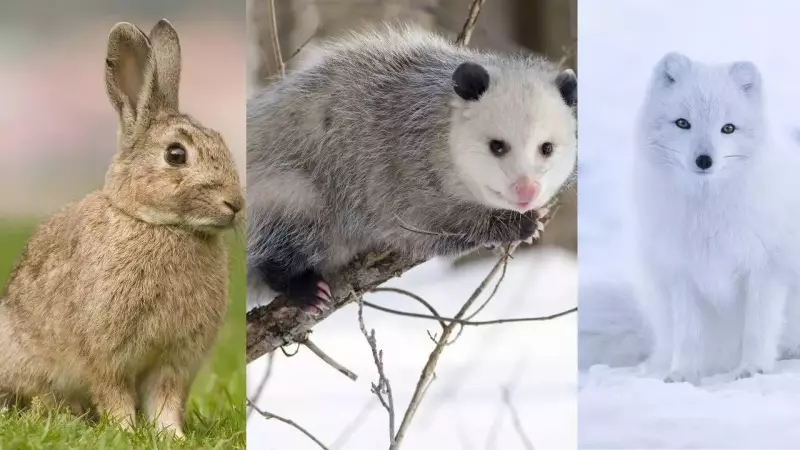
In the frozen Arctic, the Arctic fox showcases adaptability. Her litter size is directly tied to food abundance, soaring to 25 pups in plentiful seasons. Crucially, she does not shoulder the burden alone. Both parents share duties in hunting and building shelters, a partnership that lightens her load and dramatically boosts each pup's survival prospects.
Another master of quantity is the Virginia opossum. This North American marsupial often has litters of 8-9 joeys, with reports of up to 25. With just 13 teats, not all offspring can feed simultaneously, leading to a rotational nursing strategy that demands immense resilience from the mother.
Birds, Fish, and Reptiles: Strategies of Scale
The challenges of large broods extend beyond mammals. The grey partridge, a ground-nesting bird, lays clutches of 13-16 eggs, which can swell to 22. This high-volume approach is a numbers game against predators, ensuring enough chicks survive to sustain the population.
In the ocean, the ocean sunfish takes prolific breeding to a mind-boggling scale. A single female can release up to 300 million eggs in one spawning event. This strategy, known as broadcast spawning, is essential in the open ocean where predation rates are astronomical. The sheer volume is the sunfish's evolutionary answer to immense loss.
Reptiles are not to be outdone. The puff adder, a venomous viper, typically produces 20-40 live young, with captive records reaching an astounding 156 offspring. This high reproductive output, paired with its defensive capabilities, makes it a formidable survivor.
Insects and Unusual Fathers: Extreme Parenting
The insect world operates on an entirely different magnitude. The African driver ant queen is an egg-laying powerhouse, capable of producing tens of thousands to two million eggs in a burst. Her sole role is reproduction, while a vast colony handles all other tasks—a perfect division of labour enabling staggering population growth.
Perhaps the most unique strategy belongs to the seahorse. Here, nature flips the script: the male carries the fertilised eggs in a specialised pouch and gives birth to thousands of fry at a time. This allows the female to recover and produce more eggs quickly, showcasing an extraordinary evolutionary delegation of parental duty.

Meanwhile, the European rabbit adopts a minimalist but effective approach. With litters of 5-7 (and up to 12) kits every month, the mother invests only minutes per day in feeding. Her young are born relatively independent, allowing her strategy to prioritise rapid, repeated reproduction over intensive care.
From the teeming insect colony to the solitary tenrec, the animal kingdom reveals that successful motherhood with a massive brood is not about a single superpower. It is a complex interplay of physical adaptation, cooperative behaviour, environmental sensing, and sometimes, sheer overwhelming numbers. These mothers embody the relentless drive of life to persist, demonstrating that where there is a evolutionary challenge, nature often forges a remarkable, and sometimes bizarre, solution.





