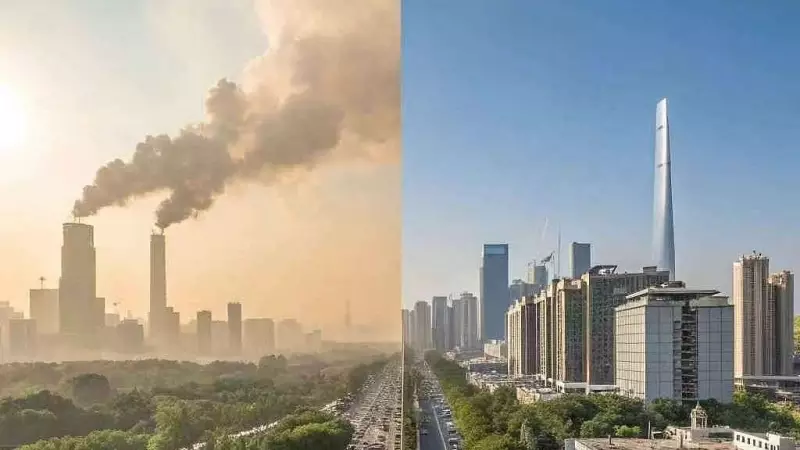
As Delhi continues its perennial struggle against hazardous air quality, a detailed playbook from an unlikely source has emerged. China, specifically its capital Beijing, has shared a comprehensive, step-by-step guide on how it transformed its skies from among the world's most polluted to significantly cleaner. This blueprint, presented at a recent international forum, offers a potential roadmap for the Indian capital's own clean air mission.
The Beijing Transformation: From Crisis to Control
For years, Beijing was synonymous with severe air pollution, with dense smog frequently shutting down the city. The turning point came with the implementation of a five-year national air quality action plan in 2013. The strategy was multi-pronged, aggressive, and backed by substantial political will and investment. The results speak for themselves: Beijing's average concentration of PM2.5 – the most harmful particulate matter – plummeted from around 90 micrograms per cubic metre in 2013 to approximately 23 micrograms per cubic metre in 2023. This represents a staggering 60% reduction in PM2.5 levels over the decade, a feat that has captured global attention.
Key Pillars of the Chinese Strategy
The Chinese model rested on several interconnected pillars, with a sharp focus on the biggest pollution sources.

1. Overhauling Vehicle Emissions: A major thrust was on cleaning up the transportation sector. Beijing implemented the China 6 emission standards, some of the strictest in the world, significantly ahead of schedule. The city aggressively promoted new energy vehicles (NEVs), including electric and hydrogen fuel cell vehicles, through subsidies and infrastructure development. Perhaps most drastically, it imposed strict limits on the number of petrol and diesel vehicles on the road through a license plate lottery and quota system.
2. Restructuring Industry and Energy: Heavily polluting industries were not just regulated but relocated. Beijing forced the shutdown or relocation of thousands of factories, including major steel producers and coal-fired power plants. The city spearheaded a shift from coal to natural gas for residential heating and industrial use. This "coal-to-gas" conversion project was massive, affecting millions of households and requiring immense investment in pipeline infrastructure.
3. Enhanced Monitoring and Regional Coordination: China established a dense network of air quality monitoring stations, providing real-time, transparent data to the public. Crucially, they adopted a regional collaborative approach, recognizing that pollution doesn't respect city boundaries. The Beijing-Tianjin-Hebei region, a major industrial cluster, was treated as a single entity for pollution control, with coordinated targets and actions.
Lessons and Potential Applications for Delhi
The presentation of this guide was not merely academic. It was shared at the "Clean Air for India" forum in Delhi, directly engaging with Indian policymakers and experts. The parallels are stark: both are mega-capitals in developing nations grappling with the twin challenges of growth and environmental health.
The Chinese experience underscores that technical solutions alone are insufficient. Success required top-level political commitment, robust legal frameworks, and substantial financial resources. Their approach was systematic, targeting the largest emission sources first with clear, phased timelines. The regional coordination lesson is particularly salient for Delhi, given the significant contribution of stubble burning from neighbouring states to its winter smog.
However, experts caution that the model cannot be copied and pasted. Delhi's context differs in its governance structure, economic makeup, and public participation. The Chinese model involved a degree of state control and enforcement that may not be replicable in India's democratic framework. Yet, the core principles – data-driven action, tackling major sources, and regional cooperation – offer a powerful framework for Delhi to adapt and build upon in its own quest for breathable air.

The sharing of this guide marks a significant moment of cross-border learning on one of the most pressing urban challenges of our time. Whether Delhi can chart a similarly successful, yet uniquely Indian, path to clean air remains the critical question for its millions of residents.