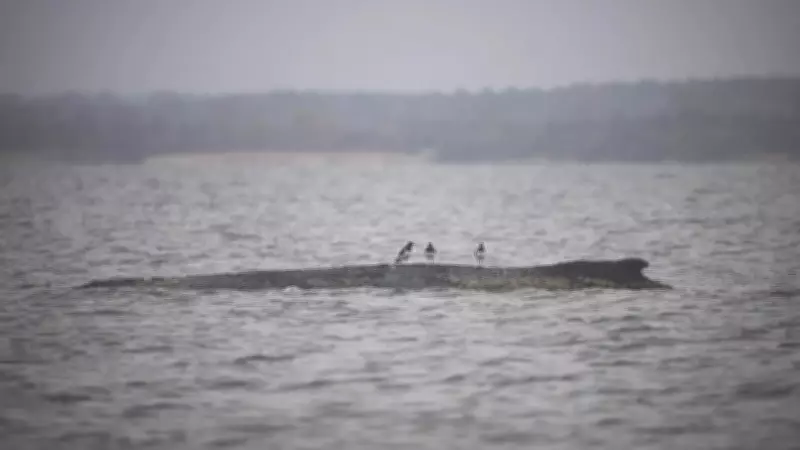
Humpback Whale Successfully Escapes Baltic Sea Stranding After Tense Days
A massive humpback whale that had been trapped in shallow waters of the Baltic Sea near Wismar, Germany, has finally managed to swim free, concluding a dramatic multi-day rescue operation that captivated both officials and spectators. The 12–15 meter marine giant, which had been stranded for an extended period, successfully navigated its way to open waters last week, providing a moment of relief and celebration for all involved.
Challenging Rescue Operations and Multiple Setbacks
The whale's journey through the Baltic Sea has been fraught with difficulties and unexpected obstacles. Initially becoming stuck near Timmendorfer Strand, rescue teams employed unconventional methods to assist the struggling animal. In a particularly unusual move, authorities brought in an excavator to help guide the whale off an underwater sandbank—a technique that blended construction equipment with conservation efforts but ultimately proved effective.
Despite this initial success, the exhausted whale soon found itself in trouble once again, prompting rescue coordinators to adopt a more patient approach. Authorities decided to step back and allow nature to take its course, giving the animal time to rest and recover its strength before attempting further navigation through the challenging waters.

Navigational Challenges and Final Escape
For a brief period, it appeared the whale might make a critical navigational error as it temporarily headed toward a harbor area before correcting its course and steering decisively toward open waters. By Tuesday morning, the humpback had completely vanished from sight, leaving behind relieved officials and a captivated audience that had gathered along the coastline.
The entire drama transformed into a live spectacle along Germany's coast, with crowds gathering to witness the unfolding events. Constant updates and video streams tracked every movement, splash, and tail flick of the determined marine mammal as it struggled toward freedom.
Uncertain Future and Scientific Perspectives
While the immediate crisis has been resolved, the whale's story is far from complete. Having strayed far from its natural Atlantic habitat, the humpback now faces a long and uncertain journey through both the Baltic and North Seas before potentially reaching safer waters.
"The whale swimming free yesterday is a first very good sign, but the way to the North Sea is still long and we can only keep our fingers crossed that it makes it there," stated Burkard Baschek, the scientific director of the Ocean Museum Germany and scientific coordinator of the rescue effort, in an interview with ZDF television that was reported by AP.
Tracking Difficulties and Migration Mysteries
Complicating monitoring efforts is the absence of any tracking device on the whale. Experts report that the animal's skin had been weakened by prolonged exposure to the Baltic Sea's low-salinity waters, making attachment of tracking equipment impractical. This means researchers can now only hope the whale finds its way back to the Atlantic unaided.
The fundamental question of why this humpback whale entered the Baltic Sea in the first place remains unanswered. Some marine biologists speculate the animal may have strayed off course while following a shoal of herring or during its migration pattern. For now, Germany's most famous marine visitor continues its solitary navigation along what promises to be a lengthy and challenging route back toward the Atlantic Ocean.