

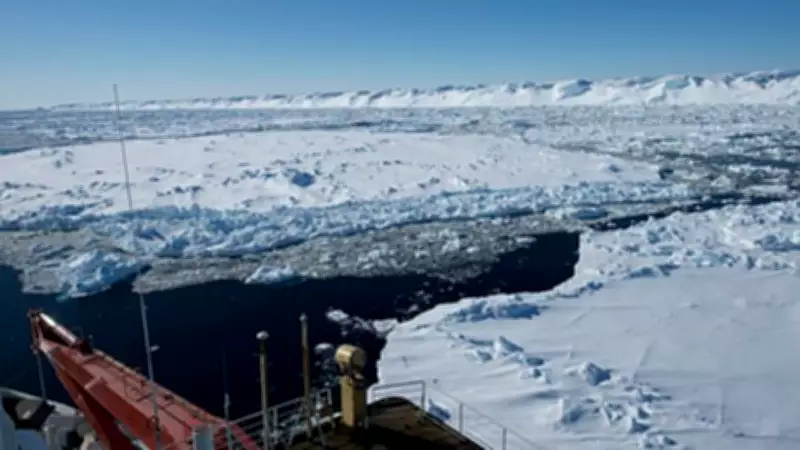
The Colossal Iceberg A23a: A Frozen Giant Threatening Antarctic Paradise
Imagine a frozen leviathan, a drifting mountain of ice so vast it could cover London twice over. This is iceberg A23a, one of the world's largest icebergs, currently stranded in the frigid waters near South Georgia, a remote sub-Antarctic island renowned for its breathtaking landscapes and abundant wildlife. According to the European Space Agency, this icy behemoth presents a looming threat to one of the planet's most pristine ecosystems.
A Monster of Ice: Twice the Size of London
Iceberg A23a is not merely large; it is monumental. Spanning approximately 3,460 square kilometers, it dwarfs Greater London, which covers about 1,572 square kilometers. To put this in perspective, this iceberg contains enough ice to blanket the entire British capital from Heathrow Airport to the Thames estuary, not once but twice. The European Space Agency's Copernicus Sentinel-3 satellite captured striking images on April 5, 2025, showing the iceberg hugging the northern coast of South Georgia.
The European Space Agency's Earth from Space report explicitly states: "The A23a is estimated to cover an area of 3,460 sq km, twice the size of Greater London in the UK." This comparison highlights its sheer scale relative to the island's total area of 3,528 square kilometers.

Origins and Journey: A Four-Decade Saga
This frozen giant originated from Antarctica's Filchner-Ronne Ice Shelf in 1986, entering the world through a natural process called calving. For nearly three decades, it remained grounded in the Weddell Sea, essentially acting as a stationary ice island. However, warmer ocean temperatures eventually lifted it free in 2023, setting it adrift on ocean currents.
By late 2024, these currents had pushed A23a toward South Georgia, located approximately 1,800 kilometers east of the Falkland Islands. As of May 2025, the iceberg has begun fragmenting into thousands of pieces. One significant fragment, designated A23c, measures about 50 square kilometers, roughly one-eighth the size of London. This natural breakup process mirrors past events involving other massive icebergs like A76a, but A23a's nearly 40-year lifespan underscores the slow, persistent changes occurring in Antarctic ice.
Imminent Collision Risks with South Georgia
South Georgia is an ecological treasure, home to millions of king penguins, vast colonies of elephant seals, and thriving fur seal populations. The island's shallow coastal shelves have now trapped iceberg A23a, creating a potentially catastrophic scenario. British Antarctic Survey researchers monitoring the situation from the RRS Sir David Attenborough have expressed grave concerns.
They warn: "As it reaches shallower waters, there is potential for disruption to the local wildlife around South Georgia." If the iceberg fully collides with or grounds itself on the island, it could block crucial foraging routes for penguins and seals, which swim miles offshore to feed on krill and fish. Such a blockage could lead to starvation for vulnerable chicks and pups.
Professor Geraint Tarling, a BAS ecologist who inspected a similar iceberg, A76a, from the RRS Discovery, described the visible ice cliffs rising tens of meters above the waterline, with hundreds of meters extending below the surface. A23a weighs trillions of tonnes, and any impact could cause it to flip or shatter violently, hurling ice chunks like projectiles.
While no human settlements exist on South Georgia, research stations like Grytviken face navigation challenges as ships already maneuver around smaller ice fragments called growlers. The European Space Agency's Sentinel-1 radar continues to track the iceberg's daily drift, confirming it remains stationary as of March 2026. Climate change exacerbates these risks, as warmer seas accelerate calving events, pushing more icebergs northward.

Wildlife in Peril: Penguins and Seals at Risk
The most heartbreaking aspect of this situation is the direct threat to South Georgia's iconic wildlife. Adult king penguins undertake arduous 30-kilometer treks inland to breed, while their fledglings later make their first swims seaward. Seals haul out on beaches to give birth, and pups learn to dive in nearby waters. A grounded iceberg could block access to these critical areas for years, similar to the lingering effects observed after iceberg A68b settled near the South Orkney Islands following its 2017 calving.
British Antarctic Survey scientists operating from Halley VI station emphasize that "researchers have raised concerns, saying that as it reaches shallower waters, there is potential for disruption." Dr. Mike Meredith, from BAS's ice shelf team, noted during the 2023 calving of iceberg A81 that while calving is a natural process, the path of these icebergs significantly impacts ecosystems.
Scientific models predict A23a might remain stranded for months, slowly melting in waters around -1°C. This melting could freshen the surrounding seas and potentially stimulate phytoplankton blooms, but such benefits offer little consolation if wildlife starves in the interim. Fragmentation provides some hope; by early 2026, satellite data indicates the iceberg has reduced to a fraction of its original size. Nonetheless, this event starkly highlights the broader implications of climate change, with Antarctica losing approximately 150 billion tonnes of ice annually in recent years.
The Broader Context: Climate Change and Iceberg Dynamics
A23a's 40-year journey from its Antarctic origins to its current stalemate near South Georgia serves as a powerful reminder of nature's immense forces. This iceberg, which once flipped upside down during its drift, exposing barnacle-encrusted undersides, now stands as a symbol of environmental change. The European Space Agency affirms that such calving events are natural, but their increasing frequency and scale are influenced by warming global temperatures.
Ongoing expeditions by the British Antarctic Survey continue to monitor these icy giants, urging vigilance and deeper understanding. In the end, the saga of iceberg A23a teaches humility. Nature's forces dwarf even our largest cities; a single collision could devastate an ecological paradise. Yet, resilience endures—penguins adapt, ice melts, and life persists, reminding us of the delicate balance in our interconnected world.





