Rain Expected to Bring Relief to North India from Historic Chill
The India Meteorological Department issued a fresh forecast on Wednesday. It predicts widespread rain across most of North India and Lakshadweep starting January 16. A new western disturbance is approaching the Himalayan region, triggering this weather change.
Cold Wave to Linger Before Abating
Relief from the intense cold will arrive after about 48 hours. Until then, cold wave conditions will persist in multiple states. IMD specifically warns Himachal Pradesh, Uttarakhand, Punjab, Haryana, Chandigarh, West Uttar Pradesh, Rajasthan, Chhattisgarh, Jharkhand, and Odisha to brace for continued chilly weather.
Dense fog is also expected to blanket Northwest India and Bihar. This foggy condition will likely last for the next five to six days, affecting visibility and daily life.

Detailed Rainfall and Snowfall Predictions
The forecast provides specific details for different regions:
- Snowfall is expected in Jammu and Kashmir, Ladakh, Uttarakhand, and Himachal Pradesh between January 16 and 20.
- Punjab, Haryana, and Chandigarh may see isolated rainfall from January 18 to 20.
- Uttar Pradesh and East Rajasthan are likely to receive rainfall on January 19 and 20.
- Lakshadweep will experience light to moderate rainfall at many places on January 14. Thunderstorms and lightning may accompany this rain.
Boost for Winter Crops and Agricultural Outlook
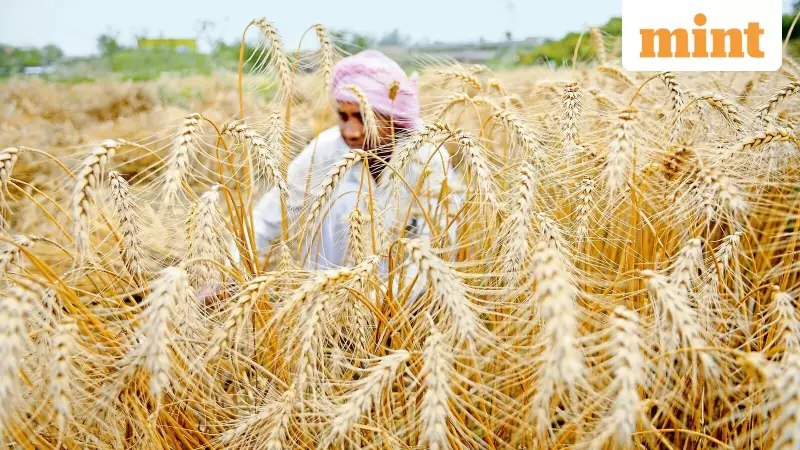
Northwest India serves as a major wheat-producing area. The anticipated rainfall promises to benefit winter crops that rely on rain for irrigation.
Ratan Tiwari, director of ICAR-Indian Institute of Wheat and Barley Research in Karnal, commented on the positive impact. He stated that the rainfall forecast should prove beneficial for the wheat crop.
Recent data from the ministry of agriculture and farmers’ welfare supports this optimistic view. Rabi sowing for 2025–26 has already increased by more than 1.76 million hectares. The total area now stands at 64.42 million hectares as of January 9. This figure is 2.8% higher than last year and exceeds the season’s average of 63.78 million hectares. Expanded acreage for wheat, rice, pulses, and oilseeds drives this growth.
January Rainfall Predictions and Regional Variations
IMD previously predicted normal rainfall for India in January. The forecast estimates rainfall between 82% and 118% of the long-period average. This average is about 49 mm, based on data from 1971 to 2020.
However, some regions may receive below-normal rainfall. Parts of northwest, east, and northeast India could see less precipitation. A few isolated pockets in the peninsular and central regions might also experience reduced rainfall.
Agricultural Advisory and Temperature Readings
IMD has issued specific advice for farmers in its agromet advisory. To protect standing crops from low-temperature stress, farmers should apply light and frequent irrigation during evening hours. Using mulching techniques is also recommended. Covering vegetable nurseries and young fruit plants with straw or polythene sheets can help maintain optimal soil temperature.
Recent temperature data reveals the extent of the cold spell. Minimum temperatures fell below 0°C in several places over the past 24 hours. Affected areas include Jammu and Kashmir, Ladakh, Gilgit-Baltistan, and Muzaffarabad.
Temperatures ranged between 1°C and 5°C across many parts of Himachal Pradesh, Punjab, Haryana, Chandigarh, Delhi, and sections of Uttar Pradesh and west Rajasthan. Isolated pockets in Uttarakhand also recorded similar lows.
Many places in Madhya Pradesh saw minimum temperatures of 5°C to 10°C. This range was also recorded at a few locations in Bihar, Odisha, West Bengal, Sikkim, Assam, Meghalaya, Saurashtra, Kutch, and isolated areas of Jharkhand and Chhattisgarh.
Hissar in Haryana recorded the lowest minimum temperature over the plains of India at 0.5°C.
The forecast reiterates that dense fog will likely persist over northwest India and Bihar for the next 5-6 days. Residents should prepare for continued challenging weather conditions before the anticipated relief arrives.