

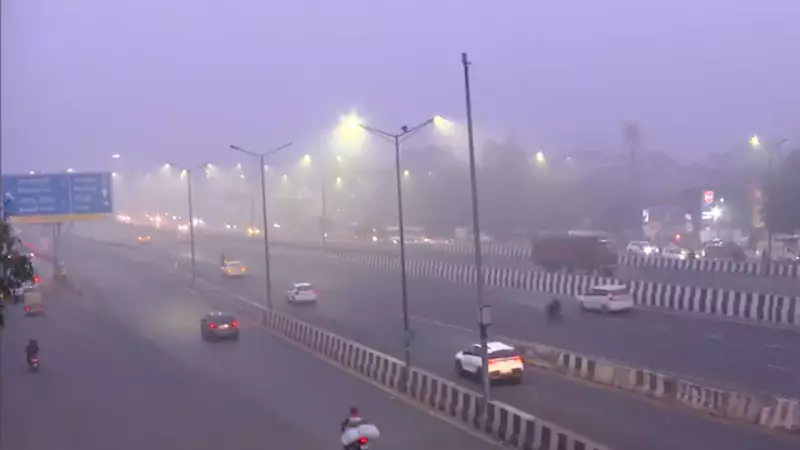
The India Meteorological Department (IMD) has sounded a red alert, forecasting dense to very dense fog to engulf large swathes of north India over the next 24 hours. This severe weather warning comes as the national capital and its surrounding regions continue to gasp for breath, with air quality stubbornly lodged in the 'very poor' to 'severe' categories.
Widespread Fog and Hazardous Air Blanket the Region
According to the IMD's forecast, very dense fog is likely to prevail over Uttar Pradesh and Bihar, with Uttar Pradesh also bracing for a very cold day. The weather agency has predicted dense to extremely dense fog across Punjab, Uttarakhand, and Bihar on December 19 and 20, with similar conditions expected over Uttar Pradesh and Haryana during the early morning hours. Officials have warned that these foggy conditions may persist for the next two to three days, significantly reducing visibility and raising serious concerns for road safety and travel schedules.
In Delhi, a thick layer of smog continued to shroud the city. Areas like Anand Vihar were particularly affected by the hazardous haze. In response to the escalating pollution, the Commission for Air Quality Management (CAQM) has activated all measures under the GRAP Stage IV across the entire Delhi-NCR region. Data from the Central Pollution Control Board (CPCB) painted a grim picture: the Air Quality Index (AQI) was recorded at 442 in Ghazipur, 409 at ITO, and 447 in Palam—all firmly in the 'severe' category. The city's overall AQI was 330 at 7:47 am, with earlier morning readings peaking at 358.

Travel Chaos and Health Advisory Issued
The dense fog severely disrupted aviation operations at Delhi's Indira Gandhi International Airport (IGI). Flights are being operated under CAT III conditions, a special Instrument Landing System protocol that allows aircraft to land in extremely low visibility but requires advanced equipment and specially trained pilots. This has led to multiple flight delays and schedule changes.
Delhi International Airport issued a statement acknowledging the impact, noting that their teams are coordinating with stakeholders to assist passengers. Similarly, airline IndiGo posted a travel advisory on social media platform X, warning customers about disruptions due to early-morning fog across northern India. They advised travelers to check their flight status online before heading to the airport.
Health authorities have strongly advised residents, especially children, the elderly, and those with respiratory conditions, to limit their time outdoors. The prolonged exposure to 'severe' and 'very poor' air quality poses significant health risks.
Breaking Down the Sources of Delhi's Pollution
An analysis from the Decision Support System for Air Quality Management pinpointed the major contributors to Delhi's toxic air. Transport emerged as the largest source, responsible for 18.3% of the pollution, followed by industries at 9.2%. Other contributors included residential sources (4.5%), construction (2.5%), waste burning (1.6%), road dust (1.3%), and power generation (approx. 1.2%).
Pollution from neighbouring districts in the National Capital Region also added to Delhi's woes. Jhajjar contributed 12.3%, Sonipat 8.8%, Rohtak 4.8%, Jind 3.1%, Bhiwani 1.4%, and Gurugram 1.1% to the capital's polluted air.
The IMD has urged the public to exercise extreme caution, avoid non-essential travel during dense fog, and stay updated with local weather advisories over the coming days as both fog and pollution show no immediate signs of relenting.






