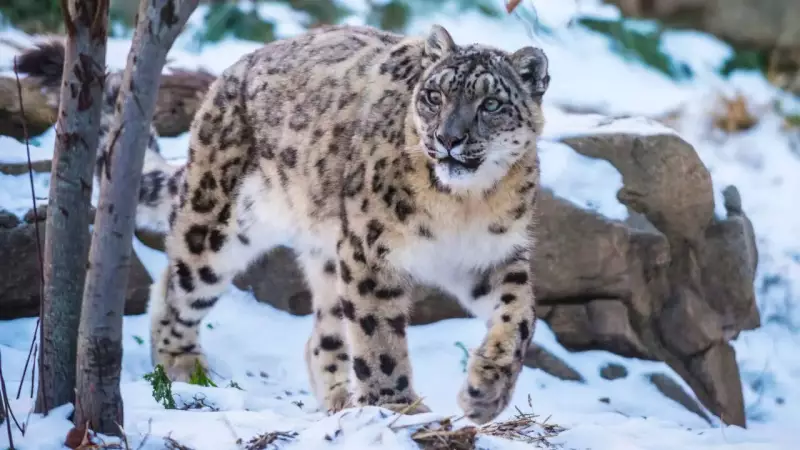
In the stark, high-altitude realms of the trans-Himalayas, where the air thins and human footprints are few, the elusive snow leopard remains the central figure in conversations about conservation, climate resilience, and human-wildlife coexistence. Though rarely seen, this apex predator's presence is a powerful indicator of the health of India's most fragile mountain ecosystems. Recent national efforts have sharpened our understanding of where these 'ghosts of the mountains' live, how many there are, and which regions serve as their crucial strongholds.
India's Official Snow Leopard Census: The Numbers Are In
The definitive answer to India's snow leopard population comes from the landmark "Status Report of Snow Leopards in India", released by the Ministry of Environment, Forest and Climate Change. Conducted under the Snow Leopard Population Assessment in India (SLPAI) program, this scientific exercise employed a rigorous methodology including systematic camera trapping, field surveys, and spatial analysis. The results are groundbreaking: India is home to an estimated 718 snow leopards.
Of this national count, the Union Territory of Ladakh emerges as the undisputed heartland, harboring roughly 400 individuals. This makes it the region with the single largest population in the country. Significant, though smaller, populations were also confirmed across other Himalayan states: Himachal Pradesh, Uttarakhand, Sikkim, and Arunachal Pradesh. These figures cement India's role as a critical range country for the species globally, while also highlighting the uneven distribution of these cats across the Himalayan arc.

Life in the Thin Air: Habitat, Diet, and Survival
Exquisitely adapted to extremes, snow leopards inhabit cold deserts and alpine zones, landscapes often locked in winter's grip for most of the year. In India, they prowl the trans-Himalayan regions, a world of steep cliffs, rocky outcrops, and sparse vegetation. Their survival is a delicate balance, dependent on ample prey, rugged terrain, and minimal human disturbance.
They are typically found at altitudes between 3,000 and 5,500 meters, favoring broken ground that provides cover for ambushing prey. Their ecological role is vital; as apex predators, they help control herbivore populations like the blue sheep (bharal), ibex, and Himalayan tahr, thereby maintaining the balance of the entire ecosystem. While wild ungulates form their primary diet, occasional livestock predation does occur in pastoral communities, creating a challenge for coexistence.
Their remarkable adaptations include:
- Thick fur and a long tail for warmth and balance.
- Large nasal cavities to heat frigid air before it reaches the lungs.
- Powerful hind limbs for navigating steep, snow-covered slopes.
As solitary creatures requiring vast home ranges, their population density remains low even in the best habitats.
Where to Find Them: Landscapes of Chance and Conservation
A wild snow leopard sighting is a rare privilege, but certain Indian landscapes offer better odds due to open terrain, reliable prey, and dedicated monitoring. Winter, when the cats descend to lower elevations following snow and prey, often provides the best window for sightings. Importantly, wildlife viewing in these areas is increasingly tied to conservation and research, with local communities playing an essential role as guides and trackers.
Key regions include:

- Hemis National Park in Ladakh: The most famous site, supported by community-based tracking and regulated winter tourism.
- Spiti Valley in Himachal Pradesh: Known for seasonal sightings, especially in areas with stable blue sheep populations.
- Nanda Devi Biosphere Reserve in Uttarakhand: Confirmed habitat, though the dense, rugged terrain makes direct observation extremely difficult.
- Eastern Himalayas (Sikkim & Arunachal Pradesh): Host smaller populations, with presence largely confirmed through camera traps rather than direct sightings.
The Path Forward: Protecting the Ghost Cat in a Changing World
As pressures from climate change, development, and tourism mount in the mountains, India's conservation strategy for the snow leopard is increasingly reliant on robust data. The discovery of Ladakh's large population is a game-changer, allowing authorities to focus on strengthening protected area management, managing grazing pressure, and planning wildlife-friendly infrastructure.
To mitigate human-wildlife conflict, community-run livestock insurance schemes and incentives for local conservation stewards are being implemented in key areas. Furthermore, continuous ecological monitoring is crucial to track how climate shifts, tourist activities, and construction projects impact snow leopard movement and prey availability. By weaving scientific evidence into policy, India is championing an evidence-driven, holistic approach to conservation—one that respects ecological complexity and supports the livelihoods of high-altitude communities.