

New Study Exposes Critical Skills Gap in India's Corporate Sustainability Drive
A groundbreaking report on India's journey toward sustainability has uncovered a significant disconnect between corporate ambition and actual execution capabilities. The study, titled 'Building India's Net Zero Capability: Industry Readiness and Skills,' was jointly prepared by IMT Ghaziabad and the United Nations Global Compact Network India (UNGCNI).
Launch Event and Key Findings
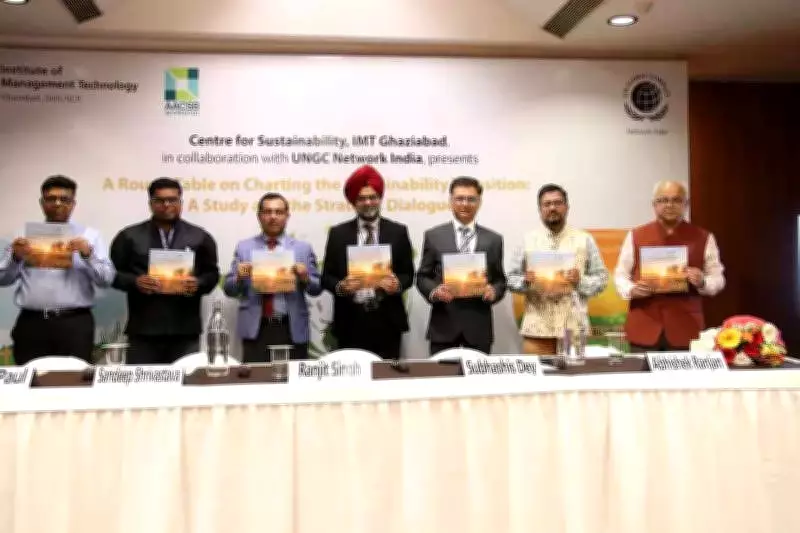
The report was officially launched in New Delhi on Friday by Atish Chattopadhyay, Director of IMT Ghaziabad, and Ratnesh Jha, Executive Director of UNGCNI. This first-of-its-kind research provides a comprehensive assessment of how prepared Indian businesses are to meet both sustainability objectives and the broader Sustainable Development Goals.
Atish Chattopadhyay contextualized the challenge by noting, "The modern industrial system, built on coal, oil and gas, powered growth and improved living standards for over a century. But it now presents a major challenge: how can we continue to grow and prosper without damaging the planet's ecosystems that sustain life?" This question is particularly relevant for India as a major energy importer with ambitious climate targets.

Survey Methodology and Core Discoveries
The research was based on a detailed survey of 113 organizations spanning multiple sectors including manufacturing, finance, technology, logistics, and retail. The findings reveal a widening gap between sustainability intent and practical implementation capabilities.
India has committed to achieving net-zero emissions by 2070, but the study identified major capacity gaps that hinder progress. While sustainability is gaining traction within India Inc and leadership commitment appears strong, operational readiness remains inconsistent and uneven across industries.
Organizational Challenges and Structural Limitations
The report highlights several critical barriers to effective sustainability implementation:
- Limited Dedicated Personnel: Over half of surveyed companies reported having fewer than five professionals dedicated to sustainability or ESG roles. Alarmingly, nearly one in ten organizations admitted to having no dedicated personnel at all for these crucial functions.
- Measurement Deficiencies: Approximately 19% of firms do not measure their sustainability impact, indicating that monitoring and accountability systems are still in their early stages of development.
- Fragmented Responsibilities: Many companies have begun integrating environmental, social, and governance practices, particularly around energy use, emissions management, and supply-chain oversight. However, progress is hampered by fragmented responsibilities, limited data systems, and significant skill shortages.
Drivers of Sustainability Adoption
The survey identified two primary motivators for corporate sustainability efforts:
- Regulatory Pressure: Approximately 51% of firms cited regulatory requirements as a key driver for adopting sustainability practices.
- Internal Leadership Vision: Around 68% of organizations reported that internal leadership vision is pushing companies to develop and implement sustainability strategies.
Future Impact and Technological Integration
Looking ahead, nearly 47% of respondents indicated that evolving sustainability norms will significantly affect their operations over the next three to five years, while another 36% anticipated a moderate impact.
The study also emphasized the growing importance of technology in managing sustainability initiatives. Firms utilizing digital tools for monitoring, analytics, and reporting demonstrate greater control over environmental performance and supply chains. This suggests that data-driven systems are becoming increasingly essential for effective ESG execution.
Special Focus on MSMEs and Broader Implications
Lead author Professor Manas Paul highlighted the particular stress on Micro, Small, and Medium Enterprises (MSMEs) during this cost-intensive transition. These smaller businesses often face greater challenges in allocating resources for sustainability initiatives compared to larger corporations.

The report concludes that India's net-zero ambitions will ultimately depend on building stronger organizational capability across several key areas: developing skilled sustainability professionals, establishing integrated governance structures, and implementing reliable measurement systems that can track progress effectively.
This comprehensive assessment serves as both a warning and a roadmap for Indian businesses as they navigate the complex transition toward sustainable operations and climate responsibility.





