

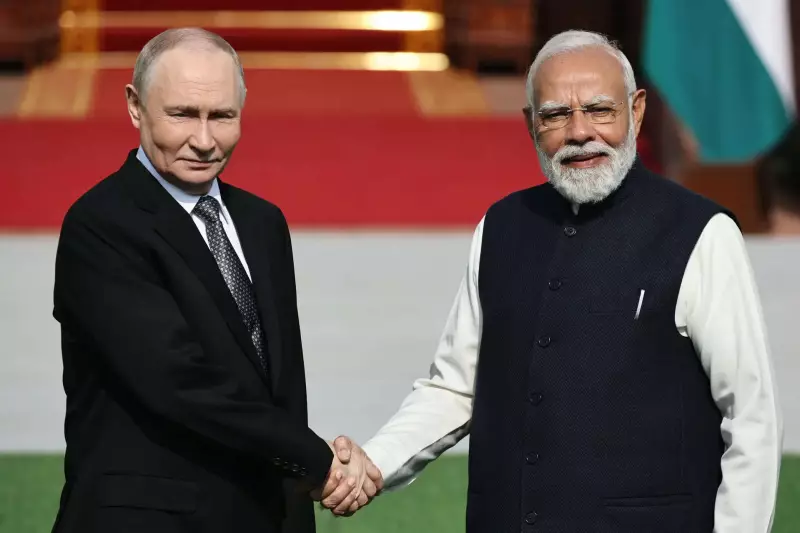
In a significant move to bolster global climate action, India and Russia have pledged to strengthen their bilateral cooperation. The agreement, reached during high-level talks between the leaders of both nations, focuses on implementing key climate goals established under international frameworks.
A Strategic Partnership for Climate Goals
The decision was formalized in a joint statement issued after a meeting between Prime Minister Narendra Modi and Russian President Vladimir Putin on Friday. The core of the agreement lies in intensifying collaborative efforts to meet objectives set by the UN Framework Convention on Climate Change (UNFCCC) and its landmark Paris Agreement.
Both nations have committed to developing joint strategies to enhance access to crucial climate finance and green technologies for developing nations and economies in transition. This partnership is particularly notable as Russia itself falls under the 'economies in transition' (EIT) category. This classification means Russia is not part of the group of developed countries legally obligated to provide climate finance under the UN Convention.

Focus on Finance, Technology, and Carbon Markets
The India-Russia dialogue aims to leverage their combined influence in multilateral forums to mobilize greater resources. A key area of collaboration will be the detailed mechanisms of Article 6 of the Paris Agreement, which governs international carbon trading markets. This partnership could help shape robust and equitable global rules for carbon markets.
Other priority areas identified for bilateral work include:
- Developing and deploying advanced low-carbon technologies.
- Promoting the use of sustainable finance instruments.
- Ensuring increased technology transfer from developed to developing nations, as mandated by the UN convention.
Multilateral Engagement and Future Cooperation
The two countries also agreed to continue their close interaction on climate issues within major international groupings like the G20, BRICS, and the Shanghai Cooperation Organisation (SCO). The statement specifically encouraged fruitful cooperation during India's upcoming BRICS chairship in 2026.
This renewed commitment builds on existing groundwork, including the first meeting of the joint Russia-India working group on climate change and low-carbon development, which was held on September 10 in New Delhi. This structured dialogue sets the stage for concrete, actionable outcomes from the strategic partnership, positioning both India and Russia as active shapers of the global climate agenda.






