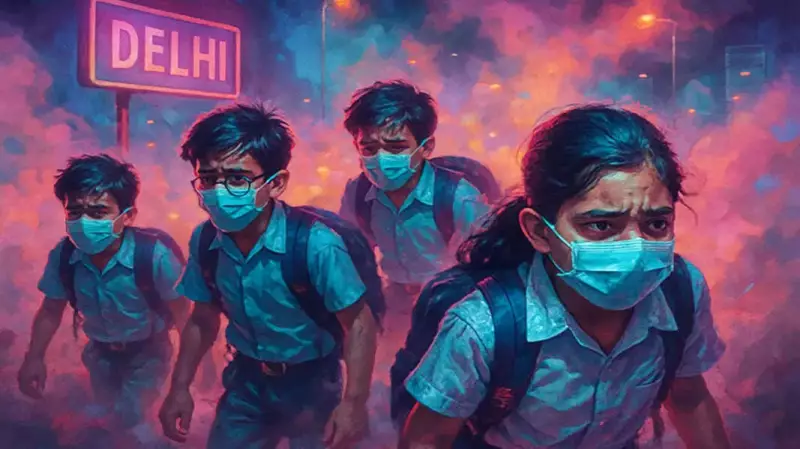
For a quarter of a century, the core reasons behind India's severe air pollution have been identified and understood. Yet, the nation remains trapped in a cycle of arguments and inaction, with the toxic problem once confined to Delhi now choking major cities like Mumbai, Bengaluru, and Hyderabad.
The Familiar, Frustrating Winter Script
Every year as winter approaches, a predictable drama unfolds around the capital's air quality. The focus shifts to finding scapegoats and engaging in political blame games, while established scientific evidence and viable solutions are consistently pushed to the background. The winter of 2025 has proven to be no exception, with recent events reaching levels of absurdity.
The season commenced with the Supreme Court's decision to permit the use of so-called "green crackers," a move met with skepticism by many environmental experts. This was quickly followed by the Delhi government's unsuccessful cloud-seeding experiment, an attempt to artificially induce rain and wash away pollutants, which yielded negligible results.

Data vs. Reality: The Stubble Burning Controversy
Adding to the confusion, official data was released claiming a dramatic 90% reduction in stubble burning incidents in the key agrarian states of Punjab and Haryana. On the basis of this report, the practice of farmers setting fire to crop residue was abruptly declared "not a problem."
This declaration, however, stands in stark contrast to the lived experience of millions and the readings from pollution monitors. More critically, it ignores a substantial body of scientific evidence that tells a completely different story. Satellite imagery and ground-level reports continued to show fires, while the air quality index remained in the 'severe' category, indicating that the core issues were far from resolved.
A National Health Emergency Spreading Beyond Delhi
The tragedy of this endless debate is its escalating cost to public health. What was once termed the "Delhi problem" has now become a pan-Indian crisis. The toxic haze is no longer confined to the National Capital Region. Major economic and IT hubs, including Mumbai, Bengaluru, and Hyderabad, are now recording dangerously high pollution levels, affecting tens of millions more citizens.
The primary culprits remain unchanged after 25 years: the widespread burning of biomass (including agricultural stubble) and the combustion of coal for power and industry. Until policy moves beyond seasonal bickering and short-term, failed experiments to address these root causes with long-term, science-backed strategies, the nation's ability to breathe freely will remain compromised.