

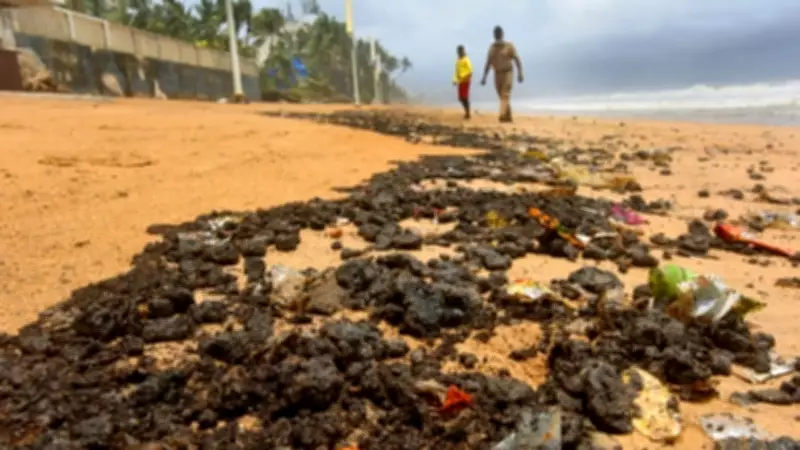
India Introduces Pioneering Tar Ball Management Rules to Safeguard Marine Ecosystems
In a landmark move to address marine pollution, the Centre has unveiled the first-ever dedicated regulations for managing tar balls, which are weathered remnants of oil spills from offshore exploration, shipping accidents, or pipeline leaks. The draft Tar-balls Management Rules, 2026, mandate that owners of oil facilities must collect, transport, and dispose of tar balls in an environmentally safe manner, marking a significant step toward protecting India's coastal regions.
Threat to Marine Life and Coastal Areas
Tar balls pose a severe threat to both on-shore and off-shore marine environments, endangering shorebirds, sea turtles, and other marine species. These pollutants frequently wash ashore during the monsoon season due to strong winds and currents, affecting beaches in states such as Maharashtra, Goa, Gujarat, and Karnataka. The new rules aim to mitigate these impacts by enforcing strict accountability measures.
Penalty Provisions and Stakeholder Responsibilities
The draft rules, notified by the environment ministry, include penalty clauses based on the polluter pays principle. Oil facility owners—defined as persons or companies involved in extracting, exploring, using, transporting, or handling oil—will face environmental compensation if they fail to manage oil spills responsibly, leading to tar ball formation and harm to public health or the environment. The compensation may cover losses, damages, and expenses incurred by district administrations in managing tar balls.

Key responsibilities have been assigned to various agencies:
- Indian Coast Guard: Tasked with implementing the National Oil Spill Disaster Contingency Plan (NOS-DCP) to manage oil spills and tar ball formation. It will conduct regular aerial and surface surveillance in India's Exclusive Economic Zone (EEZ) and inform stakeholders for preparedness and response.
- National Remote Sensing Agency: Will use satellites, drones, sensor-equipped buoys, and other means to detect oil spills and tar ball hotspots, supporting combat agencies in timely interventions.
- Ministry of Petroleum and Natural Gas: Required to provide quarterly reports on oil leakage or spill incidents from offshore installations to the Indian Coast Guard, coastal state governments, State Pollution Control Boards, and the Central Pollution Control Board (CPCB). It must also take preventive steps to control spills from exploration facilities.
- State Governments and CPCB: Assigned specific roles in the environmentally sound management of tar balls, ensuring coordinated efforts across levels of governance.
Implementation Timeline and Public Consultation
The ministry has invited stakeholders to submit comments and suggestions on the draft rules within sixty days. After reviewing feedback, final rules will be notified and are set to come into force one year from their publication in the Official Gazette. This phased approach allows for refinement and readiness among affected parties.
By introducing these comprehensive regulations, India aims to enhance its marine conservation efforts, reduce pollution from oil-related activities, and protect vulnerable coastal ecosystems for future generations.






