

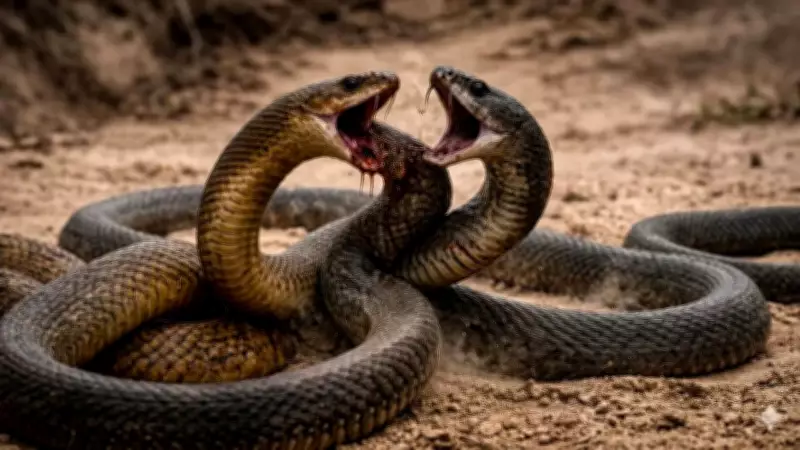
Inland Taipan vs Black Mamba: The Ultimate Venomous Snake Showdown
When examining the world's most dangerous reptiles, the comparison between the inland taipan and the black mamba presents a fascinating and compelling debate. Both snakes are widely feared, renowned as expert hunters, and hold formidable reputations within the reptile kingdom. This analysis delves into their key differences, physical characteristics, and potential outcomes in a confrontation.
Key Differences Between Inland Taipan and Black Mamba
The inland taipan is often hailed as the snake with the deadliest venom ever recorded, making it a subject of intense scientific interest. In contrast, the black mamba is celebrated for its incredible speed and aggressive nature, particularly in the African wilderness. Placing these two predators side by side raises a straightforward yet challenging question: which snake would emerge victorious in a direct encounter?
- Average Length: Inland Taipan: 1.5–2 metres; Black Mamba: 2–2.5 metres
- Maximum Length: Inland Taipan: Up to 2.8 metres; Black Mamba: Up to 4.3 metres
- Weight: Inland Taipan: Around 1–2 kg; Black Mamba: Around 1.5–2 kg
- Venom Type: Inland Taipan: Extremely potent neurotoxin; Black Mamba: Fast-acting neurotoxin
- Behaviour: Inland Taipan: Shy, avoids conflict; Black Mamba: Defensive, highly reactive
- Strike Style: Inland Taipan: Fast, close-range strikes; Black Mamba: Long-range, raised striking
- Habitat: Inland Taipan: Australia (arid regions); Black Mamba: Sub-Saharan Africa
Understanding Physical Characteristics, Size, Venom, and More
Size and Physical Advantage

The black mamba generally possesses a significant size advantage, growing longer and appearing more elongated and agile in its movements. Inland taipans, on the other hand, are smaller and more compact in build. This size difference can be crucial in close encounters, as a longer snake like the black mamba can maintain distance and strike from a safer position. However, size alone does not guarantee dominance. Inland taipans are tightly built and exhibit remarkable speed in short bursts, relying on precision rather than intimidation.
Speed and Strike Behaviour
Black mambas are frequently described as among the fastest snakes globally, capable of rapid movement over short distances, especially when escaping or defending themselves. Their striking posture involves lifting a large portion of their body off the ground, providing extended range. Inland taipans are not slow either; their strikes are sharp, direct, and highly accurate, typically avoiding prolonged confrontations. Experts often note that the mamba holds the edge in reach and overall movement capabilities.
Venom Strength
The inland taipan is consistently labeled as the most venomous snake in the world, with venom that is extremely potent, targeting the nervous system and blood clotting processes. In laboratory settings, minuscule amounts can prove lethal to mammals. The black mamba's venom is also highly dangerous, acting quickly and causing severe neurological effects, with untreated human bites often fatal within hours. The distinction lies not in safety—both are deadly—but in toxicity: the taipan's venom is more toxic per milligram, while the mamba delivers larger quantities and exhibits aggressive biting behavior.
Behaviour and Fighting Instinct
Behaviour may be the most decisive factor in a potential conflict. The inland taipan is typically reclusive, avoiding confrontation and preferring to escape when disturbed, showing no active desire for conflict. In contrast, the black mamba is more reactive and defensive, often willing to hold its ground and less likely to retreat quickly when threatened.

Who Would Likely Win in a Fight?
Both snakes possess the capability to kill each other, and in a biting scenario, both could succumb to the effects of their respective venoms. The outcome largely depends on which snake initiates the fight. The black mamba's ability to strike from a distance, combined with its larger size, could provide the initiative for victory. Conversely, the inland taipan's highly toxic venom means a single bite is often sufficient to be fatal. In a realistic encounter, however, the black mamba is most likely to have the advantage due to its aggressive nature and physical attributes.





