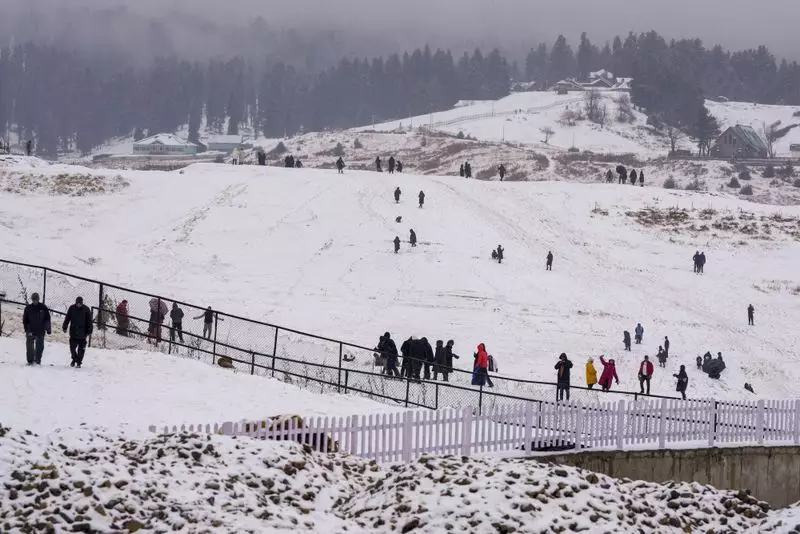
A biting cold wave has intensified across North India as the year draws to a close, bringing with it a mix of heavy snowfall, rain, and persistent dense fog. The harsh winter conditions are significantly disrupting daily life and transportation in several states, with the India Meteorological Department (IMD) indicating that the chill is here to stay for the foreseeable future.
Snowfall Blankets Hills, Fog Paralyzes Plains
The higher reaches of Jammu and Kashmir, including the famous Gulmarg ski resort, received fresh snowfall on Monday. This has delighted tourists but also led to colder temperatures in the surrounding regions. Meanwhile, the plains of North India are grappling with a different winter menace: dense fog.
On Tuesday morning, visibility dropped drastically in the national capital, Delhi, and across parts of Punjab, Haryana, and Uttar Pradesh. The IMD reported "very dense" fog in isolated pockets of Punjab and Haryana, where visibility was reduced to a mere 50 meters or less. In Delhi, the minimum temperature settled at 7 degrees Celsius, with foggy conditions affecting the early hours.

IMD Forecast: No Immediate Respite from the Chill
The weather office has predicted that cold day to severe cold day conditions are likely to continue over many parts of North India for the next few days. The western Himalayan region is expected to witness light to moderate rainfall or snowfall until December 30.
For the plains, the forecast remains grim for residents hoping for warmer days. Dense to very dense fog is very likely in many pockets over Punjab, Haryana, Chandigarh, and Uttar Pradesh during the next 2-3 days. Similar conditions are expected over Delhi and north Rajasthan, leading to potential disruptions in road, rail, and air travel. The IMD has advised people to exercise caution while driving and to follow official advisories.
Impact on Daily Life and Travel
The intensifying cold wave and fog have begun to take a toll. Early morning commuters and those who work outdoors are facing the brunt of the harsh weather. Flight and train schedules are under threat due to low visibility. The drop in temperatures also raises health concerns, especially for vulnerable populations, regarding cold-related illnesses.
Residents in the affected states are bundling up, with the demand for winter clothing and heating appliances seeing a sharp rise. The weather pattern is typical for this time of the year but appears to be more pronounced as 2023 ends, marking a frosty transition into the new year for much of North India.