

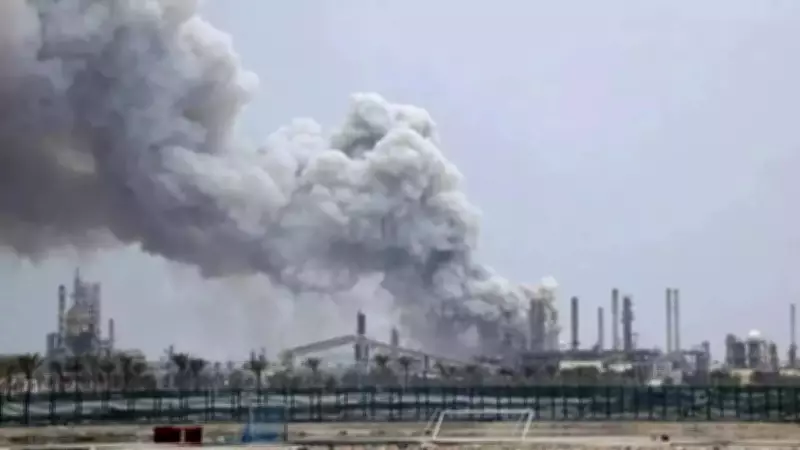
Iranian Missile Strikes Inflict Major Damage on Qatar's Critical Gas Infrastructure
Iranian military strikes have caused extensive destruction at Qatar's primary natural gas hub located within the Ras Laffan Industrial City, triggering fresh international alarm about the stability of global energy supplies as hostilities intensify across the Middle East region. The escalating conflict now directly threatens some of the world's most vital energy production and export facilities.
Qatar's LNG Facilities Suffer Significant Damage from Coordinated Attacks
State-controlled QatarEnergy confirmed that multiple waves of Iranian attacks ignited "sizeable fires" and resulted in substantial damage to liquefied natural gas (LNG) processing facilities at Ras Laffan, which serves as the operational heart of Qatar's energy export economy. Although authorities later managed to contain the fires and reported no casualties, the assault represents a dangerous escalation targeting critical infrastructure.
Qatar, ranking among the world's leading LNG exporters, shares the enormous North Dome gas field with Iran, where it is known as South Pars. This geological connection has now become a flashpoint in the broader regional conflict. In response to the strikes, Qatar has expelled Iranian military and security attachés along with their supporting staff, condemning what it termed a "brutal Iranian attack targeting Ras Laffan" that poses a direct threat to both national security and global energy stability.

Energy Infrastructure Across Gulf Region Comes Under Fire
The assault on Qatar's facilities forms part of a broader pattern of attacks against key energy installations throughout the Middle East:
- Ras Laffan, Qatar: The world's largest LNG export hub has endured repeated targeting, with the latest strikes causing extensive damage across multiple facilities. QatarEnergy had already suspended LNG production earlier this month following previous Iranian attacks.
- South Pars, Iran: This facility, representing the Iranian portion of the shared gas field, supplies approximately 70 percent of Iran's domestic gas needs. A strike ignited a fire at the complex, with former U.S. President Donald Trump confirming Israeli involvement and warning of potential massive U.S. retaliation if Iran escalates further.
- Kharg Island, Iran: Handling roughly 90 percent of Iran's crude oil exports, this terminal suffered strikes during U.S. military operations, though Iranian officials maintained export operations continued without significant disruption.
- Ruwais Refinery, UAE: Located in Abu Dhabi, this refinery temporarily halted operations as a precaution following drone attacks on its industrial complex, though operator ADNOC did not confirm direct physical damage.
- Ras Tanura, Saudi Arabia: Among the region's largest refineries, this facility experienced drone strikes that sparked fires and caused partial shutdowns before operations reportedly resumed.
Global Markets React as Energy Security Concerns Mount
The expanding conflict has triggered immediate financial repercussions, with oil prices surging more than 5 percent on mounting supply concerns. Brent crude briefly surpassed $112 per barrel as markets reacted nervously to potential disruptions in a region crucial to global energy flows. The attacks mark a dangerous expansion of hostilities into critical energy infrastructure, prompting urgent warnings from Gulf states about the broader implications.
Iran's Revolutionary Guards issued a stark warning following the strikes, stating through Iranian media: "We warn you once again that you made a big mistake in attacking the energy infrastructure of the Islamic republic." Meanwhile, Qatar's foreign ministry emphasized that "Targeting energy infrastructure constitutes a threat to global energy security, to the peoples of the region, and to its environment."

The United Arab Emirates echoed these concerns, describing the strikes as a "dangerous escalation" and highlighting that attacks on energy facilities "pose a direct threat to global energy security." As missile and drone assaults proliferate across the Gulf region, fears of prolonged disruption to oil and gas supplies have intensified significantly, with global markets remaining on edge about potential further escalations.
This latest development occurs within the context of escalating tit-for-tat strikes involving Iran, Israel, and the United States, with reports indicating Israel notified the U.S. ahead of its strike on South Pars while Washington opted not to participate. The conflict's expansion into energy infrastructure represents a particularly dangerous phase that could have far-reaching consequences for international energy markets and geopolitical stability.





