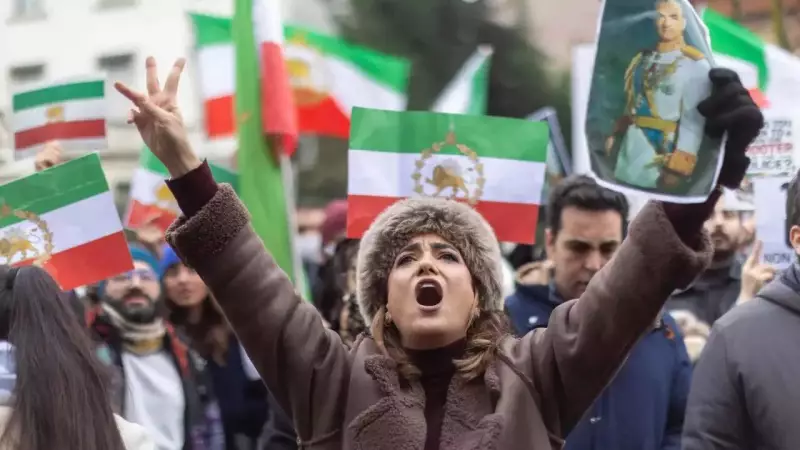
Iran is grappling with one of its most severe crises in recent memory. Multiple challenges are hitting the country simultaneously. Nationwide protests continue to shake the nation. Authorities are responding with a harsh crackdown. Cyber attackers have disrupted state television broadcasts. International pressure is mounting rapidly. All this is happening while Iran maintains a widespread internet shutdown.
State Television Hacked with Anti-Government Messages
Hackers successfully breached Iranian state television satellite transmissions early Monday. Online videos captured the incident. The hackers briefly aired footage supporting exiled crown prince Reza Pahlavi. The broadcast urged security forces not to point their weapons at the people. This footage appeared across multiple satellite channels of the Islamic Republic of Iran Broadcasting.
The hacked transmission included clips of security personnel. It claimed some officers had laid down their weapons during the unrest. Iran's semiofficial Fars news agency acknowledged a signal disruption in some areas. However, it did not specify what content was broadcast. Pahlavi's office confirmed the appearance of the footage but made no comment about the hacking operation.

Crackdown Death Toll Surpasses 4,000
The death toll from the government crackdown has risen sharply. The US-based Human Rights Activists News Agency provided alarming figures. At least 4,029 people have been killed during the suppression of protests. Activists fear this number could increase further as more information emerges.
The breakdown of casualties reveals disturbing details. Among those killed, 3,786 were demonstrators. Security personnel deaths numbered 180. Tragically, 28 children lost their lives. Another 35 non-protesters also died in the violence. The agency reported more than 26,000 arrests have occurred across Iran.
Iranian officials have not released any official death toll. Supreme Leader Ayatollah Ali Khamenei previously acknowledged the protests left several thousand people dead. He blamed the United States for instigating the unrest.
Police Ultimatum and Execution Fears
Concerns are growing about possible executions of detainees. Iran's top police officer Ahmad-Reza Radan issued a stark ultimatum. He gave protesters deemed deceived three days to surrender. Those who comply might receive leniency. Those who refuse will face severe punishment.
A joint statement from Iran's president, judiciary chief, and parliament speaker offered mixed messages. It promised punishment for killers and seditious terrorists. However, it suggested leniency for those misled into participating in protests.
International Backlash Intensifies
The global community is responding strongly to Iran's actions. The World Economic Forum in Davos withdrew its invitation to Iran's foreign minister Abbas Araghchi. Forum organizers stated it was not right for the Iranian government to be represented this year. Araghchi denounced this move, alleging political pressure behind the decision.
The Munich Security Conference also withdrew invitations for Iranian officials. These diplomatic snubs signal growing international isolation for Tehran.
US Military Movements Raise Tensions
Military tensions are escalating in the region. Ship-tracking data analyzed by AP shows significant US naval movements. The USS Abraham Lincoln aircraft carrier entered the Strait of Malacca. It appears potentially en route to the Middle East.
The Lincoln was previously stationed in the South China Sea with its strike group. Its mission there was to deter China amid rising tensions with Taiwan. Now, tracking data reveals three guided missile destroyers accompanying the carrier through the strait. These are the USS Frank E Petersen Jr, USS Michael Murphy, and USS Spruance.
Multiple US media reports from anonymous officials indicate the Lincoln is heading to the Middle East. The carrier is based in San Diego. It will take several days before its aircraft are within range of the region. Currently, no US aircraft carrier group or amphibious ready group is stationed in the Middle East. This complicates any discussion of military operations against Iran. Gulf Arab states generally oppose such attacks.

US President Donald Trump issued warnings to Tehran earlier. He cautioned against killing peaceful protesters or carrying out mass executions. Interestingly, he recently thanked Iranian authorities for canceling protestor hangings.
Iran remains under heavy security measures. Internet access remains severely limited. Authorities are struggling to contain the fallout from what has become the deadliest unrest Iran has witnessed in decades.